

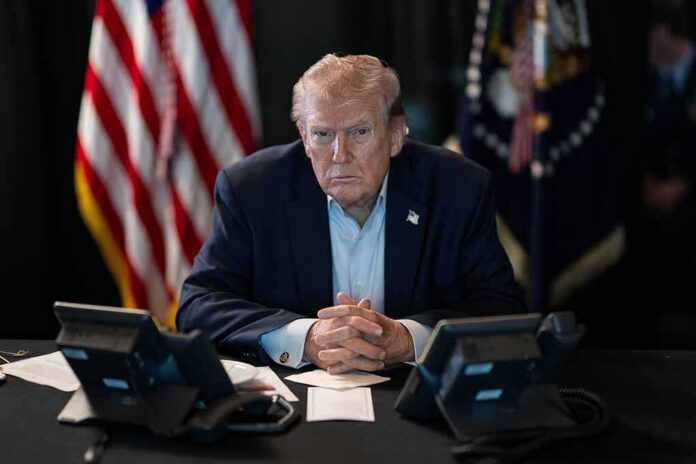
President Trump said his team is “looking at” firing Ambassador Kimberly Guilfoyle, signaling a rare public review of a political appointee tied to donor-access allegations and an inspector-general probe.
Story Snapshot
- Trump confirmed the White House is weighing Guilfoyle’s removal as ambassador to Greece.
- Reports link the review to a $100,000 request from a donor and other conduct claims.
- The State Department inspector general is examining the matter, according to multiple reports.
- Guilfoyle’s lawyers deny wrongdoing and say she will continue serving.
What President Trump Said And Why It Matters
President Trump told reporters on October 12, 2026, that he is “looking at” firing Kimberly Guilfoyle and that the administration is “not happy” with the situation. He spoke on the White House South Lawn. His words mark a public warning to a sitting ambassador, which is unusual. Presidents can remove political ambassadors at will. But they rarely preview such moves in open comments. The remarks raised pressure on the State Department to address the case.
News outlets said senior officials at the White House and the State Department discussed Guilfoyle’s future. Reporting said Secretary of State Marco Rubio and Trump were expected to decide whether she stays. The coverage stressed that no final decision had been reached. That means there is no public record of a firing, recall, or request that she resign. The status remains under review as of the latest reports.
The Allegations Driving The Review
Reports linked the review to claims that Guilfoyle asked Trump donor Eric Deters to cover a $100,000 American Express bill in exchange for access or help with the administration. Other coverage mentioned gifts, services, and behavior toward Greek officials. These claims, if proven, would raise classic conflict-of-interest concerns. They suggest possible mixing of private benefit with public office. That is the kind of issue that watchdogs and ethics rules are designed to prevent.
NBC News and the Associated Press reported that the State Department’s Office of Inspector General is examining the matter. The reports cited unnamed officials familiar with the decision. The department did not post a public case file. That is common during active inquiries. An inspector-general review signals that the government is assessing facts and methods, not that misconduct has been proven. The probe’s scope and timeline were not released.
What Guilfoyle’s Team Says In Response
Guilfoyle’s lawyers denied wrongdoing. They said the $100,000 concerned unpaid speaking and appearance fees from before she was nominated. They said she followed department guidance on private aircraft travel. They also said she remains committed to serving “with integrity, honor and distinction.” These statements push back on claims of quid pro quo and misuse of office. They do not confirm any formal request for resignation. They also do not settle questions about the messages at issue.
CNN reported that a person familiar with the matter said Guilfoyle denied to officials that she sent the alleged messages. That claim, if accurate, raises a separate question about the records and their authenticity. It also underscores why an inspector-general review is important here. The public still lacks verified messages, an investigative memo, or a final finding. Until those exist, both claims and denials remain untested in an official forum.
Why Both Sides Of The Aisle Care
Americans across the spectrum worry that big donors buy access while regular people wait in line. Research and past cases show that donor status often opens doors. That is why allegations about private bills and access strike a nerve. Conservatives see a government too cozy with elites. Liberals see special treatment for insiders. Both groups see a system that often shields the powerful while everyday families face rising costs and fewer chances to get ahead.
This case also highlights how personnel power and ethics rules meet. A president can remove a political ambassador at will. But removing someone is not the same as proving misconduct. Here, the White House has signaled displeasure, and the inspector general is reportedly reviewing facts. The right next step is transparency. The public needs a clear outcome: resignation, recall, firing, or exoneration. A formal decision, with reasons, would serve trust better than leaks and hints.
What To Watch Next
Watch for an official State Department announcement on Guilfoyle’s status. Look for a public statement from Secretary Rubio’s office or the White House that confirms a decision. Monitor whether the inspector general releases any findings or a summary. If the department cites privacy or law-enforcement limits, ask for a timeline for updates. Clarity on the records, the alleged messages, and any promised access will determine whether this is a personnel reset or a proven ethics breach.
Sources:
cnbc.com, nbcnews.com, feeds.nbcnews.com, thehill.com