

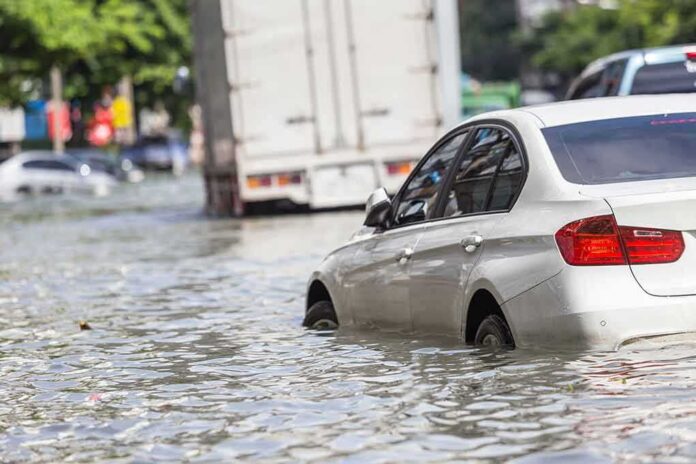
Bangkok declared all 50 districts a disaster zone after days of heavy rain left roads under water and thousands seeking shelter.
Story Snapshot
- Authorities named the entire city a disaster area amid widespread flooding.
- Rainfall in many areas topped 30 centimeters since Thursday, swamping streets.
- Officials opened more than 200 shelters as evacuations rose into the thousands.
- Water levels in key canals stayed high even as some rain eased.
Citywide Disaster Declaration and Immediate Impact
Bangkok’s governor declared the capital a disaster-affected zone on Saturday after torrential rain flooded roads, homes, and transit routes across the metropolis. The decision covered all 50 districts and aimed to speed support and emergency work. Officials said the downpours had continued since Thursday, creating long traffic tie-ups and closing some routes. Video from the scene showed vehicles stuck and neighborhoods soaked as crews worked to move water and protect low-lying areas.
Accumulated rainfall in many parts of the city since Thursday exceeded 30 centimeters, or about 12 inches, according to officials cited by the Associated Press. The heavy rain overwhelmed drains and pooled on major roads. Thailand’s Meteorological Department warned that the system would bring more rain through Sunday, keeping the risk of flash flooding high in Bangkok and nearby provinces. By the weekend, parts of the central region beyond the capital also faced rising water.
Evacuations, Shelters, and Canal Conditions
City leaders opened more than 200 shelters and said about 4,200 people had moved in as floodwaters reached homes in several districts. Crews used pumps and cleared debris to help drains work faster. Officials warned that water levels in Bangkok’s main canals stayed high, which slowed efforts to move water out of crowded neighborhoods. Authorities urged residents to avoid flooded roads, check local alerts, and prepare for possible short-notice evacuations while pumps ran at full capacity.
National officials tracked the wider toll as the storm stretched across multiple provinces. More than 84,000 people in 21 provinces had been affected as of Saturday, with the central region bearing much of the impact. Rail, bus, and air links continued to operate, but delays and detours were common near waterlogged zones. Emergency teams tended to flooded schools and clinics, while utility workers tried to protect power and communications gear placed near ground level.
Why Bangkok Floods So Easily, and What Comes Next
Bangkok sits on a low-lying delta with dense, paved neighborhoods and aging drains that struggle in extreme rain. Experts in recent years have warned that higher rainfall now exceeds the city’s designed drainage rates and that land subsidence and blocked canals raise the flood risk in many districts. Those long-term pressures turn a multi-day storm into a wider crisis, even when crews act fast. The latest event again showed how hard it is to move water when canals and streets fill at the same time.
Officials said they would keep pumps running, clear storm debris, and monitor tides and canal levels to speed drainage where possible. Residents were told to follow city alerts for route closures and shelter openings. As rain eases, the focus will shift to cleanup, damage checks, and restoring services. Local planners and engineers have said the city needs more green space to soak up water and upgrades that match today’s storms, not the rainfall patterns of decades past.
Sources:
youtube.com, abcnews.com, apnews.com, washingtonpost.com, taipeitimes.com