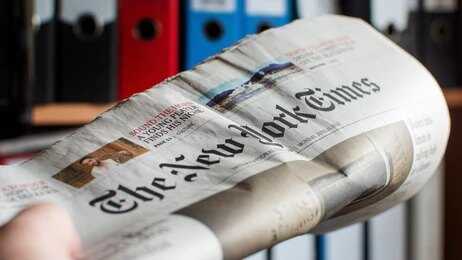
Four New York Times reporters have been ordered before a secret grand jury days after exposing security gaps on the new Air Force One, raising fresh fears that the government is punishing watchdogs instead of fixing risks.
Story Snapshot
- Trump’s Justice Department subpoenaed four New York Times journalists who reported on security concerns with the new Air Force One.
- The subpoenas seek grand jury testimony in Manhattan, likely about their confidential sources and what information was shared.
- The new, Qatari-gifted jet reportedly lacks some defensive systems and forced Secret Service to move Trump back to the older plane during a Turkey trip.
- Critics say the move fits a broader pattern of using leak laws and new Justice Department rules to pressure the press instead of fixing government failures.
What Happened To The New York Times Reporters
The Trump administration’s Justice Department sent subpoenas on Friday to four New York Times reporters who wrote about security problems on the new Air Force One. The orders require them to appear before a federal grand jury in Manhattan this Wednesday, a secret proceeding where prosecutors can ask about their sources and reporting. The New York Times called the move “brazen,” saying it is meant to intimidate journalists who revealed flaws in a key symbol of American power.
Associated Press and local outlets report that the subpoenas came just days after the paper’s detailed story on the jet’s defenses. That story said the new presidential jet, a Boeing 747 valued near $400 million and provided by Qatar, was retrofitted with fewer defensive countermeasures than the current Air Force One. The timing worries many readers on both the right and the left who already feel the government punishes whistleblowers and reporters instead of cleaning up its own mess.
Why The New Air Force One Is Sparking Security Fears
The earlier New York Times investigation explained that several officials involved in the retrofitting process warned that the new jet would not match the full defensive suite of the older aircraft. Those officials, who asked for anonymity, described compromises to some “less frequently used mission capabilities,” a polite way of saying certain protections were dialed back. The Air Force itself later admitted these tradeoffs, confirming that at least some concerns raised in the story came from official channels, not stolen secret files.
One vivid episode captured public attention and fueled doubts about the government’s choices. During a recent trip that took President Trump through Turkish airspace near Iran, the Secret Service reportedly insisted he switch back to the older Air Force One for the flight home. Agents were worried about the new jet’s ability to withstand a serious threat so close to a hostile regime. That kind of last‑minute scramble reinforces the sense that leaders accepted a cheaper or politically useful plane while gambling with security, then turned their anger on the messengers who told the country.
Press Freedom, Leak Laws, And A Divided Public
These subpoenas do not come out of nowhere. Last year, the Attorney General changed Justice Department rules to again allow subpoenas and search warrants against journalists in leak cases, scrapping Biden‑era protections. Soon after, the department tried to force reporters from the Washington Post and Wall Street Journal to testify in a sealed national security case, then pulled back after a behind‑the‑scenes legal fight. Press freedom groups say this trend shows the government is more eager to hunt sources than to repair deep security failures.
The New York Times says its Air Force One story relied on officials familiar with the retrofitting, not on stolen documents, and there is no public proof that the reporters themselves leaked classified material. So far, the Justice Department has not released any affidavit or evidence tying the four journalists to specific secret files. That silence lets each side fall back on its fears. Many conservatives see a government that hides behind “national security” while being sloppy, wasteful, and cozy with foreign money. Many liberals see a government that shouts “America First” while silencing critics and widening the gap between the powerful and everyone else.
Deeper Worries About Power, Money, And The ‘Deep State’
The jet at the center of this fight adds fuel to long‑running anger about elites and conflicts of interest. Reports say Trump pushed for a $400 million Boeing 747 gift from Qatar’s ruler, raising questions about foreign influence over something as basic as the president’s safety. Separate disclosures about huge crypto deals with investors from the United Arab Emirates have led many Americans to wonder whether top officials treat the presidency as a business line. When those same officials then subpoena reporters who ask hard questions, it looks less like security and more like self‑protection.
🇺🇸📰Trump subpoenas NYT reporters over Air Force One
(He should subpoena Bibi for telling him Iran planned to assassinate him. Presumably to restart the Iran war).
The Trump admin has issued subpoenas to several New York Times journalists, ordering them to appear before a… pic.twitter.com/ip9Y5SpRfY
— Càitrin Níall (@Kate03986) July 11, 2026
People across the political spectrum feel trapped between failing institutions and weaponized laws. Long‑time conservatives are tired of global deals, risky energy choices, and trillions in debt, while long‑time liberals are tired of cuts to social support, mass deportations, and growing inequality. Both groups see a government that often protects itself first. Using grand jury secrecy to pull journalists into leak probes about a flawed, foreign‑linked Air Force One fits a broader pattern: instead of owning mistakes and fixing systems, leaders tighten control over information and ask citizens to simply trust them.
Sources:
washingtontimes.com, facebook.com, x.com, abcnews.com, nytimes.com, washingtonpost.com, politico.com, ballardspahr.com, justsecurity.org, pressfreedomtracker.us, justice.gov