

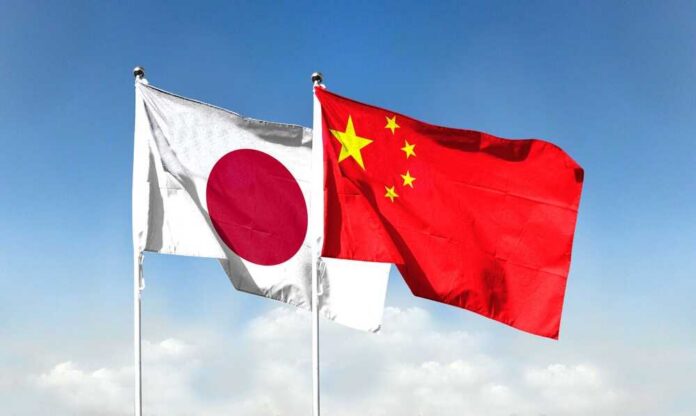
Japan shatters its post-WWII military taboo by firing offensive missiles overseas, provoking fierce Chinese condemnation and signaling a bold stand against Beijing’s regional aggression.
Story Highlights
- Japan’s Self-Defense Forces fired two Type 88 missiles on May 6, 2026, sinking a Philippine target ship 75 km offshore in the South China Sea—first such overseas offensive launch since WWII.
- Part of largest-ever Balikatan exercises with 17,000 troops from US, Philippines, Japan, and allies, just 400 km from Taiwan.
- China’s Foreign Ministry blasts action as “remilitarization” by “right-wing forces,” invoking WWII history and warning of threats beyond self-defense.
- Defense Minister Yoko Takaichi, a conservative hawk, oversees pivot from passive defense amid rising Chinese assertiveness in South China Sea and Taiwan Strait.
Missile Launch Breaks Historic Constraints
Japan’s Self-Defense Forces executed the launch during Balikatan 2026 exercises in Ilocos Norte, northern Philippines. Two Type 88 surface-to-ship missiles struck and sank a decommissioned Philippine Navy corvette. This marked Japan’s first overseas offensive missile firing since World War II, defying Article 9’s self-defense-only limits. Japanese and Philippine defense ministers observed, underscoring allied commitment. The move counters China’s South China Sea encroachments, prioritizing deterrence over historical passivity.
China’s Sharp Diplomatic Rebuttal
China’s Foreign Ministry spokesperson Lin Jian condemned the launch on May 6 afternoon. He accused Japan of breaching its “exclusively defense-oriented policy” under right-wing influence. Statements invoked Japan’s WWII invasions of the Philippines and Southeast Asia, urging reflection on “historical crimes.” Global Times called it a “dangerous gamble” and “postwar taboo” breaker. China views this as preparation for collective defense against its Taiwan ambitions, heightening Indo-Pacific tensions.
Strategic Context and Allied Coordination
Balikatan 2026, the largest since the 1990s, involves 17,000 personnel from US, Australia, France, New Zealand, Canada, Japan, and Philippines. First Japanese combat deployment to Philippine soil since WWII occurred here, 400 km from Taiwan. Triggered by Defense Minister Takaichi’s November 2025 warning of Taiwan intervention, it responds to China’s trade restrictions and travel warnings. Exercises demonstrate interoperability, validating US-led alliances against Beijing’s expansionism and safeguarding navigation freedoms.
Implications for Regional Power Balance
The launch accelerates Japan’s shift to active security role, potentially normalizing overseas operations. Short-term, it risks Chinese economic retaliation on Japanese exports. Long-term, expect boosted defense spending, arms race dynamics, and US-Japan-Philippines triangle reinforcement. Conservatives hail it as necessary deterrence; critics fear militarization. Both sides share frustration with aggressive powers upending stability, echoing American concerns over elite-driven globalism eroding sovereignty and security.
Japan Fires Missiles during Drills, Drawing China Rebukehttps://t.co/zwAPj3EEyf
— Asharq Al-Awsat English (@aawsat_eng) May 7, 2026
Broadening Geopolitical Signals
This event strengthens hawks like Takaichi, fueling domestic support for constitutional changes. Philippines gains security edge against South China Sea threats, balancing Chinese economic sway. US Indo-Pacific strategy gains validation through multinational readiness. While China cries foul, the display deters adventurism, aligning with principles of strong alliances and self-reliant defense that resonate across political divides frustrated by weak responses to authoritarian overreach.
Sources:
Japan fires missiles during drills, drawing China rebuke – Arab News
Japan’s missile launch in Philippine exercise draws rebuke – Global Times
Japan fires missiles in joint drills with US, Philippines – Channel NewsAsia