
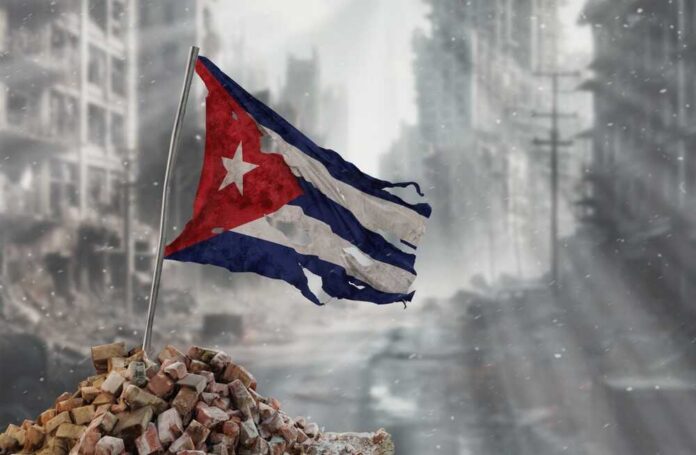
Trump’s May Day sanctions on Cuba are forcing Havana’s rulers to choose between reform and deeper isolation—while they blame “collective punishment” for a crisis they can’t control.
Quick Take
- President Donald Trump signed a May 1 executive order expanding sanctions tied to repression in Cuba and threats to U.S. national security and foreign policy.
- The order targets foreign nationals, groups, and businesses involved in Cuba’s defense, mining, finance, and security sectors, aiming to deter outside support for the regime.
- Cuban President Miguel Díaz-Canel and Foreign Minister Bruno Rodríguez condemned the move as “collective punishment” and alleged it violates international norms.
- The sanctions follow a near-total U.S. fuel blockade reported earlier in 2026, intensifying pressure amid Cuba’s ongoing economic breakdown.
What Trump’s May 1 order does—and who it’s designed to hit
President Donald Trump signed an executive order on May 1, 2026—International Workers’ Day—imposing additional sanctions connected to Cuba’s repression and what the administration describes as threats to U.S. national security and foreign policy. Reporting on the order says it targets foreign nationals, groups, and businesses operating in or enabling key Cuban sectors, including defense, mining, finance, and security. The practical goal is to tighten the regime’s access to outside capital, services, and intermediaries.
Because the order focuses on non-U.S. actors supporting sensitive sectors, the pressure is aimed at the ecosystem around the Cuban state, not just Havana’s officials. That design can matter: it signals to third-country companies that even indirect ties to certain Cuban entities can bring consequences. For U.S. policymakers, it’s also a familiar tool when Congress is gridlocked or diplomacy stalls—executive authority moves faster, even as critics argue it can bypass broader debate.
Havana’s response: “collective punishment” and a new round of propaganda leverage
Cuban President Miguel Díaz-Canel publicly condemned the sanctions on May 2, framing them as dangerous and unprecedented. Foreign Minister Bruno Rodríguez went further, labeling the measures “unilateral coercive” actions and “collective punishment,” and claiming they violate the UN Charter. The timing matters politically: May Day is a centerpiece of Cuba’s state messaging, giving the government a ready-made stage to cast the United States as an external villain during a period of internal hardship.
The Cuban government’s narrative focuses on harm to ordinary people, but the U.S. rationale presented in coverage centers on repression and security threats. Those dueling claims are hard to resolve from public statements alone, and the sources available offer limited third-party verification beyond official statements and the text of the U.S. order. Still, the pattern is consistent with decades of U.S.-Cuba tensions: Washington uses sanctions to constrain the state, while Havana uses the sanctions to rally support and excuse failures.
How this escalation fits a bigger 2026 pressure campaign
The May 1 action did not occur in a vacuum. Reporting describes a near-total U.S. fuel blockade imposed in January 2026, a step that would predictably tighten energy availability on an island already struggling with shortages. Another reported milestone came in April, when the United States set a two-week deadline tied to regime concessions, and Cuba resisted while insisting “regime change” was not on the table. The May 1 sanctions then landed as a more formal expansion of pressure.
For conservatives wary of endless foreign entanglements, sanctions sit in a complicated middle ground: they can deter bad actors without deploying troops, but they can also deepen humanitarian stress if a regime shifts costs onto civilians. The best measure of effectiveness is whether sanctions change elite behavior rather than merely shrink an economy.
Economic ripple effects: chilling foreign investment while Cuba’s crisis worsens
Targeting the defense, mining, finance, and security sectors is likely to spook international firms that might otherwise provide equipment, insurance, shipping support, financing, or joint-venture participation. Even companies not named can react defensively when compliance risk rises. That matters because Cuba’s economy is already described in coverage as being under severe strain, and the government’s ability to stabilize energy supply, currency conditions, and basic goods has been deteriorating amid public frustration and repression claims.
The issue also ties into broader distrust of “elite” systems that seem unaccountable. When sanctions regimes become complex, they can create loopholes for well-connected intermediaries while ordinary people—both in Cuba and in the U.S. economy—absorb the knock-on costs. Transparency about enforcement priorities and clear definitions of targeted entities help reduce that risk.
Military rhetoric raises stakes even if no action follows
One reported flashpoint is Trump’s rhetoric hinting at military options, including references to naval power such as the USS Abraham Lincoln aircraft carrier. Even if the remarks are meant as deterrence, that kind of signaling can increase the odds of miscalculation, especially when a regime feels cornered. The reporting reviewed does not describe additional U.S. action after May 2, and it does not confirm any deployment orders connected to Cuba beyond public comments.
Cuba president condemns additional sanctions imposed by Trump administrationhttps://t.co/G6OxQAtQUl
— MSN Canada (@MSNca) May 3, 2026
For many voters in 2026—right, left, and politically exhausted in the middle—this episode underscores a shared complaint: Washington’s foreign-policy tools can feel disconnected from everyday accountability. Supporters want firmness against repressive regimes and protection of U.S. security interests; critics worry about economic fallout and mission creep. With limited publicly reported details beyond the executive order and official reactions, the key watch points are enforcement guidance, corporate compliance shifts, and whether Havana changes course or hardens further.
Sources:
Cuba denounce Trump May Day sanction “collective punishment”