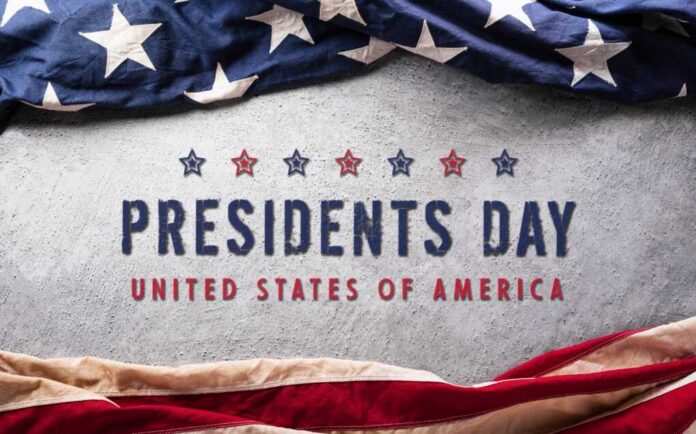
A viral “gotcha” about Democrats allegedly omitting President Trump from a President’s Day postcard is spreading fast—even though the underlying postcard itself remains unverified.
Story Snapshot
- No credible reporting has confirmed that a Democratic Party President’s Day postcard “missing someone” was actually sent or widely distributed.
- Verified postcard controversies in 2025–2026 center on election messaging and mistakes—especially in Montana and Wisconsin—not a national Democratic holiday mailer.
- Montana’s secretary of state sent a state-funded election-security postcard featuring Trump and warnings about non-citizen voting, triggering a formal complaint and legislative questions.
- Wisconsin saw liberal-backed postcards listing the wrong election date, showing how mailers can confuse voters and fuel suspicion in heated swing-state politics.
- The White House’s Valentine-themed posts in February 2026 added more partisan fuel online, highlighting how quickly political “cards” become viral weapons.
What’s Known—and What Isn’t—About the “Missing Someone” Postcard
Online posts claim Democrats circulated a President’s Day postcard that conspicuously left someone out—commonly implied to be President Donald Trump during his second term. The problem: available reporting does not confirm such a Democratic postcard exists, nor does it establish who produced it, where it was mailed, or what the exact design contained. Without a verifiable mailer, the story functions more like a social-media narrative than a documented political event.
That uncertainty matters because political mail is easy to spoof, selectively crop, or misattribute—especially when screenshots circulate without provenance, a sender name, postage marks, or a clear distribution footprint. In a political climate shaped by distrust, people understandably jump to conclusions that fit their priors. But when the evidence isn’t pinned down, responsible analysis has to separate what can be proven from what’s simply being amplified for partisan effect.
Montana’s Verified Postcard Fight: Election Messaging, State Funds, and Transparency
While the President’s Day omission claim is murky, Montana provides a verified example of postcard politics driving real controversy. Reporting describes an election-related postcard distributed by Montana Secretary of State Christi Jacobsen that included President Trump’s photo and messaging warning that “only citizens should be allowed to vote.” The mailing prompted a formal complaint and questions from Democrats about whether state resources were used to advance a political narrative.
The Montana dispute also highlights a core issue voters care about: transparency in how government communicates with citizens. The complaint process and legislative inquiries exist for a reason—public money should not be used in ways that appear partisan or misleading. At the same time, Montana’s critics argued the mailer pushed claims that audits generally do not support at scale, noting that non-citizen voting is described as extremely rare in available assessments.
Wisconsin’s Wrong-Date Postcards Show How “Innocent Mistakes” Still Damage Trust
Wisconsin offers a separate, well-documented cautionary tale. A liberal group backed postcards in a Wisconsin Supreme Court race that listed the wrong election date, triggering confusion and rumors. The group characterized the error as an “innocent mistake,” and reporting notes how quickly voters can interpret errors as intentional manipulation—especially in close, high-stakes contests where control of courts and election rules can hinge on a single cycle.
Experts cited in reporting warned that in a heated environment, even routine mistakes can harden into conspiracy theories because people “dig into” what they assume are nefarious motives. That dynamic should worry anyone who values stable elections and constitutional governance. Election integrity isn’t only about stopping fraud; it’s also about ensuring voters receive accurate information from campaigns, advocacy groups, and public institutions so lawful participation is protected.
Why These “Card Wars” Keep Escalating Online
The information ecosystem rewards the most shareable version of events, not the most careful one. That’s why Valentine-themed political posts from the White House in February 2026—featuring pointed messaging on issues like immigration and foreign policy—quickly divided audiences online and became a new round of partisan ammunition. In that atmosphere, an unverified claim about a Democratic President’s Day postcard can travel further than any correction.
Whoopsie! The Democrats' President's Day Postcard Is Conspicuously Missing Someone https://t.co/HSAQqlv1wN
— Twitchy Updates (@Twitchy_Updates) February 16, 2026
For conservatives frustrated by years of institutional bias, spending blowouts, and ideological messaging, the temptation is to treat every viral anecdote as another proof point. The better approach is to demand the same standard we ask of government: show the document, show the sender, show the distribution facts. Verified controversies in Montana and Wisconsin already demonstrate the real stakes—public trust, clean voter information, and the limits of political messaging—without relying on a postcard no one can yet authenticate.
Sources:
https://montanafreepress.org/2026/01/15/about-that-political-postcard-you-got-from-the-secretary-of-state/
https://www.geo.tv/latest/650829-maduro-greenland-immigration-white-house-valentine-post-divides-internet
https://www.wpr.org/news/wisconsin-voters-crawford-schimel-supreme-court-race-postcards-wrong-date
https://www.moneycontrol.com/world/maduro-in-cuffs-greenland-in-a-heart-the-white-house-just-dropped-its-valentine-s-day-cards-made-just-for-you-article-13828248.html
https://english.mathrubhumi.com/news/world/us-white-house-valentines-mtl5duyp