When a Holy Land pilgrimage turned into a night-after-night sprint to bomb shelters, one South Carolina church learned how quickly war can trap ordinary Americans overseas.
Story Snapshot
- About 40–41 members of Calvary Chapel Summerville were stranded in Jerusalem after flights were canceled amid escalating regional conflict and airspace disruptions.
- Church leaders said the group took shelter repeatedly, including reports of roughly 30 shelter trips in a 24-hour stretch, and described missile debris landing near their hotel.
- Pastor Vic Carroll posted updates saying the group was safe and even held a worship service inside a bomb shelter.
- South Carolina elected officials and the U.S. State Department were contacted as evacuation efforts expanded to assist Americans seeking help.
Flights Canceled as Airspace Tightens, Leaving Pilgrims Stuck
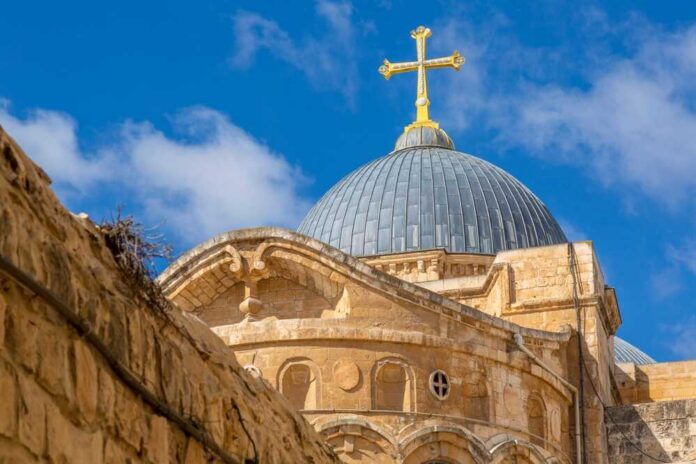
Calvary Chapel Summerville, based in Summerville, South Carolina, sent dozens of members to Israel in late February 2026 to visit major biblical sites, including Jerusalem and the Dead Sea. In early March, the group’s return plans collapsed when their flight was canceled during a rapidly deteriorating security situation that affected air travel across the region. Reports described the group being stopped mid-process at airport security before being forced back to Jerusalem.
Those disruptions came as U.S. officials urged Americans to pay close attention to evacuation guidance and changing conditions. One report said U.S. Ambassador Huckabee issued an urgent notice giving citizens less than 24 hours’ warning, while Israel’s airspace closures and related regional impacts canceled thousands of flights. Secretary of State Marco Rubio was cited as saying roughly 1,500 Americans were seeking help, illustrating that this wasn’t an isolated travel nightmare.
Missile Alerts and Bomb Shelters Replace the Original Itinerary
Church leaders described the group’s days and nights being punctuated by alerts and repeated moves into shelters. Assistant Pastor Charles Timmerman, coordinating from South Carolina, said missile debris landed roughly 300 yards from the group’s hotel and that members went to bomb shelters around 30 times in 24 hours. Accounts also said the group sheltered multiple times as explosions were heard over Jerusalem during the escalation, underscoring how quickly a pilgrimage became a crisis.
Pastor Vic Carroll, who was with the group, emphasized safety and faith in public updates. He said the group was safe and “trusting in the Lord,” and he described holding church in the bomb shelter. In interviews, that shelter service was framed as a meaningful moment under pressure—an example of how faith communities often respond when government systems, airlines, and normal routines are suddenly overwhelmed by conflict and uncertainty.
Community Fundraising and Political Outreach Drive a Private-Sector Response
With commercial travel disrupted, church leadership leaned heavily on fundraising and outreach to officials to cover mounting costs and secure routes home. Reports described a GoFundMe effort targeting about $100,000 and said donations came in quickly to support extended lodging, transportation, and rebooking. The situation also drew attention from South Carolina’s federal delegation, with Senators Tim Scott and Lindsey Graham and Rep. Nancy Mace cited as being involved in efforts to help constituents navigate an unstable evacuation environment.
Uncertainty on Exit Routes Highlights the Limits of Real-Time Information
As of March 5, 2026, reporting indicated the group hoped for flights by Thursday or Friday, though the situation remained fluid and location details were limited for safety. One account suggested the group may have made it out of Israel into another Middle Eastern country. That gap matters because it reflects a hard reality in modern crises: families at home often depend on partial updates while decisions are made in real time.
What This Episode Says About Americans Abroad in a More Dangerous World
This story resonates with many Americans because it shows how fast ordinary citizens can be caught between geopolitical forces they didn’t create and can’t control. It also highlights the importance of clear, constitutional governance at home—an administration’s first duty is protecting Americans, including those traveling abroad. When conflict closes airspace and strains resources, families end up relying on churches, neighbors, and local leadership to fill the gaps while federal evacuation systems scale up.
For churches and tour groups, the practical takeaway is straightforward: build contingency plans before travel, including emergency communications, funds for extended lodging, and clear procedures for contacting U.S. officials. For the broader public, the episode is a reminder that “global” instability doesn’t stay global for long. It reaches straight into American living rooms—through late-night phone calls, canceled flights, and anxious prayers—when citizens are stranded in a war zone.