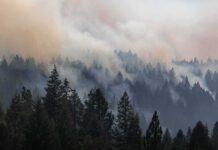
President Donald Trump is turning hazardous wildfire smoke into a trade weapon, vowing to bill Canada for America’s dirty air through higher tariffs.
Story Snapshot
- President Trump accused Canada of “willful negligence” in managing its forests and wildfire debris, blaming it for dangerous smoke in U.S. cities.
- He says the smoke is costing Americans “billions of dollars” and wants that cost added to tariffs Canada already pays on its exports.
- Republican lawmakers in Michigan and other northern states are backing Trump, pointing to repeated summers of bad air from Canadian fires.
- Experts and Canadian officials say wildfire smoke crosses borders because of weather and climate, and warn tariffs will not fix the underlying problem.
Trump Blames Canada and Ties Wildfire Smoke to Tariffs
President Donald Trump used a Truth Social post and public remarks to say he is “holding Canada responsible” for thick wildfire smoke hanging over parts of the Midwestern and eastern United States. He charged that Canada is not “properly maintaining” its forests and brush and called that “willful negligence” that lets fires burn and smoke drift south. He described the air as filthy, polluted, unhealthy, dangerous, and totally unacceptable for millions of Americans breathing it.
Trump went further by treating the smoke as an economic injury, claiming it is costing the United States “billions of dollars” in health, business, and daily life. He said the “cost of this pollution must of necessity be added to the tariffs Canada is currently paying,” signaling that existing import taxes on Canadian goods could rise. Reporting notes he has not released any formal study or government audit that backs up the “billions” figure or shows how the new fees would be calculated.
Plans to Press Prime Minister Carney and Rally Republican Support
Trump said he plans to call Canadian Prime Minister Mark Carney to demand answers about what Canada “is going to do” about the fires and smoke. His post framed the event as a “yearly occurrence,” suggesting Canada is allowing the same crisis to repeat summer after summer without changing its forest practices. In affected states like Michigan, Republican lawmakers have escalated complaints about air quality and backed Trump’s push, telling voters they are fighting for clean air and fair treatment from America’s northern neighbor.
News outlets report that it is unclear how Trump could legally tie specific wildfire costs to higher tariffs beyond those already set in trade law. Trade experts say he could try to use national security or emergency powers, but they warn such a move would likely face court challenges and pushback from businesses that depend on cross-border trade. At the same time, many ordinary Americans in smoke-choked cities see leaders arguing on television while their kids are kept inside and small businesses lose customers, adding to anger at government gridlock.
Health Risks and the Science of Cross-Border Smoke
Scientists and health agencies have spent years studying wildfire smoke and its health impact in both Canada and the United States. Fine particles from burning forests can cause or worsen heart disease, lung problems, and even some cancers, and are linked to thousands of premature deaths per year when exposure is repeated. Public health guides from Canadian and U.S. agencies now treat wildfire smoke as a serious health hazard, advising people to stay indoors, use air filters, and limit outdoor exercise during heavy smoke days.
Trump threatens tariffs on Canada over wildfire smoke. Meanwhile climate experts say both countries need to tackle the root cause: climate change is making fires worse. Tariffs won't clear the air.
— Dr. Leroy Mealancon Jr. (@TheNewsMan94) July 18, 2026
Atmospheric science studies show that smoke and other tiny particles move easily across the Canada–U.S. border with weather systems. A joint assessment by the U.S. Environmental Protection Agency and Canadian authorities found a strong link between emissions in one country and fine particle levels in the other, stressing that “air pollutants know no borders.” Climatologists note that weather “doesn’t stop at the international border,” and wind patterns, drought, and rising temperatures all help explain why smoke from hundreds of fires can reach major U.S. cities.
Competing Narratives: Forest Management vs Climate and Cooperation
Trump’s charge of “willful negligence” focuses almost entirely on forest management and debris removal as the cause of the fires and smoke, without mentioning climate-driven factors like heat and drought. Republican lawmakers in Michigan and elsewhere have echoed that message for several summers, saying Canada is failing to clear brush or thin forests and should pay when the smoke harms American communities. Critics respond that these claims often lack specific evidence of broken rules or ignored standards and risk turning a shared disaster into a political blame game.
Canadian officials and many experts frame the situation very differently, pointing to climate change, lightning strikes, and fires in remote areas far from logging roads. Coverage shows Canadian leaders calling U.S. attacks “political theater” and highlighting past cooperation, including American firefighters helping in Canada and Canadian crews dying while assisting with U.S. fires. Environmental lawyers stress that major disputes over cross-border pollution have usually been handled through diplomacy under the Canada–U.S. Air Quality Agreement, not tariffs, because both countries create pollution and both suffer when the air turns toxic.
Shared Frustration with Elites and the Limits of Tariff Politics
For many Americans, this fight fits a pattern: elites argue over who to blame while regular people cough through orange skies and wonder who is truly looking out for them. Conservatives who feel global bodies and green rules have raised costs see Trump’s stand as overdue accountability for a foreign government they think has shirked its duties. Liberals who fear climate damage and cuts to social programs see another distraction from deeper problems, like rising temperatures and weak help for workers and the poor.
Non-partisan experts warn that turning smoke into a tariff weapon may heat up political talk but will not cool down the fires. They say both countries need serious investments in forest resilience, firefighting capacity, and climate action, along with honest data on health and economic damage. The bigger concern, shared across much of the political spectrum, is that while leaders trade insults and threats, the basic promise of safe air, fair work, and a livable future slips further out of reach, and trust in the federal government erodes even more.
Sources:
cbsnews.com, bbc.com, cnn.com, lethbridgenewsnow.com, cbc.ca, insidetrade.com, ccnse.ca, climateinstitute.ca, pmc.ncbi.nlm.nih.gov, youtube.com, canada.ca, epa.gov, ca.news.yahoo.com