

One of the largest sewage spills in U.S. history has turned the Potomac into a public-health hazard—and President Trump just ordered FEMA to take charge after weeks of finger-pointing.
Story Snapshot
- A sewer pipe collapse on January 19 dumped more than 200 million gallons of raw sewage into the Potomac River system.
- Testing found E. coli levels far above safe standards, triggering advisories for people and pets to stay out of the river.
- President Trump directed FEMA and federal authorities to take over coordination on February 16, calling it an ecological disaster.
- Maryland Gov. Wes Moore’s office argues the key sewer line is federally operated and says the state responded within hours.
- DC Water estimates a 4–6 week interim fix and a longer nine-month rehabilitation plan for the aging Potomac Interceptor.
Trump Orders FEMA Coordination as Potomac Contamination Spreads
President Donald Trump said Monday, February 16, that the federal government will assume management and coordination of response efforts to the massive Potomac River sewage spill. Trump announced the move on Truth Social and said the situation amounted to a “massive ecological disaster,” arguing that local leadership had failed to contain it. FEMA’s involvement places federal assets and interagency authority at the center of the cleanup and public-safety messaging.
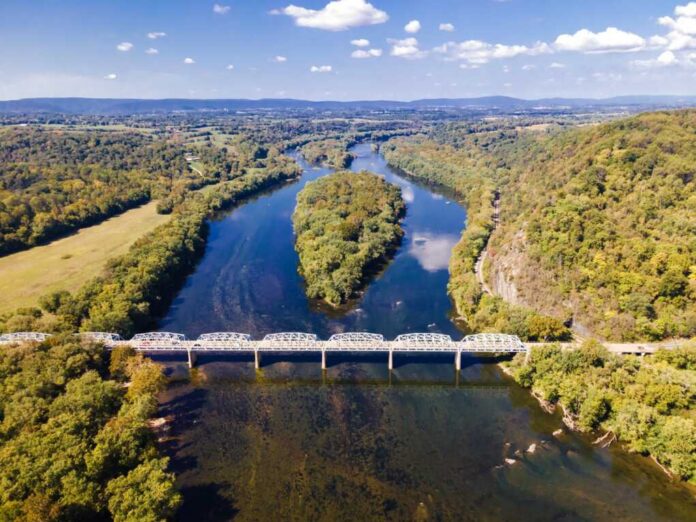
The spill began January 19 when a pipe near the I-495 and Clara Barton Parkway interchange collapsed in Montgomery County, Maryland. Wastewater spilled into the ground, the C&O Canal, and the Potomac River, pushing contamination downstream through a waterway that serves the nation’s capital region. Reports put the release at over 200 million gallons, with some estimates closer to 250 million—numbers that help explain the sweeping warnings now covering multiple jurisdictions.
The federal government is now stepping in to address the 243.5 million gallon sewage spill disaster into the Potomac River 🚨
Emergency repairs are expected to last about six weeks, according to DC Water. The sewer line collapsed on January 19th in Montgomery County, Maryland. pic.twitter.com/cFBMFbXFJA
— The DC MD VA Live (@TheDMVLive) February 17, 2026
A 1960s-Era Interceptor Line Is at the Center of the Dispute
Attention has focused on the Potomac Interceptor, a major sewer system built in the early 1960s that carried about 60 million gallons of wastewater per day to the Blue Plains Advanced Wastewater Treatment Plant. That age matters because it underscores the vulnerability of essential infrastructure that has been operating for decades under heavy load. The current break has also triggered a jurisdictional fight over accountability that complicates public trust.
Maryland Gov. Wes Moore’s office pushed back on Trump’s criticism by saying the federal government has been responsible for the Potomac Interceptor “since the last century.” The governor’s team also said Maryland personnel were on site within hours and signaled they would work collaboratively if federal officials are now taking a more direct role. Trump, meanwhile, framed the takeover as necessary because he believes regional Democratic leaders mishandled the crisis.
Public-Health Warnings Intensify After Extreme E. coli Results
Health concerns escalated after testing found extreme bacterial contamination. DC Water testing detected E. coli levels nearly 2,000 times higher than safe standards, while University of Maryland testing in the immediate aftermath found readings up to 10,000 times higher. Officials across Prince George’s and Montgomery counties, Washington, D.C., and parts of Virginia issued advisories warning residents to avoid the river, particularly to keep children and pets away.
Officials have also tried to draw a clear line between recreational contact and drinking-water safety. Public health messaging reported in coverage said the spill did not have a major impact on local drinking water quality, but residents were discouraged from using or entering the Potomac itself. As temperatures rise, authorities have warned that bacteria that may have been slowed by colder conditions could pose greater risks, making timing and transparency critical.
Emergency Engineering, Interim Repairs, and a Longer Nine-Month Fix
Response work has included emergency measures designed to stop additional sewage from entering the river system and to reroute flow while repairs proceed. Coverage described federal employees building a cofferdam to redirect sewage, with high-capacity pumps operating at the site and more expected to come online. Local authorities also constructed an alternative route for water flow earlier in the response, reflecting the immediate need to stabilize the system.
DC Water has said an interim solution is expected to take roughly 4–6 weeks. Longer-term, plans call for a nine-month “slip-lining” program intended to rehabilitate the aging line. University of Maryland’s School of Public Health described the incident as one of the largest sewage spills in U.S. history, a label that elevates the stakes for both government competence and infrastructure planning. Hard numbers and timelines will be the yardstick for success.
Federal Intervention Raises Accountability Questions for the Region
The political clash is also a governance test: when a critical system crosses local, state, and federal lines, voters expect clear responsibility, not bureaucratic buck-passing. Trump’s move places the federal government squarely on the hook for coordination going forward, while Maryland’s response highlights the complexity of who “owns” aging assets versus who bears the public consequences when they fail. With advisories still active, cleanup progress will matter more than press statements.
So far, the public record in available reporting supports two realities at once: the contamination has been severe enough to warrant multi-state warnings, and competing officials are disputing who should have acted sooner on infrastructure they each describe differently. The next several weeks—through the interim repair window—should clarify whether FEMA-led coordination speeds communication, accelerates engineering work, and restores safe access to the Potomac. Until then, the risk to families and local communities remains the central concern.
Sources:
Trump Deploys FEMA to Control Potomac River Sewage Spill; Blames Democratic Leadership
Potomac River sewage spill: E. coli contamination prompts warnings as Trump says FEMA will handle response