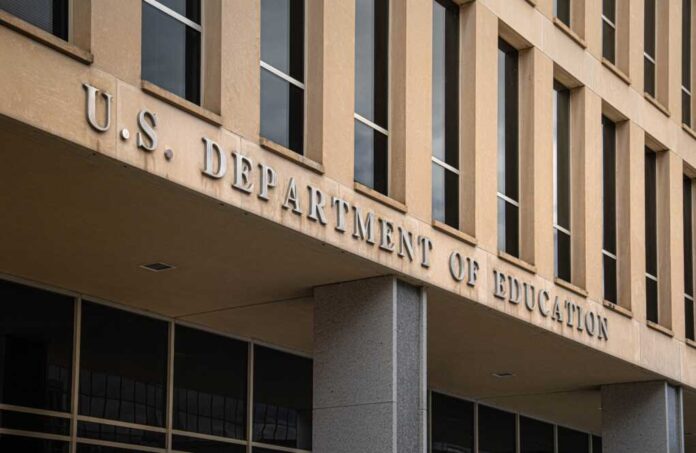
President Trump’s move to dismantle the Department of Education is igniting fierce debate as it promises to end decades of federal control, returning power to states—and sparking concerns among those who see this as both a victory for local values and a threat to vulnerable students.
Story Snapshot
- President Trump signs an executive order to dismantle the Department of Education, shifting authority back to the states.
- Federal funding for key programs like Title I and Head Start faces elimination, raising alarms about impacts on disadvantaged students.
- The administration pledges to cut “woke” policies and red tape, vowing to empower parents and uphold traditional values in education.
- Critics warn of job losses, increased class sizes, and diminished civil rights protections for students, while supporters hail the return of local control.
Trump Dismantles Federal Education Bureaucracy, Citing Constitutional Principles
In March 2025, President Trump issued a sweeping executive order to begin dismantling the Department of Education, a move long demanded by conservatives who see federal overreach as detrimental to American schools. The administration contends that education is a state and local responsibility, not a federal one, and argues that decades of centralized control have failed students and families. By closing the Department, Trump aims to empower communities to make decisions reflecting local values, restoring what he calls “common sense” and “parental rights” to education policy.
Administration officials stress that this action will not abruptly cut off funding for students who rely on federal programs. Instead, they plan a managed transition, sending resources directly to states as block grants with fewer restrictions. Secretary of Education Linda McMahon emphasized that teachers will be “unshackled from burdensome regulations,” allowing them to focus on core subjects instead of progressive social experiments. The administration frames this as a win for taxpayers, promising to eliminate waste and ensure that parents and local leaders—not unelected bureaucrats—shape the future of education.
Controversy Over Program Cuts and Civil Rights Protections
Despite administration assurances, education groups and some local officials warn that eliminating federal oversight could have dire effects, especially for vulnerable students. Project 2025, the policy roadmap guiding these changes, proposes cutting Title I funding, Head Start, and universal free school meals. Education researchers, including Randi Weingarten of American Federation of Teachers, argue that such cuts could disproportionately affect low-income children and strain already limited school resources. Civil rights groups, including the Leadership Conference on Civil and Human Rights, warn that closing the Department’s Office for Civil Rights could weaken enforcement of federal protections against discrimination in schools.
Unions and education advocates highlight the risks of removing federal standards for student rights and teacher quality. They warn that merit pay schemes, favored by the Trump administration, may unfairly penalize teachers working with disadvantaged students, and note that opposition to diversity, equity, and inclusion (DEI) initiatives could leave some children behind. The debate has reignited longstanding tensions over the role of Washington in ensuring educational equity while respecting state sovereignty and parental authority.
Return to State Control: Conservative Victory or New Challenges?
Many conservatives welcome the decision as a long-overdue correction to decades of left-wing social engineering in schools. Supporters argue that federal mandates have eroded local control, pushed radical agendas, and saddled communities with unnecessary costs. By restoring state and parental authority, they see an opportunity to refocus education on basics like reading, math, and civics—free from what they view as government overreach and indoctrination.
President Trump signs executive order to dismantle Department of Education, delivering a devastating blow to mass Marxist indoctrination, forced Child Tranz ideology, woke Afrocentric revisionism, DEI, CRT, and anti-White racism. The Global Communist agenda took a major L today. pic.twitter.com/pxs2GDHCIV
— Robert Sepehr (@robertsepehr) March 20, 2025
However, the transition is not without challenges. States will now have to manage complex funding and policy decisions without federal guidance, and disparities between wealthy and poor districts could widen if oversight lapses. The debate underscores a deep divide over who should set education priorities in America, and whether rolling back federal power will strengthen or undermine the nation’s schools in the long run.
Sources:
How Project 2025 Would Devastate Public Education | NEA
Trump signs executive order dismantling the Department of Education
Statement on President Trump’s Executive Order to Return Power …
EXECUTIVE ACTIONS CHART: EducationCounsel’s Summary and …
Improving Education Outcomes by Empowering Parents, States, and …