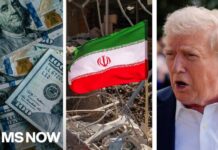

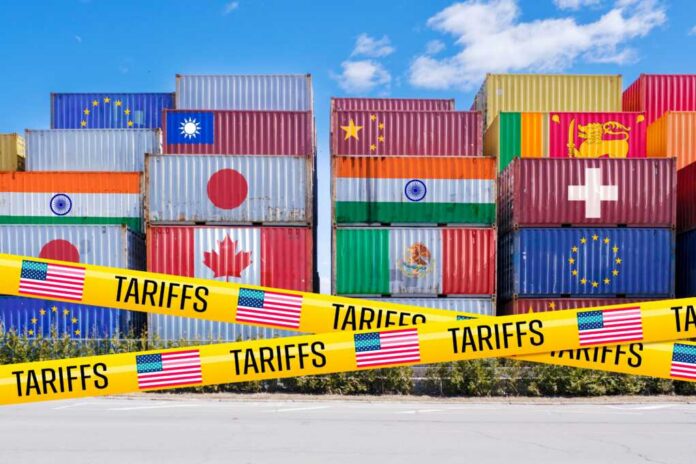
When a White House uses the moral horror of forced labor to justify new taxes on nearly everything Americans buy from 60 trading partners, many voters see less a crusade for human dignity than another power play by a government that keeps treating them as collateral damage.
Story Snapshot
- The Trump administration has opened Section 301 forced-labor investigations covering about 60 economies and is signaling tariffs of 10–12.5% or more on most imports once probes conclude.[2][4]
- The move effectively rebuilds a broad tariff wall after the Supreme Court struck down Trump’s earlier “Liberation Day” tariff regime as beyond his emergency powers.[4][5]
- Targets include not just China and Russia but close allies such as Canada, Mexico, Japan, South Korea, the United Kingdom, and the European Union.[2][3][4]
- Supporters see long-overdue enforcement against goods tainted by forced labor, while critics say the evidence is thin and the policy mainly restores a collapsed tax-and-tariff machine.[2][4][6][7]
What the new forced-labor tariff push actually does
The Office of the United States Trade Representative (USTR), led by Jamieson Greer, has formally launched Section 301 investigations into “forced-labor practices in 60 economies,” including the European Union and China.[1][3] These probes allege that foreign governments have failed “to impose and effectively enforce a ban on the importation of goods produced with forced labor.”[3] Under Section 301 of the Trade Act of 1974, such findings can justify new tariffs or import restrictions once the investigation and comment process is complete.[3][4]
Reporting indicates the administration is now proposing additional tariffs of roughly 10–12.5% on imports from most of these partners once the investigations finish, framing them as a response to unfair trade rooted in forced-labor-linked supply chains.[7] The list reaches across nearly the entire global economy, covering major partners such as Canada, Mexico, Brazil, Japan, South Korea, Indonesia, Malaysia, and the European Union.[2][3][4] For American businesses and consumers, that means another round of broad price hikes filtered through higher import taxes.[1][2]
How this connects to Trump’s broader tariff “rebuild”
This new front opens just months after the Supreme Court struck down Trump’s earlier “Liberation Day” tariffs, which had imposed a 10% baseline duty on almost all imports and even higher “reciprocal” rates—up to 50%—on countries with large trade deficits with the United States.[4][5] The Court ruled that the International Emergency Economic Powers Act did not give presidents authority to impose sweeping tariffs, forcing Customs to begin refunding those duties and tearing down a key pillar of Trump’s trade strategy.[4]
Analysts note that the Section 301 forced-labor probes are part of a deliberate attempt to “rebuild tariff pressure” using a different legal hook that Congress has clearly authorized for unfair-trade cases.[2][4] Instead of an emergency declaration, USTR now alleges that foreign failures to block forced-labor goods burden United States commerce, giving the administration a new statutory path to reimpose broad tariffs.[3][4][6] To many Americans, this looks like classic Washington behavior: when one door is closed by the courts, the political class quietly finds another way to extract revenue and leverage without fixing deeper economic problems.
Supporters’ argument: moral enforcement and American jobs
Backers of the move, including some American worker, farmer, and manufacturer groups, argue that forced labor abroad undercuts honest United States producers and mocks basic human rights.[6][7] They say foreign governments have looked the other way as goods made with coerced labor in third countries flow into their markets and then into the United States, depressing wages and rewarding abusive employers.[2][3] From this perspective, tariffs become a way to level the playing field and force trading partners to clean up their supply chains or lose access to America’s consumer market.
The USTR press messaging emphasizes an “international consensus against forced labor” and frames the investigations as overdue enforcement rather than protectionism.[2][3][6] For older conservatives angry about factories moving overseas, and older liberals outraged by labor exploitation, the idea of finally punishing companies that profit from forced labor has intuitive appeal. It taps into a shared suspicion that multinational corporations and foreign elites get rich while American workers and vulnerable communities, at home and abroad, pay the price.[2][6][7]
Critics’ concerns: thin evidence, broad targets, real costs
Critics counter that the public record is still at the investigation stage, not the final-finding stage, and that blanket tariffs on 60 partners are being floated before evidence has been fully tested.[2][4][5] The Federal Register notices and press materials outline legal theories but do not yet provide country-by-country data on seizures, prosecutions, or verified forced-labor-linked shipments for each targeted economy.[3][4] Trading partners have begun filing comments pushing back, signaling likely disputes over both the facts and the breadth of Washington’s accusations.[5][6]
TRUMP TARIFF SHOCK MACRO ALERT
Proposed 10%+ tariffs on 60 trading partners, forced-labor cited.
EUR/USD 1.1613
USD/JPY 159.79
USD/INR 95.97
Gold $4,442
WTI $98.64Largest protectionist move since prior regime struck down by SCOTUS. India says talks with Washington active.
— DailyXBT (@dailyxbtlive) June 3, 2026
Opponents also stress that tariffs are a blunt instrument that often function more as hidden taxes on American families than precision tools against abusive factories overseas.[2][4] When the earlier “Liberation Day” and reciprocal tariffs were in force, average United States tariff rates jumped to their highest levels since the Great Depression, raising costs throughout supply chains.[3][5] Both conservatives and liberals who already distrust “globalist” trade deals and concentrated corporate power now see another policy that may squeeze household budgets while lobbyists, lawyers, and large firms figure out how to game the new rules.[4][5]
Why this taps into shared frustration with the federal government
This fight lands in a country where many citizens on both the right and the left believe the federal government serves the interests of a narrow elite rather than ordinary people. Forced labor is real evil, yet Washington’s response once again centers on complex legal maneuvers, hearings, and opaque tariff schedules instead of transparent enforcement that clearly punishes actual offenders.[2][3][4] Voters see major allies and rivals thrown into one giant list and suspect that geopolitical bargaining, not moral clarity, drives the decisions.[2][4][6]
Older conservatives remember promises that tariffs would bring back jobs, yet still see shuttered towns and rising prices.[4][5] Older liberals hear pledges to defend human rights but watch as policies tied to those pledges may deepen inequality between the well-connected and everyone else.[2][4] Both sides can reasonably ask whether a government that struggled to police its own borders, budgets, and corporate influence can be trusted to run a massive moral-tariff regime without it becoming another tool for insiders to exploit. That shared skepticism—not just about trade partners, but about Washington itself—may be the most important political force shaping how these new tariff threats are received.[2][4][6]
Sources:
[1] Web – Trump admin. floats tariffs on 60 trading partners after forced labor …
[2] YouTube – US Starts Second Trade Probe in Trump’s Tariff Policy Revival
[3] Web – Trump administration launches new forced labor investigations into …
[4] YouTube – US launches unfair-trade probes to rebuild tariff pressure
[5] Web – USTR Initiates Section 301 Investigations into 60 Countries Forced …
[6] Web – USTR Launches Broad Section 301 Investigations Into Excess …
[7] Web – U.S. trading partners begin to weigh in on new Section 301 probes