

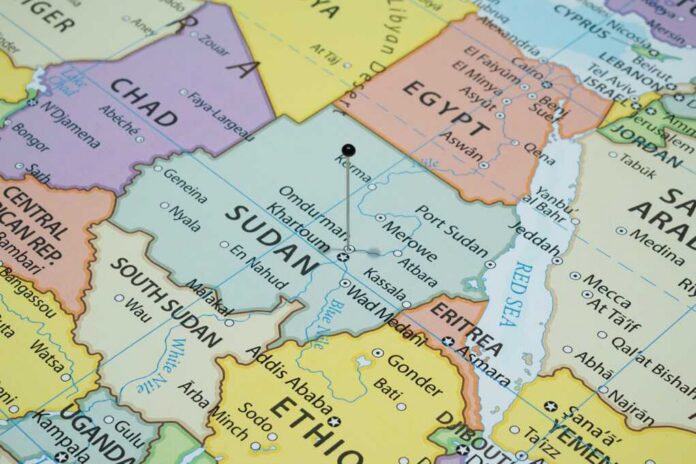
Sudan’s civil war has claimed over 150,000 lives since 2023, topping global crisis lists as a preventable catastrophe fueled by foreign meddling and global indifference—exposing the failures of unchecked globalism.
Story Snapshot
- Sudan’s war between SAF and RSF has killed 150,000+ people, triggered famine, and displaced millions since April 2023.
- IRC ranks Sudan #1 crisis for 2026 due to aid blockages and zero accountability, with daily starvation deaths.
- UAE backs RSF for gold and oil access, prolonging a brutal deadlock that weaponizes humanitarian aid.
- 89% of global humanitarian needs concentrate in crises like Sudan, affecting 12% of world population.
Sudan’s War Erupts into Catastrophe
Sudanese Armed Forces (SAF) under Abdel Fattah al-Burhan clashed with Rapid Support Forces (RSF) led by Mohamed Hamdan Dagalo in April 2023 over paramilitary integration. The conflict, rooted in post-2019 power struggles after Omar al-Bashir’s ouster, escalated into sieges and mass casualties by 2024. Famine declarations hit North Darfur amid resource wars over gold and oil. Climate shocks and refugee influxes from South Sudan worsened the food crisis, pushing millions toward starvation. This deadlock evades accountability, mirroring past Darfur genocides.
Foreign Powers Exploit the Chaos
UAE supports RSF advances to secure gold mines and oil access, acting as a proxy similar to Yemen conflicts. SAF, backed by Egypt, resists integration to retain central power in Khartoum. External meddling prolongs sieges that block food and medicine, weaponizing aid. UN and USAID agencies struggle with underfunded responses, facing 2025 cuts like $387 million in Ethiopia. Humanitarians from the International Rescue Committee advocate amid insecurity, as warring parties dictate blockades. Global donors cover only half the needs.
Escalating Crisis in 2026
Early 2026 updates show no ceasefire, unlike Gaza’s fragile truce. IRC’s January Watchlist confirms Sudan as top risk for the third year, predicting deeper hunger for tens of millions. Late 2025 saw famine deaths surge daily, with 16 million in extreme need. Violence curbs aid access, distinguishing Sudan from other crises like DRC. Proxy escalations persist, with drone warfare overwhelming responders. No major SAF or RSF announcements signal resolution.
Short-term famine kills civilians daily, while long-term risks include state collapse and spillovers to South Sudan. Oil disruptions fuel regional unrest, amplified by inequality as a crisis multiplier.
The Most Horrific Statistic in the World 😔 https://t.co/cAArilmsln via @YouTube
— Marcel Pattison (@PattisonMa75864) January 29, 2026
America First: Rejecting Endless Foreign Entanglements
President Trump’s policies wisely prioritize U.S. borders over distant quagmires like Sudan, where foreign powers exploit chaos without accountability. Past administrations’ globalist aid often fueled conflicts through mismanagement, straining American taxpayers. Sudan’s 89% share of humanitarian needs highlights how limited resources demand focus on national security, not open-ended interventions. Refugee caps at 7,500 for 2026 protect American communities from importable crises. Common sense demands skepticism of proxy wars that erode stability abroad and burden our sovereignty at home.
Sources:
IRC’s 2026 Emergency Watchlist: Top 10 Crises the World Can’t Ignore
The New Humanitarian: Ten humanitarian trends to keep an eye on in 2026
Global Risks 2026: Expert Outlook
WEF Global Risks Report 2026