The Senate Foreign Relations Committee recently hosted a tense hearing that brought to light a persistent constitutional ambiguity: when the U.S. military captures a foreign leader and effectively governs the country afterward, who holds the authority to classify this action as war—Congress or the White House? The debate featured Senator Rand Paul’s direct challenge to Secretary of State Marco Rubio over whether the operation to remove Venezuela’s Nicolás Maduro constitutes an act of war under Article I of the Constitution. While Rubio defended the President’s flexibility to act in U.S. national interests, the hearing intensified warnings from senators across the aisle that major, open-ended foreign commitments made without clear congressional authorization risk mission creep and fundamentally disrupt the constitutional balance of power.
Story Highlights
- Sen. Rand Paul challenged Secretary of State Marco Rubio on whether the U.S. operation that removed Venezuela’s Nicolás Maduro amounts to an act of war under the Constitution.
- Rubio defended the Trump administration’s authority to act in U.S. national interests, while keeping future military options on the table.
- Several senators argued Congress must be consulted, warning that major foreign operations without clear authorization risk mission creep and open-ended commitments.
- The dispute highlights a Republican split: strong-action foreign policy versus strict constitutional limits on executive war powers.
Rand Paul’s “Reverse the Scenario” Test Puts War Powers in the Spotlight
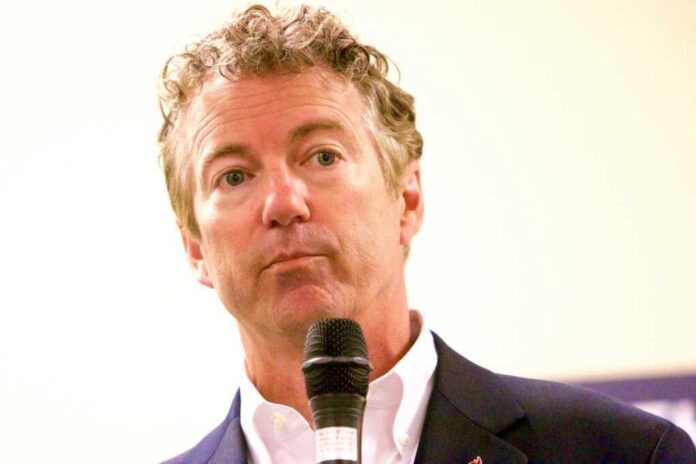
Sen. Rand Paul (R-KY) pressed Secretary of State Marco Rubio during a Senate Foreign Relations Committee hearing in late January 2026, focusing on whether the U.S. military capture and removal of Venezuelan leader Nicolás Maduro should be treated as an act of war. Paul’s core move was simple: if Americans would call it war when done to the United States, the same standard should apply when the U.S. does it abroad.
Paul’s questioning matters because it targets the legal framing, not the politics. He challenged the administration’s reported characterization of the operation as something short of war—closer to law enforcement or a limited national-security action. Paul, who has long argued Congress must authorize major military actions, used the hearing to reassert Congress’s Article I authority, rather than simply scoring partisan points.
Sen. Rand Paul dismantles warmongering Marco Rubio over Venezuela:
“If a foreign country bombed our air defense missiles, captured and removed our president and blockaded our country, would that be considered an act of war?”
— sarah (@sahouraxo) January 28, 2026
Rubio Defends Executive Flexibility While Leaving the Door Open
Rubio’s response centered on executive responsibility to protect U.S. interests. He argued the United States retains the right to act in its national interest and defend itself, reflecting the long-standing view that presidents must have operational flexibility as commander in chief. Rubio also indicated the administration would not box itself in, stating the president does not rule out options when protecting national interests.
The hearing also revealed the administration’s careful messaging: reassurance paired with contingency. Rubio stated with certainty the U.S. was not postured for military action in Venezuela, while still reserving the possibility of further operations if circumstances change—particularly if hostile foreign military infrastructure emerges. That combination may satisfy hawks who want deterrence, but it also leaves constitutional critics asking where the limiting principle sits.
“Run Venezuela” and a Longer U.S. Footprint Raise Oversight Questions
Reporting around the operation describes a U.S. posture that goes beyond a single raid or extraction. After Maduro’s removal, the U.S. position has been described as intending to “run” Venezuela until a transition can occur, alongside work toward establishing a permanent CIA presence. Those facts change how Americans should evaluate the mission: a temporary strike looks different than taking responsibility for governance and intelligence infrastructure.
A larger footprint also intensifies the risk of mission creep, especially when the end-state is not clearly defined. The more the U.S. takes ownership of another country’s transition, the more pressure builds for long-term security guarantees, continued deployments, and follow-on operations. Even many voters who support decisive action against hostile regimes draw the line at open-ended overseas commitments that lack a clear authorization, objective, and exit plan.
Republicans Applaud the Result, but the Constitution Still Has to Work
The hearing showed praise from some Republicans for the administration’s aggressive posture, alongside Paul’s objections. That split isn’t just ideological; it’s structural. Conservatives who prioritize limited government often apply that principle to foreign policy too: executive power expands fastest in crises, and it rarely shrinks back on its own. If Congress avoids hard votes while the executive branch acts first, the constitutional balance tilts permanently.
Democratic senators raised separate critiques, including warnings about another “forever war” and concerns about process and consultation. Some of that opposition is predictable politics, but the constitutional point about congressional responsibility is not automatically wrong just because it’s coming from Democrats. Conservatives can acknowledge that Congress has duties under Article I while still insisting any U.S. action abroad be rooted in U.S. security interests, not globalist nation-building.
What’s Known, What’s Contested, and Why It Matters Going Forward
What’s known is the public record: a Senate hearing, a direct constitutional challenge from Paul, and a firm defense from Rubio that emphasized national interest and preserved future options. What remains contested is the legal classification of the Venezuela operation and what Congress will do about it. The research also indicates uncertainty about duration, mission scope, and enforcement mechanisms if lawmakers want to reassert authority.
For voters who are exhausted by decades of Washington overreach, the key issue is accountability. A strong America can still be a constitutional America. If the U.S. is going to conduct operations that look like war to the rest of the world—capturing leaders, blockading, controlling territory, and managing transitions—Congress should not be a bystander. Clear authorization forces clarity, prevents drift, and protects the constitutional order.
Watch the report: Rand Paul, Rubio Clash On Maduro Capture, Drug Boats; ‘Not A War Argument A Ruse’
Sources:
WATCH: Sen. Paul presses Rubio on why Maduro ouster isn’t an act of war | PBS News
Rand Paul, Marco Rubio clash over whether Maduro capture ‘an act of war’
Senator Rand Paul Presses Secretary of State on Whether Maduro Capture was an Act of War | Video | C-SPAN.org