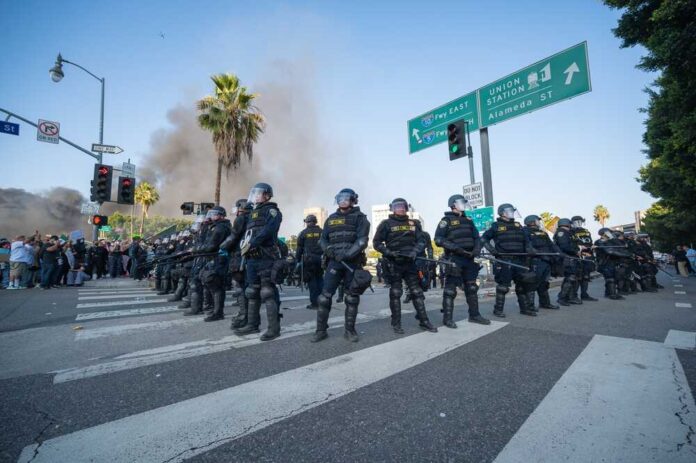
Mass deportations, new executive orders, and the rollback of longstanding immigration policies are altering U.S. border enforcement, prompting debate among constitutional conservatives and critics of expansive executive authority.
Story Snapshot
- President Trump’s second term launches the most aggressive immigration enforcement in modern American history.
- Executive orders close the southern border, suspend asylum, and end “catch and release.”
- ICE raids expand nationwide, targeting communities and eliminating “sensitive location” protections.
- Legal challenges mount over due process and the limits of executive authority.
Trump’s Second Term Ushers in Sweeping Immigration Crackdown
Following his inauguration in January 2025, President Donald Trump wasted no time executing his promise to restore strict border controls and combat illegal immigration. Trump declared a national emergency at the southern border and issued executive orders ending “catch and release,” blocking asylum seekers, and suspending most refugee admissions. These moves were accompanied by the passage of the Laken Riley Act, mandating the detention of immigrants charged with or convicted of certain crimes. The administration has also ended birthright citizenship for children of non-permanent residents, intensifying the legal and political debate nationwide.
Within the first few months of Trump’s second presidency, illegal border crossings reportedly dropped to their lowest level in decades. Administration officials credit aggressive enforcement and expanded use of expedited removal procedures, which now allow Immigration and Customs Enforcement (ICE) to detain and deport individuals far from the border and without the previous due process safeguards. Military hardware and personnel have been deployed at the border, and new legislation provides $170 billion in federal funding for enforcement, detention, and deportation efforts. These swift actions fulfill long-held conservative demands for border security and rule of law, though critics warn of humanitarian and constitutional consequences.
Expansion of ICE Raids and Elimination of “Sensitive Locations” Protections
The new administration has authorized ICE to conduct nationwide raids, including in cities with large immigrant populations. One of the most controversial changes is the elimination of “sensitive locations” policies, which previously shielded schools, hospitals, and religious institutions from enforcement actions. Now, ICE agents have the authority to arrest individuals in these places, a move praised by supporters as a necessary step to restore respect for the law. However, this expansion has disrupted families and created an atmosphere of fear in many communities, as law enforcement can now enter homes without warrants under directives from the Attorney General.
Detention centers have expanded capacity to hold up to 100,000 individuals at any given time, with mandatory deportation for many regardless of flight or safety risk. Project 2025, a conservative policy blueprint, underpins much of the administration’s approach, calling for a nationwide “deportation machine,” militarized border enforcement, and significant reductions in visa categories and humanitarian relief programs. These measures have drawn criticism from civil rights organizations and legal experts, who warn that mass deportations and curtailed due process threaten constitutional protections and the nation’s long-standing commitment to fairness and family unity.
Legal Challenges and the Constitutional Debate
As federal agencies move quickly to implement these new policies, a wave of legal challenges has arisen. The administration’s efforts to pressure states and localities into cooperating with federal immigration enforcement, as well as its expansion of expedited removals and restriction of humanitarian relief, are being tested in federal courts. Civil liberties advocates argue that these actions may exceed the limits of executive power and erode fundamental rights guaranteed by the Constitution. Conservative supporters counter that strong enforcement is necessary to safeguard American sovereignty, restore public safety, and end years of unchecked government overreach.
Tom Homan: “It’s a shame we have governors & mayors who have said they’re going to push back on President Trump & what we’re trying to do. Let me be clear, THERE IS GOING TO BE A MASS DEPORTATION.” 🔥🔥🔥 pic.twitter.com/6yq3MizXN7
— Tiffany Fong (@TiffanyFong_) November 26, 2024
Limited data is available regarding the full impact of these policies on local economies and long-term integration, as many programs are still in the early stages of implementation. However, it is clear that the Trump administration’s sweeping changes have redefined the immigration debate, energizing supporters of constitutional government while provoking new scrutiny of the balance between security, liberty, and due process in the American system.
Sources:
Immigration policy of the second Trump administration – Wikipedia
The Trump Administration’s 2025 Changes to Immigration Law …
Protecting The American People Against Invasion – The White House
The Anti-Immigrant Policies in Trump’s Final “Big Beautiful Bill …