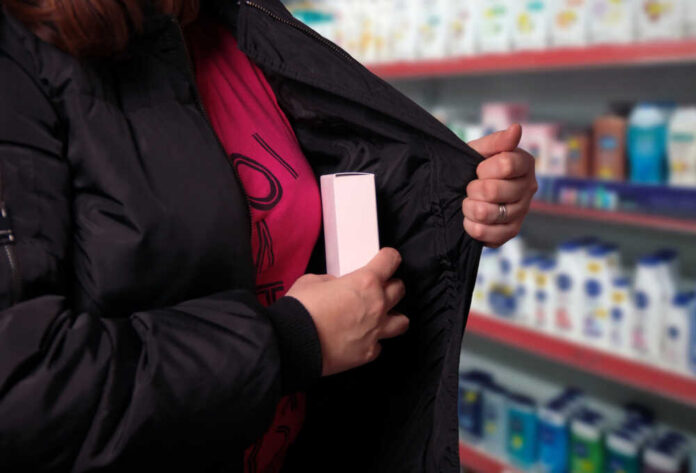
New York City Democrats are pitching a “shoplifting fix” that fines grocery stores and pharmacies—while the people doing the stealing remain largely untouched.
Quick Take
- A newly introduced NYC Council bill would mandate staffing ratios and cap self-checkout purchases at 15 items in certain stores.
- Non-compliant retailers could face daily fines starting at $100 per missing employee, plus whistleblower protections for staff who report violations.
- Supporters argue fewer workers at checkout has fueled theft and reduced safety; industry representatives dispute that staffing ratios stop criminals.
- NYC’s retail theft problem remains severe, with the NYPD reporting 46,736 retail theft incidents in 2025.
A Retail-Theft Crisis Meets a Retailer-Punishment Proposal
New York City Councilwoman Amanda Farias (D-Bronx) introduced legislation aimed at changing how self-checkout is run in grocery stores and pharmacies. Instead of focusing on arrest, prosecution, or sentencing changes for repeat offenders, the bill targets store operations. The proposal arrives as theft remains elevated: Manhattan Institute research cited in coverage reports shoplifting rose 68.1% from 2019 to 2022, and the NYPD reported 46,736 retail theft incidents in 2025.
City leaders have also been grappling with a broader retail squeeze, not just theft. Storefront vacancy rates were about 4% in 2007 and reached 11.2% by 2024, nearly double the 6% vacancy rate recorded in 2019, according to NYC Council reporting on related commercial-corridor challenges. That context matters because higher operating costs—whether from crime, regulation, or both—can be the final push that closes marginal locations and reduces access to basic goods, especially in dense neighborhoods.
What the Self-Checkout Bill Would Require
The measure has three core requirements for food retailers and pharmacies that operate four or more self-service kiosks. First, it would require at least one employee for every three kiosks. Second, it would require stores to establish and clearly advertise a 15-item maximum for self-checkout use. Third, it would impose enforcement through daily penalties: the proposal includes fines of at least $100 per employee for non-compliance and adds whistleblower protections for employees who report violations.
Farias has framed the policy as a response to what she describes as a removal of workers from the retail floor, which she argues has contributed to “increased retail theft, less oversight, fewer protections for both workers and customers, and generally decreased safety.” She has also described the 15-item limit as a way to maintain “safety, accountability, and fairness” in the checkout process. The bill’s introduction date and the basic mechanics does not specify a committee assignment or a schedule for a vote.
Industry and Council Pushback: Does Staffing Stop Theft?
Industry opposition has been blunt. A National Supermarket Association board member, Jason Ferraira, called the proposal “a horrible idea,” arguing that “You don’t prevent shoplifting by making me have a certain ratio of employees.” That criticism points to a practical gap: staffing rules can create more labor cost and more compliance risk, but they do not automatically deter repeat offenders who already operate with little fear of consequences in jurisdictions where enforcement and prosecution are inconsistent.
Political criticism has also focused on who gets punished. Councilwoman Joann Ariola has argued the plan reflects “backwards leftist logic” because it makes “life even harder for businesses and consumers” rather than punishing criminals. One comparison offered in coverage likened the approach to punishing a homeowner after a burglary for not having a better alarm system. That analogy captures the core dispute: whether public policy should treat the retailer as the primary lever to pull, even when the underlying behavior is criminal.
Consumer Tradeoffs and the Bigger Regulatory Pattern
For customers, the most immediate change would be convenience. A 15-item self-checkout cap would push larger baskets into staffed lanes, and staffing mandates may not solve lines if stores cannot hire quickly or cannot afford the new headcount. For retailers, daily fines create a high-pressure compliance environment that could make self-checkout less attractive altogether. The available sources do not include a detailed fiscal estimate of systemwide cost, nor do they provide modeling of theft reduction under the proposed rules.
NYC Democrats' Plan for Stopping Shoplifting Will Make You Roll Your Eyes Into the Back of Your Head
https://t.co/DajIspVGgg— Townhall Updates (@TownhallUpdates) March 16, 2026
The bill also sits alongside other New York City Democratic efforts to regulate consumer-facing business practices, including a push by Mayor Zohran Mamdani to eliminate “junk fees and subscription traps,” and separate NYC Council activity around restricting biometric data practices in retail settings. Taken together, the through-line is heavier operational regulation as a default response. What remains is whether regulating checkout behavior can substitute for the basic expectation of law enforcement: stopping repeat offenders and restoring consequences that protect workers, customers, and lawful commerce.
Sources:
NYC Democrats’ Plan for Stopping Shoplifting by Penalizing Stores Rather Than Shoplifters
In the News – Council Member Oswald Feliz
New York City Mayor Zohran Mamdani seeks to eliminate junk fees and subscription traps