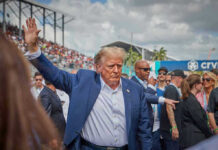

President Trump’s decision to vote by mail in Florida—while still calling mail-in voting “cheating”—is handing the press a narrative weapon right when conservatives want election rules that are fair, simple, and trusted.
Story Snapshot
- Florida records show Trump requested and used a mail-in ballot for a March 24 special election after repeatedly attacking mail voting in national rhetoric.
- Trump defended the mail ballot as necessary because presidential duties had him “mostly in D.C.,” though reporting also places him in Palm Beach during key dates.
- Florida is a no-excuse mail voting state, meaning any eligible voter can legally vote by mail without claiming a special reason.
- Democrats seized on the mismatch between Trump’s words and actions as Republicans debate the SAVE America Act and broader election integrity proposals.
What Florida records show about Trump’s ballot
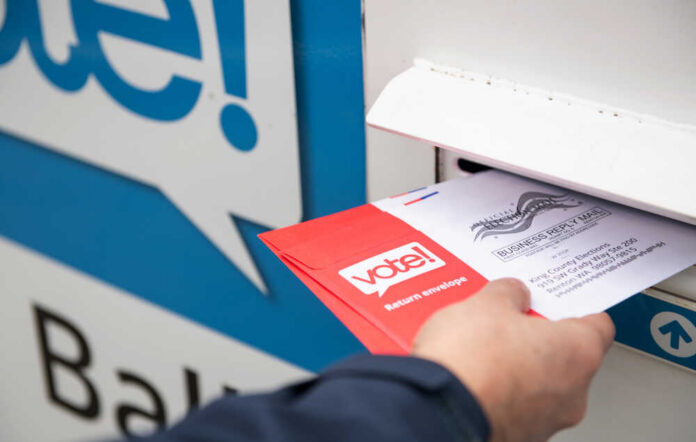
Palm Beach County election records show President Trump requested a mail ballot on March 14 and that the ballot was processed and later counted around March 17–18 for Florida’s March 24 special election in the 87th state house district. Those records also show the ballot was sent to Mar-a-Lago in Palm Beach. Nothing indicates the ballot was illegal or challenged; it was counted under Florida law.
The timeline matters because early in-person voting ran March 14–22, meaning Trump could have voted in person while he was in Florida. Reporting also places him at his golf club on March 14 and March 15 before departing for Washington later on March 15. The core fact pattern is straightforward: Florida allows no-excuse mail voting, and Trump used that option while remaining a vocal critic of mail voting nationally.
Why the “mail-in cheating” line collided with reality
On March 23, the day before the special election, Trump again criticized mail voting in public remarks, describing it as “mail-in cheating.” That line is familiar to voters who remember the post-2020 fights over election rules and confidence. The new twist is that the criticism came after the mail-ballot request was already on the books and just before the vote became public news, giving critics an opening.
Trump’s response to reporters on March 26 leaned on the idea of an exception: as president, he said, travel and duties can require alternatives such as absentee or mail voting. The White House also portrayed the controversy as a “non-story,” pointing to his split time between Washington and Florida. The difficulty for messaging is that Florida does not require a special excuse to vote by mail, undercutting the need for a tailored justification.
How Democrats and the media are using it—and why it’s sticking
Democratic critics framed the episode as “rules for thee but not for me,” and the press amplified the discrepancy between Trump’s repeated warnings about mail voting and his personal reliance on it. From a purely factual standpoint, the “hypocrisy” label gains traction because it is built on verifiable public records and on-the-record quotes. At the same time, no fraud in Trump’s ballot itself.
Election integrity, the SAVE America Act, and a conservative credibility test
The episode lands amid debate over the SAVE America Act and other election integrity ideas, including voter ID and tightening rules around no-excuse mail voting. For many conservative voters, the priority is confidence: transparent rules, equal enforcement, and fewer pathways for ballot harvesting or administrative gamesmanship. When a high-profile leader condemns a method as inherently suspect but uses it anyway, persuading swing voters becomes harder—even if the act was fully legal.
President Trump SHUTS DOWN Media Hysteria as Democrats MELT DOWN After He LEGALLY Casts Mail-In Ballot in Florida
READ: https://t.co/V9PG85wGz9 pic.twitter.com/BVJazGEovA
— The Gateway Pundit (@gatewaypundit) March 26, 2026
Republicans also have to separate two issues that the media often blends together: whether Florida law allowed Trump to vote by mail (it did), and whether broad expansion of mail voting in other states creates verification and chain-of-custody problems (a policy argument still contested). If the goal is to strengthen constitutional self-government through trusted elections, the most effective approach is consistent standards and consistent personal example—because credibility is the fuel that drives reform.
Sources:
Trump said he voted by mail in Florida because he ‘should be’ in D.C.
Trump calls mail-in voting ‘mail-in cheating.’ He just cast his ballot by mail.
Trump defends mail voting in Florida special elections