
Magic Johnson’s endorsement of Los Angeles Mayor Karen Bass is reigniting a raw question many Americans—left and right—keep asking: when leaders fail, why do the powerful keep protecting them?
Quick Take
- NBA legend Magic Johnson endorsed Mayor Karen Bass for a second term, praising her work on homelessness and public safety.
- The endorsement landed as Los Angeles is still facing backlash over 2025 wildfire deaths, multi-billion-dollar losses, and a slow rebuilding pace.
- Lakers governor Jeanie Buss broke the other way, donating the maximum allowed amount to Bass challenger Spencer Pratt and appearing with him publicly.
- The early 2026 mayoral race is shaping up as a referendum on competence, recovery, and whether celebrity influence replaces accountability.
Johnson’s endorsement spotlights a “results vs. relationships” political test
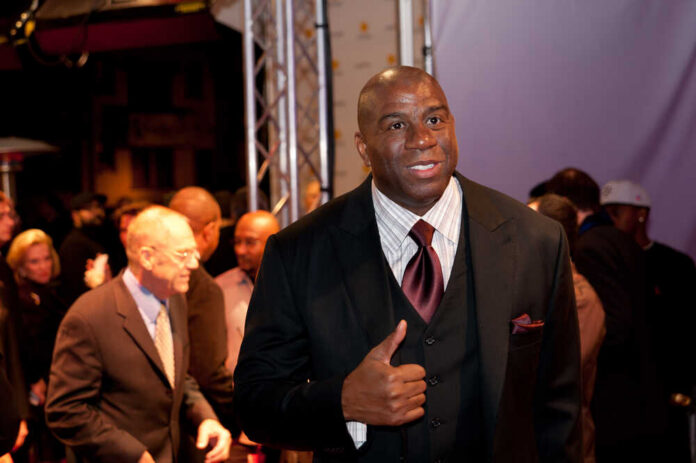
Magic Johnson backed Karen Bass in a video shared through the mayor’s social media, leaning heavily on a long personal relationship and arguing she has earned a second term. Johnson emphasized Bass’s efforts on homelessness and reductions in homicides, a core quality-of-life concern for families and small businesses. The moment matters because Los Angeles voters are not just picking a mayor—they are deciding whether visible crisis conditions can be outweighed by institutional loyalty.
Los Angeles politics has always been celebrity-adjacent, but this endorsement hits during a period of intense public anger over government performance. For conservatives, the frustration often centers on mismanagement, permissive disorder, and taxpayer-funded programs that never seem to deliver measurable improvements. For many liberals, the anger is also real, focused on inequality and a sense that the system protects insiders. Johnson’s message, fair or not, plays directly into the perception that elites circle the wagons when ordinary residents want hard accountability.
Wildfire recovery remains the unresolved reality underneath the campaign
The hardest issue for Bass is the lingering fallout from the 2025 wildfires, which reportedly killed at least a dozen people and caused billions of dollars in damage. Critics argue the response was slow and that rebuilding has dragged, citing claims that only a tiny share of destroyed structures have been rebuilt. Some of those rebuilding figures are tied to activist estimates and remain difficult to independently verify from the research provided, but the political vulnerability is clear: recovery speed is measurable in lived experience.
The clash over rebuilding is not just about permits and contractors—it is about trust. When residents watch destroyed neighborhoods sit in limbo, they tend to conclude that government is either incompetent or captured by special interests. That suspicion increasingly crosses party lines, feeding a broader “deep state” style narrative in which agencies, insiders, and connected donors get protected while regular people shoulder the cost. In a city managing homelessness, budget pressures, and public safety, slow disaster recovery can become the symbol for everything else that feels broken.
Buss vs. Johnson turns Lakers star power into a proxy fight over city leadership
Jeanie Buss’s financial support for Spencer Pratt adds a surprising counterweight because it suggests even major figures in the Lakers orbit are not aligned on Bass. Buss reportedly donated $1,800, the maximum allowed contribution, and was seen with Pratt at a Lakers playoff game. Pratt, a reality TV personality and wildfire victim, is positioning himself as a challenger speaking for residents who feel ignored after catastrophe. The split underscores that this isn’t only partisan; it’s also establishment versus outsider energy.
Backlash shows how quickly local governance becomes national political ammunition
Ric Grenell, a prominent Trump ally, publicly blasted Johnson for backing Bass, framing the endorsement as selfish and out of touch with public suffering. That response illustrates a larger trend: city governance failures increasingly become national narratives because they reinforce arguments about one-party rule, bureaucratic inertia, and elite insulation. Even for voters who dislike nationalized politics, the pattern is hard to ignore—local crises become examples used by both sides to prove the system no longer responds to regular citizens.
Don't Believe in Magic: Basketball Legend Throws Support Behind Mayor Overseeing the Destruction of LAhttps://t.co/nkXhsKMfcf
— RedState (@RedState) May 11, 2026
The near-term political effect is straightforward: Bass gains a visibility boost from a global celebrity, while Pratt gains momentum from anger, personal loss, and a “hold them accountable” frame. The bigger question is what Los Angeles voters will reward in 2026—branding or performance. If rebuilding timelines, homelessness outcomes, and public safety metrics remain contested, the race may become less about ideology and more about competence. That’s where the broader American frustration with government—too slow, too insulated, too self-protective—keeps intensifying.
Sources:
nba-legend-magic-johnson-breaks-former-lakers-boss-endorse-karen-bass-la-mayoral-race
Quick Hit: “What a selfish move.” Official rages at Magic Johnson for supporting Democratic friend