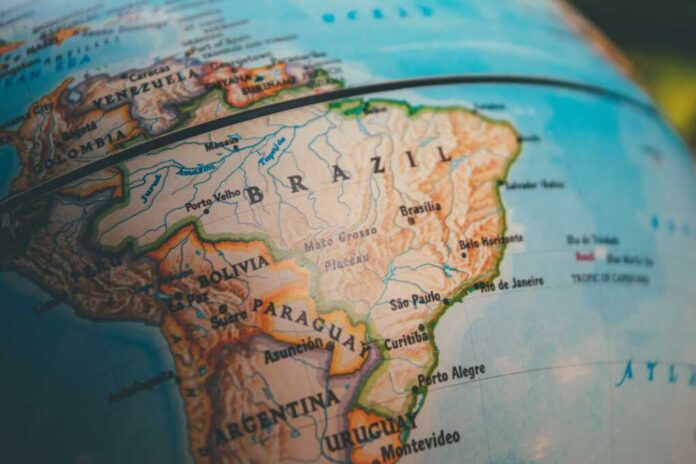
Left-leaning governments in Latin America and Spain stunned the world by uniting against U.S. intervention in Venezuela, signaling a seismic shift in hemispheric power dynamics.
Story Snapshot
- Brazil, Chile, Colombia, Mexico, Uruguay, and Spain issued a joint statement on January 4, 2026, rejecting U.S. military actions to oust Nicolás Maduro.
- The coalition opposes any external control or appropriation of Venezuela’s oil reserves, following Donald Trump’s suggestion to “run” the country.
- This unusual alliance of ideologically diverse nations prioritizes sovereignty and regional autonomy over U.S. unilateralism.
- The statement calls for peaceful resolutions led by Latin American actors, framing U.S. moves as violations of international law.
- Event highlights tensions amid Venezuela’s crisis, with potential for UN involvement and oil market disruptions.
Joint Statement Rejects U.S. Military Ousting of Maduro
Brazil, Chile, Colombia, Mexico, Uruguay, and Spain released their joint declaration from Bogotá on January 4, 2026. Presidents Lula da Silva, Gabriel Boric, Gustavo Petro, Claudia Sheinbaum, and Luis Lacalle Pou, alongside Spain’s Pedro Sánchez, signed the document. They explicitly condemned unilateral U.S. military actions in Venezuelan territory. The leaders labeled such interventions a dangerous precedent threatening regional peace. Their unified stance emerged hours after reports of U.S. forces advancing to remove Maduro from power.
Venezuela’s crisis traces to Maduro’s 2013 rise amid disputed elections. Economic collapse followed due to oil dependency, hyperinflation, and U.S. sanctions imposed since 2017. Over seven million Venezuelans fled the humanitarian disaster. In 2019, more than 50 nations, including the U.S., recognized opposition leader Juan Guaidó as interim president. Maduro clung to control with Russian and Chinese backing. Recent U.S. rhetoric under Trump’s return escalated tensions, culminating in military moves tied to Venezuela’s vast oil reserves—the world’s largest.
Unlikely Coalition Forms Across Ideological Lines
Left-leaning Brazil under Lula and Mexico’s Sheinbaum joined right-leaning Chile’s Boric and Uruguay’s Lacalle Pou, plus Colombia’s Petro. This diverse group set aside differences to defend sovereignty. Motivations include preventing U.S. dominance and safeguarding economic ties to Venezuelan oil. Domestic anti-imperialist politics fueled their resolve. The coalition revives Lima Group dynamics from 2019 efforts for democratic transition. Their statement urges regionally led peaceful resolutions, aligning with UN Charter non-intervention principles.
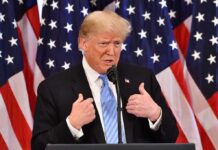
U.S. President Donald Trump suggested Washington would oust Maduro and access oil resources. This provoked the sharp regional backlash. Maduro’s alliances with adversaries like Russia and China complicate U.S. interests in energy security. The joint response boosts Maduro’s legitimacy short-term while straining OAS and UN forums. Common sense dictates that outsiders seizing control rarely stabilizes regions; history shows blowback, from Iraq to Libya, undermines American interests and erodes trust in conservative foreign policy goals of stability through strength.
Implications Ripple Through Oil Markets and Diplomacy
Short-term effects include heightened U.S.-Latin America tensions and potential deterrence of further intervention. Long-term, the stance reinforces non-intervention norms, risking fragmented regional security. Venezuelan civilians suffer amid contested control, with refugee flows burdening neighbors. Oil sector volatility looms as markets react to appropriation fears. Western sanctions weaken if multipolar alliances empower non-Western backers. Regional leaders position for influence in UN Security Council dynamics.
🚨BREAKING:Brazil,Chile,Colombia,Mexico,Uruguay, Spain reject outside ‘control’ of Venezuela
Five Latin American countries and Spain warned on Sunday against any outside bid for “control” of Venezuela, after US President Donald Trump suggested Washington would “run” the country… pic.twitter.com/5848bBr8XT— USReport (@US_ReportNews) January 4, 2026
Experts view the declaration as a strong contravention of international law claims. It sets precedents against resource grabs. Pro-U.S. perspectives argue intervention aids democracy, but facts favor sovereignty when aligned with conservative values of self-determination and avoiding endless foreign entanglements. The coalition’s unity, cross-verified by multiple reports, underscores Latin America’s maturing autonomy. Future developments may involve UN emergency meetings, testing hemispheric relations.
Sources:
Brazil, Chile, Colombia, Mexico, Uruguay, Spain reject outside ‘control’ of Venezuela
Venezuela: Emergency Meeting
Latin American countries, Spain reject outside control of Venezuela