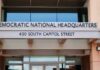
Democrats’ main House super PAC cut millions from planned ads in three Republican-leaning districts, signaling a late shift in battlefield priorities.
Story Snapshot
- House Majority PAC reduced ad reservations in Tennessee’s 5th, Florida’s 7th, and Colorado’s 3rd districts.
- The cuts totaled millions, with sharp drops in each market based on AdImpact data.
- The group still touts a $272 million national plan focused mostly on offense.
- Selective “shaves” elsewhere suggest reprioritization, not a full retreat.
What Changed In Key Districts
Axios reported that House Majority PAC pulled back planned advertising this week in three Republican-leaning House districts. The reductions hit Tennessee’s 5th, Florida’s 7th, and Colorado’s 3rd. AdImpact data showed the scale in each market. Tennessee’s 5th dropped from nearly $1.6 million to a little over $500,000, Florida’s 7th from about $3.9 million to $1.95 million, and Colorado’s 3rd from more than $2.1 million to less than $1.1 million.
The Washington Examiner also cited AdImpact when cataloging late spending changes by both parties. That reporting listed other districts where Democrats trimmed or Republicans shifted funds, showing a fluid map as Election Day nears. The overlap on AdImpact data across outlets gives a consistent picture of district-level changes. It points to targeted pullbacks in places viewed as tougher wins for Democrats this cycle.
Why The Money Is Moving Now
House Majority PAC earlier announced $272 million in television and digital reservations across 68 media markets for 2026, with nearly 80 percent aimed at flipping seats. That scale means plans must adjust as new polling, media prices, and candidate strength emerge. The super PAC’s own release underscores a broad offense, while the late trims look like resource triage in harder districts, not a national retreat from the House fight.
Axios reported smaller “shaves” in Arizona’s 2nd and Texas’ 23rd, both rated “likely Republican” by Cook Political Report, reinforcing the pattern of fine-tuning rather than abandoning the map. Independent groups often book early to lock inventory and then rebalance as conditions change. These moves fit that norm, even as they feed a narrative about momentum where cuts occur.
The Financial Backdrop And Voter Impact
FactCheck.org reported that House Majority PAC raised about $123.6 million through June 30 while placing nearly $284 million in reservations. That gap can reflect future fundraising, cancellations, and adjustments, but it also highlights the squeeze that big national plans face late in the cycle. In politics, large reservations are signals and options, not final spending guarantees. The numbers help explain why some districts lose planned ads.
Republicans may not be fighting every House race anymore.
Pod Save America hosts say Republican strategists and super PACs are reacting to internal data that they interpret as a “blue tsunami.” Their conclusion, they argue, is not simply that some races look difficult. It is… pic.twitter.com/IrKZXJgM8h
— TalkOnPoint (@TalkOnPointApp) October 19, 2026
Political science research shows television ads make up a large share of campaign budgets and can matter most in close races. That is why late money tends to chase the most winnable seats and the cheapest points of persuasion. When a group trims ads in tougher districts, it often aims to put the next dollar where it can move more votes. This is standard for both parties when the map is wide and cash is finite.
What This Means For Both Sides
Democrats are narrowing bets where the path looks steepest, while still pressing a broad offensive funded by large reservations. Republicans can point to these trims as proof of strength in select seats. Both narratives can be true at once. Voters should read these moves as a normal late-game reallocation in a high-cost media war. The bigger story is a system where outside money shapes the map more than local voices would like.
Sources:
washingtonexaminer.com, axios.com, thehousemajoritypac.com, factcheck.org, cambridge.org