

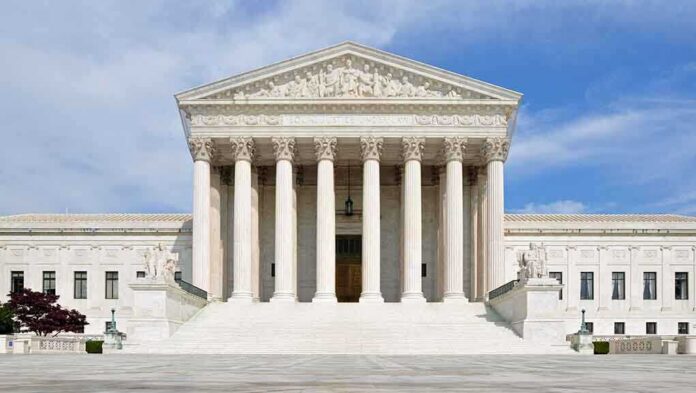
The Supreme Court will decide whether President Trump can lawfully block most migrants who cross the southern border from seeking asylum, a ruling that could reshape executive power and migrants’ rights.
Story Highlights
- The Supreme Court agreed to hear the case on Trump’s asylum restrictions this term.
- Two lower courts ruled the restrictions unlawful under immigration law.
- The policy remains in effect while the justices review the dispute.
- The decision could define how far presidents can go without new laws from Congress.
What The Supreme Court Agreed To Review
On Friday, the Supreme Court said it will review President Trump’s directive that suspends access to the asylum system for most migrants who cross the southern border between ports of entry. The case asks whether the president can bar these claims under statutes that let presidents restrict entry. The hearing is expected this term, with a decision likely by early summer. The White House has described the policy as a key tool to curb illegal crossings and close legal loopholes.
The administration’s position rests on broad presidential powers under immigration law to suspend the entry of noncitizens. Supporters argue those powers overlap with steps needed to manage asylum at the border during a surge. Critics say Congress, not the president, sets asylum rules. They contend the directive crosses a legal line by changing who can seek protection after reaching United States soil, not just who may enter. This core dispute is now before the justices.
How Lower Courts Viewed The Policy
Two lower courts said the policy broke immigration law and exceeded presidential authority. A federal appeals court focused on the text that lets presidents suspend “entry,” reading it as not authorizing new limits on asylum eligibility once a person is here. Those rulings did not end the policy. The Supreme Court allowed it to remain in place while the case proceeds, keeping the immediate status quo at the border. That pause set the stage for a definitive ruling this term.
The legal fight turns on how different parts of immigration law fit together. Past Supreme Court rulings upheld strong presidential power to suspend entry from certain countries. But those cases dealt with entry bans, not cutting off asylum claims by people already present. Nonpartisan analysts note that both Republican and Democratic presidents have leaned on executive tools when Congress stalls, which often triggers new lawsuits rather than lasting fixes.
Why This Case Matters Beyond Immigration
This case could redraw the map of executive power. If the Court backs the directive, future presidents may gain wider room to limit access to statutory protections during border surges without new laws from Congress. If the Court blocks it, the ruling could fence in the presidency’s use of “entry” powers and reaffirm that Congress controls asylum rules. Either way, the decision will tell agencies what they can and cannot do during crises at the border.
The stakes touch frustrations on both the right and the left. Many Americans see a system that is not working, marked by long backlogs, uneven enforcement, and rapid policy swings. Supporters of tighter controls want firm, clear rules that deter unlawful crossings and stop cartels from gaming the system. Humanitarian groups want due process and safety for people fleeing danger. The Court’s ruling will not fix Congress’s inaction, but it will set the guardrails for the next round of policy choices.
What To Watch Next
Watch for the Court’s briefing schedule and any signals during oral argument. Listen for questions about statutory text, especially the word “entry,” and how it relates to asylum eligibility. Expect both sides to cite earlier cases on presidential power and border management, including the ruling upholding entry suspensions from certain nations. A final decision by early summer would give agencies time to adjust guidance and field operations before peak migration months.
Sources:
cbsnews.com, inquisitr.com, news.bloomberglaw.com, wsoctv.com, cnn.com, whitehouse.gov