A new federal case centered on the assassination of conservative activist Charlie Kirk could redefine hate crime laws in the United States. The Department of Justice, under President Trump, is considering an unprecedented use of federal hate crime statutes against the alleged killer, Tyler James Robinson, framing the act as anti-Christian due to Kirk’s views on transgender issues. This legal maneuver would be the first time such laws are used to protect political and religious speech in this manner, sparking a fierce debate over federal jurisdiction, free speech, and the political application of hate crime statutes.
Story Snapshot
- The DOJ considers charging Charlie Kirk’s alleged killer with a federal hate crime.
- This would be the first time such laws protect political and religious speech.
- Conservative voices see this as a necessary protection against leftist aggression.
- Critics argue it’s a misuse of hate crime statutes and a political maneuver.
DOJ’s Unprecedented Legal Maneuver
The Department of Justice, under President Trump, is considering a groundbreaking use of federal hate crime laws against Tyler James Robinson. Robinson is accused of assassinating conservative activist Charlie Kirk in what the DOJ frames as an anti-Christian act due to Kirk’s views on transgender issues. This potential federal charge comes despite traditional jurisdictional challenges, as murder typically falls under state law.
Robinson, facing state charges including aggravated murder in Utah, could see his case escalate federally. The DOJ, led by Attorney General Pam Bondi, argues that Kirk’s assassination was motivated by religious bias, linking his Christian faith to his conservative views on transgender issues. This approach is causing a stir, as it seeks to protect religious and political speech under hate crime statutes traditionally used for race or religion-based attacks.
NBC: Three months after the assassination of Charlie Kirk, the Justice Department is considering charging the shooter with an anti-Christian federal hate crime https://t.co/INv4dXSHda
— Jacob Wheeler (@JWheelertv) December 13, 2025
Background of the Case
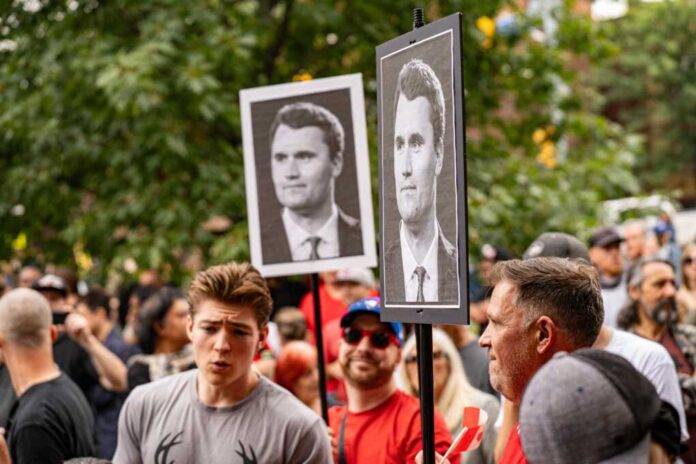
Charlie Kirk, a prominent right-wing activist and founder of Turning Point USA, was known for his outspoken criticism of progressive ideologies, including LGBTQ+ rights. His assassination at Utah Valley University has flipped the typical narrative of hate crimes, which often involve minority victims. The DOJ’s stance could set a precedent for protecting conservative voices under hate crime laws, a move that aligns with the Trump administration’s agenda to defend conservative values.
Robinson, who previously aligned with conservative views, had shifted left politically, reportedly influenced by his transitioning roommate. His frustration with Kirk’s stance on transgender issues allegedly led to the planned attack, as revealed in texts and a Discord chat.
DOJ weighs novel federal hate crimes case against Charlie Kirk’s alleged killer WASHINGTON
Implications and Reactions
The potential federal charges raise significant implications for free speech and hate crime laws. Should the DOJ proceed, it could delay state proceedings and test the boundaries of federal jurisdiction over politically motivated violence. The case has sparked a debate on the use of hate crime laws to protect conservative speech, with critics labeling it as a political overreach.
Conservative communities rally for justice, seeing this as a necessary step to counter leftist aggression. Meanwhile, LGBTQ+ groups express concern over equating anti-trans views with religious protection, fearing further marginalization. As the case unfolds, it underscores the deepening cultural and political divides in America.
Watch the report: Charlie Kirk Murder Suspect in Court as Judge Weighs Media Access
Sources:
Trump’s DOJ Could Charge Alleged Kirk Killer With Surprising Crime
DOJ weighs novel federal hate crime case against Charlie Kirk’s alleged killer
DOJ weighs novel federal hate crime case against Charlie Kirk’s alleged killer