
A country already under heavy sanctions is now effectively installing a cash register on one of the world’s main oil lifelines—and calling it “navigational services.”
Story Snapshot
- Iran says it is charging ships for “navigational services,” not tolls, in the Strait of Hormuz, but many governments and shippers see a de facto paywall on a crucial global chokepoint.
- Reports describe an Islamic Revolutionary Guard Corps–controlled corridor, clearance codes, and escorts, with some ships allegedly paying up to $1–2 million per transit in Chinese currency or cryptocurrency.
- Legal experts argue that mandatory passage fees clash with post–World War II maritime norms that protect free transit through natural international straits.
- The fight over language—“services” versus “tolls”—masks a deeper problem both left and right recognize: powerful states and elites treating global infrastructure as leverage while ordinary people absorb the higher costs.
What Iran Says It Is Doing in the Strait of Hormuz
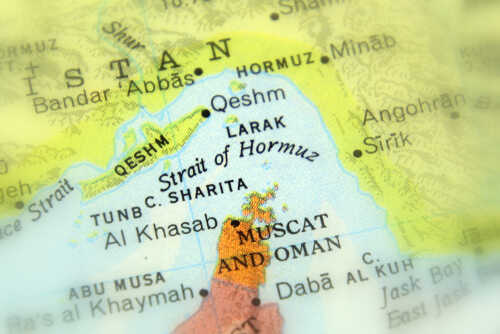
Iran’s foreign ministry recently stated that Tehran is collecting fees for “navigational services” from ships passing through the Strait of Hormuz, a narrow waterway that carries a large share of global oil and gas exports. Iranian officials insist these are not tolls on the right of passage itself but charges for safety, security, and guidance in a conflict zone. That framing matters, because charging for optional services is widely accepted in maritime practice, while charging for simple passage through an international strait is far more controversial.
Reports from shipping industry sources describe how this system works in practice. Lloyd’s List says that much of the limited traffic now moves through a corridor controlled by Iran’s Islamic Revolutionary Guard Corps, where vessel operators must submit detailed documentation, receive a clearance code, and accept an Iranian escort.[1] Economic coverage adds that Iran has floated transit fees that could reach about $1–2 million per vessel, reportedly sometimes paid in Chinese yuan or cryptocurrency, with amounts varying by cargo and ship type.[3]
Why Many See a “Tehran Toll Booth,” Not a Neutral Service
Western and Gulf officials, along with many shipping actors, argue that this looks less like a neutral safety service and more like a coerced toll regime. Analysts note that access to the safest corridors appears restricted to countries deemed non-hostile to Iran, with Iranian vessels moving freely while others either pay, negotiate via diplomacy, or risk mines and potential attacks.[1][4] Economic reports say Iran has proposed making these payments part of a broader peace framework with Oman, effectively monetizing control over the chokepoint rather than simply recouping service costs.[3][4]
Policy and legal experts point out that there is no clear post–World War II precedent for mandatory transit tolls in natural international straits such as Hormuz, where the expectation has been free passage for peaceful vessels.[2] A detailed legal analysis explains that while states can charge for optional services like pilotage or tugboats, the practice of charging simply to pass through a natural chokepoint has been rejected in other major straits.[2] That paper concludes there is “no meaningful economic or historical basis” for imposing compulsory transit fees in this kind of waterway, framing Iran’s move as a significant departure from established norms.[2]
Legal Gray Zones and the Power of Labels
The legal picture is not entirely straightforward. Commentary on the Law of the Sea notes that the United Nations Convention on the Law of the Sea—often treated as the main global rulebook—protects unimpeded “innocent passage” and bars tolling access to international straits, though it does allow non-discriminatory fees for actual services.[4] However, Iran has not ratified this treaty, and Iranian officials reportedly argue that its tolling limits bind only formal parties, not non-signatories, leaving a gray zone between treaty rules and customary international law.[4]
That ambiguity gives enormous weight to language. Iran insists it is charging for “navigational services,” while shipping publications and some media talk about a “Tehran toll booth.”[1] Because most public evidence comes from secondary reporting rather than published Iranian tariffs, decrees, or itemized invoices, outside observers have to infer the nature of the regime from partial data. Some ships appear to transit without payment through diplomatic channels, while others reportedly pay significant sums for access and protection.[1][3] This mixed pattern makes it harder to prove a single, uniform policy yet easier for each side to spin events to fit its preferred narrative.
What This Fight Reveals About Global Power and Ordinary Costs
For Americans watching from home—whether fed up with “America First” interventions or with globalist deals that never seem to help Main Street—the stakes are not abstract. The Strait of Hormuz moves a major share of the world’s oil; when a government under sanctions turns that chokepoint into a cash lever, energy markets react and the costs ripple through gasoline prices, heating bills, and inflation.[2] People on both the right and the left see a familiar pattern: powerful states and connected elites rearranging the rules of global trade while regular families pay more for basics.
Iran has announced it is now charging fees for navigational services provided to ships passing through the Strait of Hormuz. A spokesperson for the foreign ministry clarified that these charges are specifically for navigational assistance and environmental protection measures in…
— Global Arab Network (@Global_Arab_Net) May 25, 2026
The controversy also reinforces a deeper frustration that crosses party lines: international rules seem flexible when strong players want them to be. Washington condemns Iran’s practice as “unacceptable,” while Tehran points to decades of sanctions, military threats, and selective enforcement of other agreements by Western powers.[4] Meanwhile, no one is asking ordinary Americans, Europeans, or Iranians whether they want to gamble global stability and household budgets on a legal tug-of-war over a waterway thousands of miles away. That disconnect is exactly what fuels distrust toward governments and international institutions across the political spectrum.
Sources:
[1] Web – Tehran’s ‘toll booth’ system is now controlling Hormuz traffic
[2] YouTube – Iran ‘TAKES CONTROL’ of Strait of Hormuz After Ceasefire
[3] Web – Is Strait of Hormuz open now, and will it be free or $2 million …
[4] Web – Iran eyes rial-only transit fees in Strait of Hormuz | VOV5.VN