
A new Pentagon review threatens to roll back women’s roles in combat, challenging a decade of military integration.
Story Highlights
- The Pentagon has ordered a review of women’s effectiveness in combat roles, potentially reversing integration policies.
- Defense Secretary Pete Hegseth emphasizes a return to “highest male standards” in military fitness tests.
- The review could lead to significant changes in military policy and affect thousands of servicewomen.
- Critics argue the review is a step back for gender equality in the armed forces.
Pentagon’s Review Sparks Debate
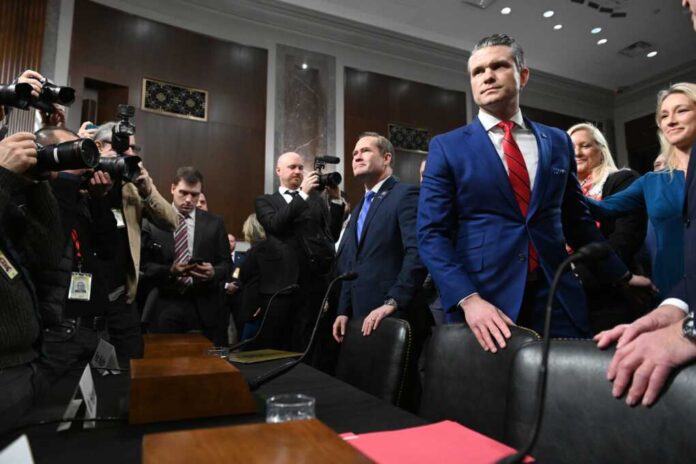
The Pentagon has initiated a formal review of women in ground combat roles, nearly a decade after the 2015 lifting of the exclusion ban. This six-month review, ordered by Undersecretary of Defense for Personnel Anthony Tata, requires data from the Army and Marine Corps on various operational aspects. The move, directed under the Trump administration, aligns with Defense Secretary Pete Hegseth’s agenda to revert to more stringent standards, raising questions about the future of gender integration in the military.
The Historical Context and Concerns
In 2015, the U.S. military opened all combat roles to women, a landmark decision that ended a formal ban and allowed thousands of women to serve in infantry, armor, and artillery roles. However, this decision has faced ongoing scrutiny, particularly from those who argue that mixed-gender units compromise combat effectiveness. A 2015 Marine Corps study suggested all-male teams performed better, though it was criticized for methodological flaws. The current review appears to revisit these longstanding debates, with Hegseth advocating for standards that may disproportionately impact women.
Hegseth’s past statements have been clear; he believes that the inclusion of women in combat roles complicates military operations without enhancing lethality. This review, therefore, is not merely an evaluation of effectiveness but a potential precursor to policy changes that could limit women’s roles based on perceived performance discrepancies.
Implications for the Military and Society
The review’s outcome may significantly impact approximately 4,500 women currently serving in ground combat roles. Should the findings support a rollback of integration policies, it could lead to broader debates on gender roles within the military and fuel political divides over equal opportunity versus combat effectiveness. The review also holds economic implications, as changes could affect recruitment and retention costs if women are deterred from service. Socially, this could reignite discussions on the role of women in the armed forces and their contribution to national security.
Pentagon orders review on ‘effectiveness’ of women in infantry, other combat arms jobs https://t.co/zaumqHAM2D
— Task & Purpose (@TaskandPurpose) January 6, 2026
As the review progresses, all eyes will be on the Pentagon to see if it will uphold its commitment to sex-neutral standards or revert to outdated, exclusionary practices. The decision will have lasting consequences not only for the military but for society’s view on gender equality and the role of women in defense.
Sources:
Military Times: DOD launches review of ‘effectiveness’ of women in ground combat roles
Task & Purpose: Pentagon review of women in combat
MS NOW: Pentagon reportedly to reassess allowing women in combat roles
KERA News: Pentagon under Hegseth to review role of women in ground combat units