
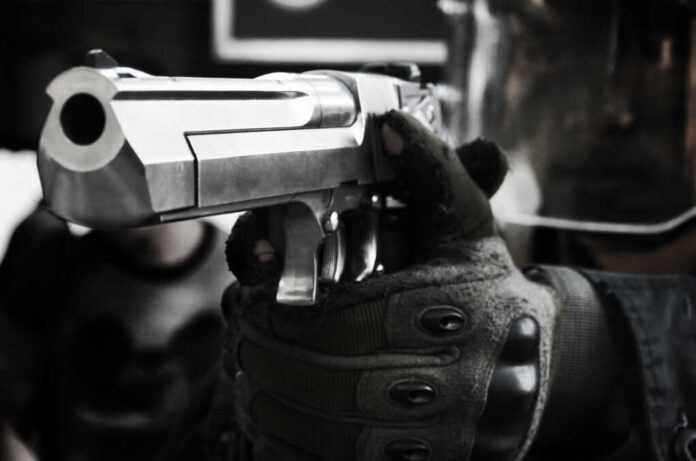
In a deeply troubling incident near the White House, Afghan national Rahmanullah Cornwell—a man granted asylum after working with a CIA-backed unit—has been identified as the perpetrator of a shooting attack on two National Guard members. This premeditated assault, which left both victims in critical condition, has immediately reignited national debates over the effectiveness of the vetting process for Afghan refugees and prompted federal agencies to scrutinize potential vulnerabilities in current national security protocols.
Story Highlights
- The suspect, Rahmanullah Cornwell, is linked with a CIA-backed unit in Afghanistan.
- The incident involved a targeted attack on two West Virginia National Guard members.
- Concerns are mounting over the effectiveness of vetting for Afghan refugees.
- Public safety and national security implications are under scrutiny.
Security Concerns Over Refugee Vetting
In a concerning incident near the White House, Afghan national Rahmanullah Cornwell was identified as the perpetrator behind a shooting attack on two National Guard members. Cornwell, who worked with a CIA-backed unit in Afghanistan, managed to obtain asylum in the U.S. This incident has reignited debates about the effectiveness of the vetting process for Afghan nationals, especially those with ties to U.S. military operations.
The suspect drove across the country to carry out the attack, targeting the guardsmen stationed outside a busy Washington, D.C. Metro station. Both victims, Sarah Beckstrom and Andrew Wolf, remain in critical condition, as law enforcement continues to investigate the motives behind the attack. This event underscores the challenges of balancing national security with humanitarian commitments to individuals who supported U.S. efforts abroad.
So turns out the national guard shooter was part of a CIA-operated deathsquad that functioned outside of the Afghan army with even less impunity than the Afghan army operated with. These guys were all shipped to America first thing even before the war ended. pic.twitter.com/ZSxPeGzT3m
— Mehmet (@afgmeh) November 27, 2025
Implications for National Security
The attack has immediate implications for the security of National Guard personnel and broader national security measures. It prompts a reevaluation of the special immigrant visa (SIV) process and highlights potential vulnerabilities in current refugee vetting protocols. Given the suspect’s history and the premeditated nature of the attack, federal agencies are under pressure to reassess and potentially overhaul existing procedures.
Additionally, this incident raises broader questions about post-arrival monitoring and integration support for refugees in the United States. The challenge remains in ensuring that those granted asylum do not pose a threat to the public, while also protecting their rights and offering necessary support for successful integration.
Public and Policy Reactions
The public’s response to the incident reflects growing concerns about security gaps in the asylum and immigration system. As the investigation unfolds, there may be calls for policy reviews and increased scrutiny of individuals with similar backgrounds. This could result in significant changes to the vetting processes for Afghan nationals and potentially impact future refugee and immigration policies.
Federal officials have confirmed that Cornwell underwent the standard vetting procedures, but this does little to alleviate public fears. As the story develops, it’s crucial for policymakers to address these concerns while balancing security needs with the humanitarian commitments made to those who risked their lives to support U.S. operations abroad.
Watch the report: DC shooting suspect worked with CIA in Afghanistan
Sources:
Afghan accused of shooting 2 National Guard members was part of CIA-backed unit whose veterans have struggled in the U.S.
National Guard shooting suspect radicalized in US, homeland secretary says | Reuters
National Guard shooting suspect worked with CIA in Afghanistan before coming to US