
A major $100 million embezzlement scandal has exposed systemic corruption at the highest levels of the Ukrainian government, casting a harsh new light on the country’s reliance on Western funding. The fraud, allegedly orchestrated by a former close associate of President Volodymyr Zelenskyy, has not only led to key ministerial resignations but has also intensified calls from U.S. and allied policymakers for immediate, rigorous oversight of taxpayer dollars sent to Kyiv. This investigation reveals the details of the scheme and the critical lessons it offers for American foreign aid policy.
Story Snapshot
- Timur Mindich, once closely tied to Zelenskyy, was accused of orchestrating a $100 million embezzlement from Ukraine’s nuclear sector.
- The National Anti-Corruption Bureau uncovered a vast scheme involving high-level officials and forced key ministerial resignations.
- The corruption erupted amid Ukraine’s heavy reliance on Western aid, casting doubt on the stewardship of taxpayer dollars.
- Sanctions were imposed, and suspects fled, fueling concerns about ongoing fraud, government instability, and the lack of robust accountability.
Ukraine’s Corruption Scandal: A Stark Reminder for American Taxpayers
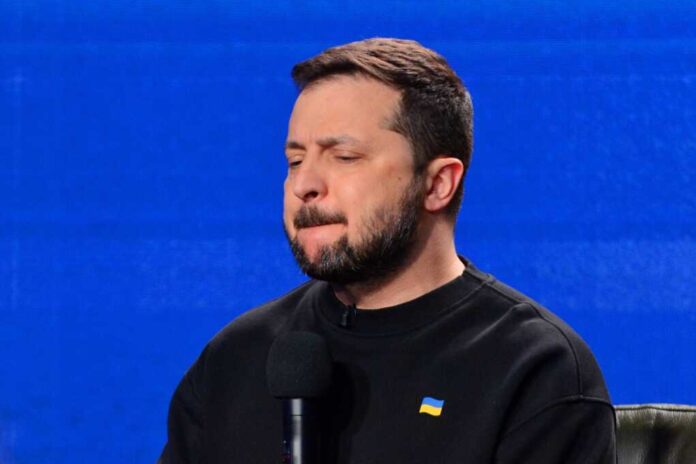
The exposure of a $100 million embezzlement scheme involving Timur Mindich, a former close associate and business partner to Ukrainian President Volodymyr Zelenskyy, has sent shockwaves through international circles. The National Anti-Corruption Bureau of Ukraine (NABU) uncovered the operation, revealing how Mindich and others siphoned off vast sums from state-owned Energoatom, Ukraine’s nuclear power company. This scandal has not only brought about the resignation of key government ministers but also triggered a wave of public outrage and skepticism about the real destination of Western aid to Ukraine.
The investigation, launched in 2024 and spanning over a year, culminated in November 2025 when charges were formally brought against eight individuals, including Mindich and his associate Oleksandr Tsukerman. The pair allegedly orchestrated a sophisticated web of kickbacks and illicit contracts, exploiting Energoatom’s resources at a time when Ukraine was under immense pressure from ongoing Russian aggression. The National Security and Defense Council moved swiftly, imposing asset freezes and travel bans, but by then, both Mindich and Tsukerman had already fled the country, raising doubts about the government’s ability to hold the perpetrators accountable.
Former Zelenskyy associate accused in $100 million embezzlement scheme. 👀 https://t.co/zOalNhsbkG
— Erik-Conservative In Cali 𝕏 (@caliucconserv) November 16, 2025
Political Fallout and Western Accountability
The scandal’s political repercussions were immediate and severe. President Zelenskyy, once hailed as a reformer, was forced to distance himself from Mindich and demand the resignation of implicated ministers, including the justice and energy ministers. Prime Minister Yulia Svyrydenko announced a sweeping sanctions process, but the damage to Ukraine’s international credibility was already done. This crisis unfolded just as Ukraine was seeking further Western financial and military aid, intensifying calls for stricter oversight of U.S. and allied taxpayer dollars sent abroad.
For American conservatives, this episode underscores longstanding concerns about unchecked foreign aid, especially to countries with a history of entrenched corruption. The fact that such a large-scale scheme occurred despite years of promised reforms raises questions about the due diligence performed by Western governments and international agencies. It highlights the need for robust accountability mechanisms and transparency when sending American resources overseas, particularly when domestic priorities—such as border security, energy independence, and fiscal responsibility—are at stake.
Systemic Corruption: A Threat to Stability and Aid Effectiveness
Ukraine’s energy sector, long plagued by opaque procurement and political interference, has served as a breeding ground for corruption. Despite high-profile promises of reform after the 2014 Maidan revolution, and ongoing efforts by NABU and the Specialized Anti-Corruption Prosecutor’s Office (SAPO), systemic issues persist. The Mindich scandal is not an isolated event; it follows previous cases, like the 2023 arrest of oligarch Ihor Kolomoysky, demonstrating how deeply entrenched these networks are within state enterprises and government ministries.
The exposure of such corruption during wartime is particularly damaging, as it undermines public trust and risks destabilizing essential sectors. For Ukrainian citizens, it means continued hardship and instability. For international donors, especially the United States, it means reevaluating how aid is distributed and monitored, ensuring that support intended for defense and humanitarian needs does not line the pockets of corrupt elites.
Broader Lessons: Constitutional Safeguards and Conservative Vigilance
The Mindich affair serves as a cautionary tale about the dangers of government overreach, lack of transparency, and misplaced priorities. It reinforces the principles that have guided conservative American policy: vigilant oversight of taxpayer funds, insistence on constitutional safeguards, and a refusal to enable foreign regimes that fail to uphold basic standards of accountability. As President Trump’s administration works to restore order at home—addressing border security, reducing reckless spending, and defending constitutional rights—this scandal highlights why Americans must demand integrity abroad as well as at home.
Ultimately, the unraveling of this embezzlement scheme should inform future U.S. foreign aid policy. Aid must be contingent upon measurable reforms, strict auditing, and demonstrable results. America’s resources should serve our interests and values, not enrich corrupt foreign officials. As the investigation in Ukraine continues, the lesson for U.S. policymakers is clear: Never allow the urgency of global crises to override the fundamental need for accountability and constitutional governance.
Watch the report: Mindich scandal shakes Zelenskyy’s circle | Eastern Express
Sources:
Zelensky to impose sanctions against his close associate Mindich following large-scale corruption probe — Kyiv Independent
Former Zelenskyy associate accused in $100 million embezzlement scheme — Fox News
Zelensky Sanctions Ex-Associate Over $100 Million Corruption Scandal — NDTV
Once a shadowy dealmaker, former Zelenskyy associate is accused in Ukrainian corruption scandal — Courthouse News