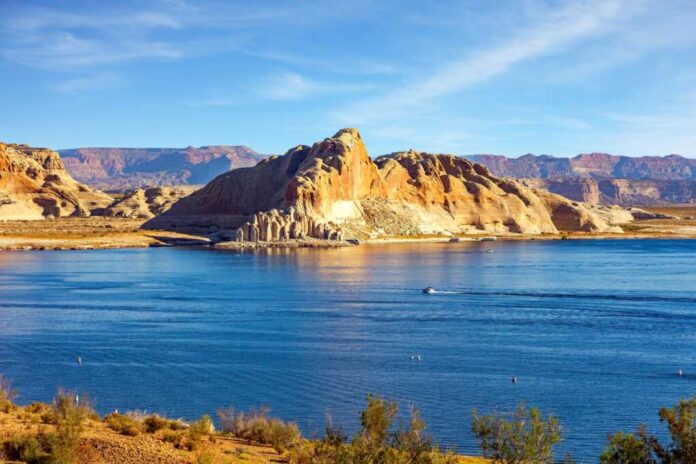
Federal bureaucrats are threatening to seize control of the Colorado River, overriding the rights of seven Western states amid a man-made crisis from decades of mismanagement and overregulation. This looming federal overreach comes after the states missed a critical November 11, 2025, deadline to propose new post-2026 water rules, prompting the Interior Department to set a new February 14, 2026, deadline while preparing top-down alternatives. The 25-year drought has left Lakes Powell and Mead at critically low levels, endangering 40 million Americans, farmers, and tribes, and escalating the conflict between states’ rights and federal intervention.
Story Snapshot
- Seven Western states missed a critical November 11, 2025, deadline to propose post-2026 water rules, risking federal overreach.
- Interior Department sets new February 14, 2026, deadline, preparing alternatives that could impose top-down mandates on local water use.
- Lakes Powell and Mead are at critically low levels after a 25-year drought, endangering 40 million Americans, farmers, and tribes.
- Upper and Lower Basin states are deadlocked on cuts, echoing failures of big-government planning since the 1922 Compact.
- President Trump’s new administration faces pressure to protect states’ sovereignty against Washington’s intervention.
States Miss Key Deadline
Arizona, California, Colorado, Nevada, New Mexico, Utah, and Wyoming failed to submit a unified framework by November 11, 2025, for managing the Colorado River after current rules expire in 2026. The seven states, divided between Upper Basin defenders of compact rights and Lower Basin advocates for shared cuts, produced no agreement. This impasse highlights decades of federal overreliance on outdated allocations assuming 16.5 million acre-feet annual flow, now reduced to 12.5 million by prolonged drought. Agriculture consumes 70 percent, fueling exports like alfalfa amid shrinking supplies. Local leaders like Colorado’s Becky Mitchell call for science-based collaboration, but unity eludes them.
The Bureau of Reclamation participated in the #CRWUA conference in Las Vegas to discuss post-2026 Colorado River operations and long-term drought.
“With 60 days left until the Feb. 14 deadline, the time for serious negotiations is now,” said Andrea Travnicek, assistant secretary… pic.twitter.com/LyujT9qre3
— Bureau of Reclamation (@usbr) December 18, 2025
Federal Pressure Mounts
On December 17, 2025, Interior Department Assistant Secretary Andrea Travnicek announced a new deadline of February 14, 2026, for state consensus. The department will release draft options by year-end for public review and identify a preferred path if states falter. U.S. Bureau of Reclamation Acting Commissioner Scott Cameron warns the crisis demands bold action through biweekly state meetings. Travnicek stresses the river waits for no one and urges ending grandstanding to avoid litigation. Failure invites Interior to assert authority, potentially dictating cuts and operations.
Reservoir Declines and Short-Term Pain
Lake Mead dropped 148 feet and Lake Powell 112 feet since 2000 due to low snowpack and inflows at 44-73 percent of average. Current 2025 operations place Powell in mid-elevation tier and Mead in Tier 1 shortage, forcing Arizona to cut 512,000 acre-feet. Farmers, powering 5.5 million acres and hydropower, face immediate economic hits. Urban centers like Phoenix and Las Vegas confront rationing risks. Tribes with senior rights join consultations, but low projections exacerbate uncertainty without state-led solutions.
Long-Term Risks to States and Trump Agenda
Post-2026 rules failure threatens federal imposition, lawsuits, and further declines serving 40 million people, 30 tribes, and Mexico. Upper-Lower divides strain relations despite joint progress claims. Nevada Governor Joe Lombardo pushes a January 2026 D.C. summit. Environmental critics label the missed deadline a setback, but precedents like rejected federal alternatives show state resistance. President Trump’s administration, prioritizing limited government, must counter Biden-era federal tilt to safeguard Western sovereignty and family farms from overreach.
Path Forward Amid Uncertainty
Recent California compromise signals and joint panels offer glimmers, but no framework details emerge. Reclamation’s 24-Month Study guides interim operations amid low inflows. Litigation looms if talks stall, undermining compact principles. Trump’s dealmaking prowess could rally governors, rejecting wasteful bureaucracy for market-driven conservation. Southwest economies hang in balance, demanding accountability over endless negotiation.
Watch the report: Feds urge 7 states to develop new Colorado River agreement or it will intervene
Sources:
Federal Water Tap: December 22, 2025 – Interior Sets New Colorado River Agreement Deadline
Colorado River crisis deepens as 7 states miss deadline for water management plan
Feds track release first look at Colorado River management options
The fight over the Colorado River has become a political nightmare – POLITICO