New Jersey’s “moderate” governor just walked into a Ramadan service with an imam long dogged by Hamas-related allegations—at the exact moment Americans are rethinking foreign entanglements and demanding leaders put national security first.
Story Snapshot
- Gov. Mikie Sherrill visited the Islamic Center of Passaic County during Ramadan and publicly praised the congregation’s “good works.”
- The mosque’s leadership history includes figures tied in court records to Hamas fundraising, and its current imam has faced deportation proceedings tied to alleged Hamas links.
- Imam Mohammad Qatanani has denied Hamas ties, while court fights have often turned on procedural and authority questions rather than merits of the allegations.
- The visit creates political friction for Sherrill’s national-security-centered “moderate” branding, especially as voters grow wary of elite decision-making on security issues.
Sherrill’s Ramadan Appearance Puts “Moderate” Branding Under a Microscope
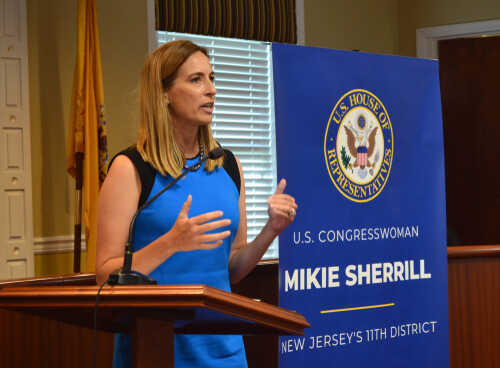
Gov. Mikie Sherrill, elected in November 2025 and marketed as a centrist Democrat with a Navy background and prosecutorial experience, attended Ramadan services at the Islamic Center of Passaic County on a Friday during Ramadan 2026. Photos and reporting indicate she met Imam Mohammad Qatanani and addressed attendees. Sherrill praised the community, saying it was “constantly looking to do good works,” and described that spirit as “lacking now in this country.”
Sherrill’s office did not respond to inquiries, leaving the public with a familiar problem: major symbolic outreach, but little clarity on vetting or boundaries. For voters who watched officials downplay border enforcement, crime spikes, and cultural radicalism for years, this kind of unanswered question lands hard. The story is less about religious outreach—routine for politicians—and more about who gets legitimized when the governor shows up.
The Imam’s Legal History and Why It Matters to Security-Minded Voters
Imam Mohammad Qatanani has been at the center of repeated immigration and deportation battles. Reporting describes an undisclosed 1993 Israeli conviction for Hamas membership that allegedly was not disclosed on a 1999 U.S. visa application, triggering Department of Homeland Security actions over time. Qatanani has denied Hamas ties. A July 2025 Third Circuit ruling, decided 2–1, blocked DHS from revoking his green card, but the court did not resolve the underlying Hamas-related allegations.
That procedural posture matters. When judges decide cases on agency authority or process rather than the substance of accusations, politicians often treat the outcome like a full exoneration, even when it isn’t. Conservative voters—already skeptical after years of selective enforcement in immigration and national security—tend to focus on the unanswered core question: if leadership wants public trust, it should be willing to explain why this specific figure warranted a gubernatorial platform.
A Mosque With Documented Hamas-Fundraising Connections in Its Past
The Islamic Center of Passaic County was founded in 1989 and has a history that has drawn scrutiny. The reporting reviewed states that cofounder Mohammad El-Mezain was convicted in 2009 for funneling money to Hamas through the Holy Land Foundation. It also says Mohammed Al-Hanooti, described as having raised over $6 million for Hamas, served as an imam there in the 1990s. Those historical details are central to why Sherrill’s visit became controversial.
Elected officials are not ordinary visitors; they lend legitimacy. When an institution has leadership history tied to terror-finance convictions, the burden shifts to the politician to show careful judgment—especially a governor whose personal brand trades heavily on seriousness, uniformed service, and “national security” competence.
Public Praise, Follow-Up Outreach, and the Political Risk of Selective Transparency
Sherrill’s Ramadan appearance in Passaic was not her only public-facing outreach to Muslim groups. Separate coverage highlights her participation in an Eid al-Fitr event in Newark marking the end of Ramadan. Her administration has also issued statements on Middle East-related evacuations, criticizing federal response and offering New Jersey support. Those events show an ongoing posture of engagement, but they do not answer the narrower question raised by Passaic: why this mosque and why this imam.
NJ Gov. Mikie Sherrill Visits Mosque Run by a Radical Imam With Troubling Ties to Hamas
https://t.co/eHMSucfQiI— Townhall Updates (@TownhallUpdates) March 24, 2026
The broader national mood in 2026 makes these questions sharper, not softer. Americans who are divided over U.S. involvement abroad and skeptical of open-ended conflict still expect basic gatekeeping at home: lawful immigration rules, consistent terror-finance scrutiny, and clear lines against radical agitation. Reporting notes Qatanani’s past rhetoric, including a 2017 call for a “new intifada” at a Times Square rally and praise for Yusuf al-Qaradawi. If those claims are accurate, Sherrill’s team owes voters an explanation of standards—not slogans.
Sources:
Governor Mikie Sherrill celebrates the end of Ramadan with New Jersey Muslim groups
Statement from Governor Sherrill on Middle East Evacuations