A former cable-news star is now facing a federal indictment after an anti-ICE protest reportedly spilled into a Minneapolis church—raising a blunt question: when does “journalism” become participation in intimidation?
Story Snapshot
- Deputy Attorney General Todd Blanche confronted ABC’s George Stephanopoulos on This Week after the host defended Don Lemon as a reporter.
- Federal prosecutors say Lemon embedded with activists, joined planning for a “surprise operation,” and then took part in a church disruption during a worship service.
- According to the reporting cited, an appellate court reversed an initial dismissal and found “clear probable cause,” and a grand jury later returned an indictment.
- The dispute centers on whether Lemon’s conduct was protected newsgathering or illegal participation in an operation targeting religious congregants.
Blanche’s Message to ABC: Courts and a Grand Jury Already Weighed In
Deputy Attorney General Todd Blanche used his ABC appearance to push back on the idea that Don Lemon’s status as a former journalist should shield him from prosecution. Blanche pointed to the sequence described in the available reporting: a judge initially tossed charges, an appellate court reversed that decision while finding probable cause, and a grand jury then returned an indictment that was unsealed publicly. That progression matters because it reflects multiple legal checkpoints, not a spur-of-the-moment political claim.
The key factual hinge in Blanche’s argument is participation. The research provided describes Lemon as embedded with activist Nekima Armstrong during planning for “Operation Pullup,” with Lemon allegedly agreeing not to disclose the target and framing the action as a “surprise operation” meant to “disrupt business as usual.” On that account, Blanche challenged Stephanopoulos’ premise that this was simply independent reporting, arguing that planning and operational secrecy look less like observation and more like involvement.
What the Indictment Narrative Describes About the Church Disruption
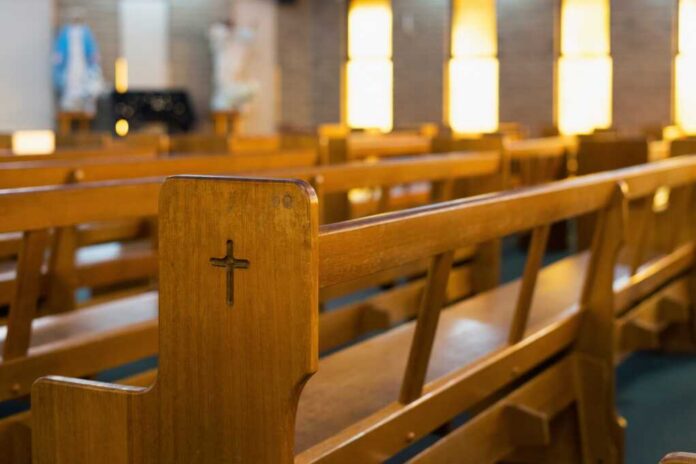
The reporting describes an early-February disruption at a Minneapolis church during a worship service. According to the account, Lemon and others entered, occupied aisles, yelled and chanted, and obstructed congregants and the pastor even after being asked to leave. The alleged target selection was tied to claims that the pastor had ICE connections, placing the incident squarely in the larger anti-ICE protest orbit. On these facts, the dispute is not about speech in a public square but conduct inside a sanctuary.
For many Americans—especially those already worn down by years of institutions excusing destructive activism—the setting is the point. Churches are not political props, and families attending worship should not be treated as acceptable collateral for an “operation.” The First Amendment protects speech, but it does not automatically convert every disruptive act into protected press activity. Based on the provided research, Blanche’s position is that the legal system is treating this as intimidation and obstruction, not mere documentation.
The “Journalism” Defense Meets a Bright-Line Problem: Planning vs. Covering
Stephanopoulos reportedly pressed Blanche on where Lemon “crossed the line” from reporting to criminal activity, referencing the earlier dismissal before the appellate reversal. Blanche’s response, as summarized, emphasized a plain distinction: recording an event is different from helping execute it. The research also cites Lemon’s own livestream framing the disruption as what the First Amendment is “about” and conceding protests are “not comfortable,” language that reads like advocacy rather than neutral documentation.
With only one primary news source provided, readers should recognize limits: the research does not include a full ABC transcript, the complete indictment text, or independent corroboration from additional outlets. Even so, the sequence described—arrest on the Friday before Feb. 1, 2026, a public debate on Sunday, and references to appellate and grand-jury action—creates a concrete framework for evaluating claims. Courts and jurors do not indict because an anchor is unpopular; they indict when probable cause is found.
Why This Case Resonates in 2026: Accountability After Years of Double Standards
The broader political context is hard to miss. After years when many voters felt left-wing activism was routinely minimized—while everyday Americans were lectured about “norms” and “decency”—this case spotlights whether elite credentials still buy exemptions. The reporting frames Blanche’s position as simple: “It doesn’t matter if you’re a former CNN journalist,” you cannot participate in a disruptive operation and then claim press immunity. That approach aligns with equal application of the law.
Despite all the clear video evidence and the
clear legal basis, Dems are still shilling for Lemon.WATCH: Deputy AG Todd Blanche DESTROYS George Stephanopoulos After he Defends Don Lemon https://t.co/QFUYUEVe9R #gatewaypundit via @gatewaypundit
— Lonestarmango (@lonestarmango) February 2, 2026
What happens next will determine how much of this becomes precedent versus a one-off controversy. The research indicates the case is active and the indictment is publicly viewable, but it does not provide later court dates, motions, or Lemon’s full defense beyond the First Amendment framing. For conservatives concerned about constitutional rights, the principle cuts both ways: a strong press matters, but so do free exercise of religion, public order, and the basic idea that political mobs cannot commandeer sacred spaces without consequences.
Sources:
WATCH: Deputy AG Todd Blanche DESTROYS George Stephanopoulos After he Defends Don Lemon
Meet the Press