
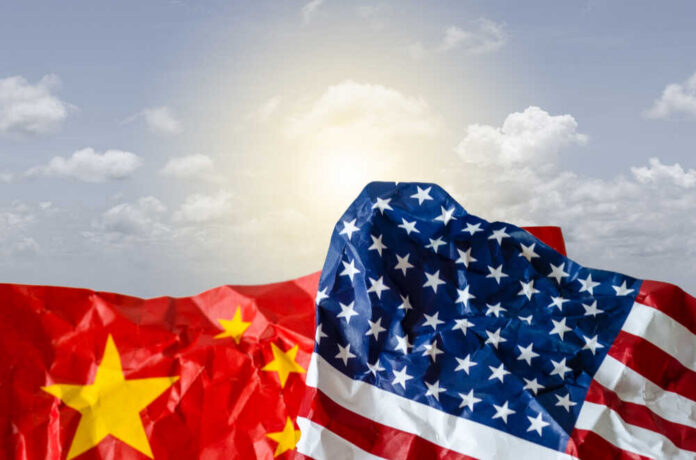
While Washington fights partisan trench wars at home, Beijing is quietly turning the Americas into a testing ground for whose story about freedom, prosperity, and power people believe.
Story Snapshot
- China has rapidly expanded trade, finance, and infrastructure ties across Latin America and the Caribbean, often facing little U.S. pushback for nearly two decades.[1][7]
- Scholars describe the region as a new arena where the United States and China compete not just for markets, but for credibility and long‑term influence.[1][2]
- China’s advance blends economic deals with political and ideological messaging, while U.S. soft power is undercut by domestic dysfunction and policy drift.[1][2][5][7]
- Both conservatives and liberals in the United States increasingly see a global system tilted toward unaccountable elites, and this great‑power rivalry risks deepening that distrust.
The New Front Line: Latin America as a Test of Credibility
Analysts now describe Latin America and the Caribbean as a key arena where China and the United States are testing whose model looks more reliable under pressure.[1][2] Over roughly twenty years, China has moved from the margins to a “major actor” in the region, increasing its influence at “an unprecedented pace” and, crucially, doing so for many years without serious contest from Washington.[1][7] That vacuum let Beijing present itself as a problem‑solver on infrastructure, trade, and finance, while U.S. attention drifted elsewhere.
Policy researchers argue this is about more than ports, railways, or commodity contracts.[1][5] When Chinese loans fund highways or power plants, they also bring political narratives about partnership, non‑interference, and “win‑win” development that contrast with memories of heavy‑handed U.S. involvement.[1][5] At the same time, China’s presence often bypasses local debates on transparency and rule of law, deepening fears that deals are negotiated among elites while ordinary citizens shoulder the long‑term costs.[1][5] For many in the Americas, both great powers look self‑interested, but in different ways.
How China’s Approach Differs from America’s
Researchers highlight deep cultural contrasts between Chinese and American political behavior that shape how this rivalry plays out.[3][4][8] Chinese political culture traditionally emphasizes group harmony, hierarchy, and long‑range planning, while American culture prizes individual initiative, open criticism, and shorter‑term accountability.[3][4] Beijing’s outreach often stresses stability, sovereignty, and gradual change, which can appeal to governments tired of Western lectures on democracy yet still dependent on outside capital.[1][2][5] Washington, by contrast, leads with rights language but frequently delivers inconsistent follow‑through.
These differences show up in diplomacy and messaging.[2][4][8] Chinese officials favor indirect communication and closed‑door bargaining, making concessions slowly while projecting confidence in their long‑term rise.[4][8] American officials tend to speak more bluntly about corruption, human rights, or security threats, but their credibility suffers when U.S. policies swing every election cycle or when Congress is gridlocked.[2][5] For citizens across the Americas, the question is not which ideology is purest; it is which partner will still be there when the next crisis hits, and on what terms.[1][2][5][7]
U.S. Soft Power Under Strain
Scholarship on U.S.–China competition in the Western Hemisphere stresses that Beijing’s gains were made easier because Washington let its own influence tools erode.[1][2][7] One major study notes that China’s advance faced “little contestation” from the United States for most of the early twenty‑first century, attributing the later U.S. response to a narrow policy window rather than a sustained strategy.[7] As wars, domestic polarization, and economic mismanagement dominated U.S. politics, attention to long‑term engagement with neighbors to the south slipped down the priority list.[1][5][7]
That drift feeds into broader American frustration with a federal government that appears more focused on partisan advantage than coherent foreign policy. Conservatives see elites embracing globalism, porous borders, and costly overseas commitments while neglecting working‑class communities at home. Liberals see a system captured by corporations and wealthy donors, indifferent to social inequality. In that context, learning that China is methodically building leverage across the Americas while Washington fights over talking points deepens the sense that ordinary citizens are not the priority for either camp of elites.[2][5][7]
The Battle for Belief, Not Just Territory
Experts increasingly describe U.S.–China rivalry as a clash over influence and rules, not a simple replay of ideological Cold War blocs.[2][5] One analysis argues the competition is “a clash of power, not models,” meaning both sides sell variations of market capitalism while arguing over who writes the regulations and whose standards others must follow.[2] In Latin America, that means the same Chinese investment can be portrayed as crucial development, dangerous dependency, or geopolitical encroachment, depending on who is speaking and whose interests are threatened.[1][5][7]
For Americans on both the right and the left, the deeper issue is trust. Many no longer believe their own leaders defend the national interest consistently, much less the interests of working families. When they hear about Chinese‑funded projects in Panama or Argentina, or U.S. pressure campaigns in Brazil or Mexico, it fits a pattern: big powers and local elites cutting opaque deals, while everyday people worry about jobs, inflation, migration, and crime. The “battle for the Americas” is ultimately a battle over whose promises about fairness, sovereignty, and opportunity anyone can still believe.[1][2][5][7][8]
Sources:
[1] Web – The Battle for the Americas Is a Battle for Belief
[2] Web – Between the Hegemon and the Revisionist: China’s Strategic …
[3] Web – The Silent Parallels of US-China Rivalry: A Clash of Power, Not …
[4] Web – Cultural Differences Between China and the United States
[5] Web – 10 cultural differences between China and the US – Country Navigator
[7] YouTube – Should Americans Fear China’s Dominance?
[8] Web – Explaining the belated US response to China’s advances in Latin …