
A sudden landslide in southwest China crushed homes and families in minutes, while tight state control over information leaves the world guessing how bad it really is.
Story Snapshot
- At least eight people are dead and 34 are missing after a landslide hit Pengshui County in Chongqing, China.
- More than ten residential buildings were buried and over 1,100 nearby residents were evacuated from the area.
- China deployed a large rescue force and activated a national Level II emergency response for geological disasters.
- Heavy rain and unstable slopes fit a wider pattern of deadly landslides in Chongqing’s mountainous region.
What happened in Pengshui County
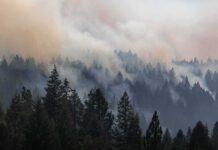
The disaster struck on Friday morning when a landslide hit Pengshui County, on the outer edge of Chongqing in southwest China. Local officials say the slide began at about 9:08 a.m. and sent rocks and soil roaring down a slope above the Wujiang River. The debris buried more than ten residential buildings and damaged a stretch of road, trapping people inside homes and vehicles. Rescue teams rushed in, but officials admit they still do not know the exact number of people caught under the rubble.
By Friday night, authorities reported at least eight people dead and 34 still missing, with 18 people pulled out after being trapped. Earlier updates had listed nine or ten rescues, showing how fast numbers shifted in the chaos. More than 1,100 residents living near the collapse zone were evacuated to safer areas, as power, water, and gas were shut off within a one‑kilometer radius to reduce further risk. Ten injured survivors were taken to hospitals, including several in serious or critical condition.
Rescue efforts and Beijing’s response
China’s Ministry of Emergency Management activated a national Level II emergency response for geological disasters and sent a 100‑member rescue team to Pengshui. State media report that over 800 rescuers are now on the ground, including firefighters and a state engineering rescue force with geological experts and search equipment. President Xi Jinping ordered “scientific” search and rescue operations and called for an investigation into what caused the slide. The central government also allocated tens of millions of yuan in disaster relief funds to support rescue work and rebuild damaged infrastructure.
Local officials say community workers noticed scattered falling rocks around 8 a.m. and issued an emergency warning. More than 60 residents in the most dangerous zone started to evacuate, but the main landslide struck during that process and buried some of them. One county resource official estimated the landslide volume at about 18,000 cubic meters, with one huge rock alone around 3,000 cubic meters. Officials describe the terrain as unstable and “unpredictable,” with dangerous rocks still hanging above the site. Continued rain is making the rescue slower and more risky.
Why this region is so vulnerable
This tragedy fits a known pattern in Chongqing, a city built among steep mountains and deep river valleys. Geological studies show that landslides there usually occur when daily rainfall goes over about 250 millimeters, a threshold often reached during typhoon season. The Pengshui slide has been described as rainfall‑induced, matching the way extreme storms can quickly turn fragile slopes into rivers of mud and rock. Only weeks earlier, a May 24 landslide in Yongchuan District, also in Chongqing, killed about 20 people after extremely heavy rain.
Experts have warned for years that rapid building in risky zones and poor slope management make these natural hazards far more deadly. When homes sit directly below unstable cliffs or fill narrow river valleys, even a single storm can wipe out entire blocks. A World Bank emergency project for Pengshui, prepared before this event, already flagged the need for better environmental and social risk controls around landslide‑prone areas. That background raises hard questions about how much was known in advance and whether safety steps kept up with growth.
Information gaps and the power of the state narrative
Almost all data about this landslide comes from Chinese state media and official press conferences, including numbers of dead, missing, and rescued. International news outlets on the story are mainly repeating those figures, because foreign reporters and independent groups appear to have limited or no direct access to the site. Officials themselves say they are still confirming how many people are trapped, and rescue totals have changed across different reports. No independent geological survey has yet been released to verify landslide size or the exact cause.
For many Americans on both the right and the left, this situation looks familiar: a deadly event, ordinary families at risk, and a government tightly managing the message. In China, state media control shapes how disasters are framed, often stressing “unpredictable” terrain and heavy rain rather than planning failures or unsafe construction. Here at home, people worry that elites and bureaucrats also hide behind technical language when systems fail, whether in train derailments, industrial spills, or storms that hit unprotected communities. The Pengshui disaster is a stark reminder that when government controls information, regular citizens everywhere struggle to learn the full truth and to hold leaders accountable.
Sources:
youtube.com, apnews.com, english.www.gov.cn, xinhuanet.com, yahoo.com, newsbreak.com, documents1.worldbank.org, globaltimes.cn, global.chinadaily.com.cn, bastillepost.com, chinadaily.com.cn