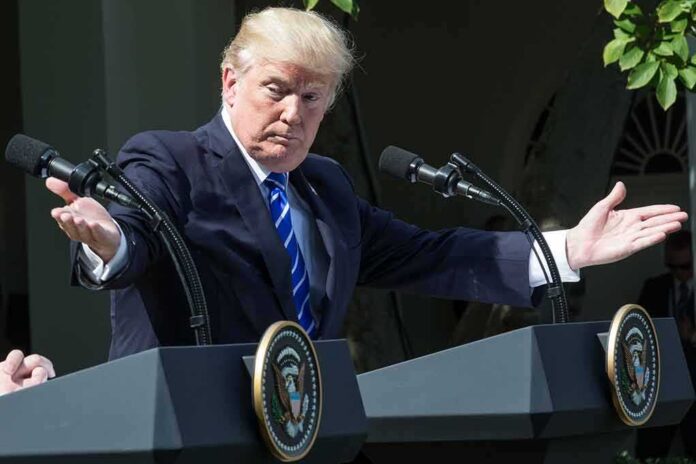
A socialist mayor and a Republican president who spent months trading insults now talk so often that Mamdani says he can’t even remember who calls whom first.
Story Snapshot
- Mayor Zohran Mamdani calls his working relationship with President Trump “honest,” “direct,” and “productive,” despite sharp policy disagreements.
- The two have met face-to-face at least three times since late 2025, including a surprise White House visit and a sit-down at Gracie Mansion.
- Mamdani and the White House held an hourslong phone negotiation after a New York City immigration enforcement shooting in October.
- New York City has asked the Trump administration for $21 billion in federal money for a massive housing project at Sunnyside Yard.
- The cooperation mirrors a long pattern of mayors working with presidents on money and logistics while fighting them on broader policy.
An Unlikely Rapport Takes Shape
Mamdani told NBC’s Kristen Welker on “Meet the Press” in April that his dealings with Trump have been straightforward. “I would say it’s honest. It’s direct, and it’s productive,” he said. He added that honesty means admitting where the two men still disagree, even as they keep talking.
The tone was not always friendly. Reuters reported that Trump and Mamdani traded insults for months before an unexpectedly warm November 2025 meeting, where they smiled, swapped compliments, and pledged to work together on crime and affordability in New York City. Since then, the two have met in person multiple times, including a September sit-down at Gracie Mansion and a surprise White House visit in February.
Housing, Grocery Prices, and a Tense Phone Call
During their February meeting, Mamdani pitched Trump on building more housing in New York City and discussed student detentions with federal officials. A later meeting in San Francisco covered housing, grocery prices, and energy costs. Mamdani said he views a working relationship with Trump as a practical way to solve problems facing city residents, regardless of their political differences.
The relationship faced its biggest test in October, after a shooting tied to an immigration enforcement operation in New York City. Mamdani held multiple calls with the White House that stretched into an hourslong negotiation, trying to get the victim, Oscar Belgal, released from custody. Mamdani has said his direct line to the administration made that effort possible.
A $21 Billion Ask and an Unsettled Bromance
New York City has asked the federal government for $21 billion to help build housing, parks, schools, and medical buildings at Sunnyside Yard, a long-stalled development site in Queens. The pitch came one day after Mamdani’s surprise White House visit, though months later the project still has no confirmed federal funding commitment. New York has long sent more money to Washington than it gets back, giving city officials a case for federal help.
Speaking to Fox News’ Shannon Bream in November, Mamdani described the back-and-forth contact with Trump as unpredictable. “It varies,” he said when asked who typically reaches out first. The two have met privately in the Oval Office and kept in touch through texts and phone calls since February, according to the New York Post.
Trump, for his part, has said he hopes Mamdani will be a “great mayor” and that he is open to working with him on behalf of New Yorkers, even as the two clash over immigration enforcement and policing. This kind of selective teamwork is not new in American politics. Mayors from both parties often work with presidents of the opposite party on housing money, disaster aid, or policing grants, while publicly opposing them on bigger constitutional or policy fights. Research on so-called “sanctuary” city policies shows local governments frequently draw a line between practical cooperation and formal political resistance, especially on immigration enforcement.
That pattern fits what has unfolded in New York City. Mamdani has pushed back hard on federal immigration enforcement tactics while still picking up the phone to negotiate with the same administration carrying them out. For a city facing high housing costs and growing affordability pressure, that balancing act may matter more to residents than the politics driving it.
Sources:
facebook.com, reuters.com, edition.cnn.com, ianslive.in, nytimes.com, san.com, nypost.com, thehill.com, scielo.org.mx, bisnow.com, thenation.com, normanoder.substack.com