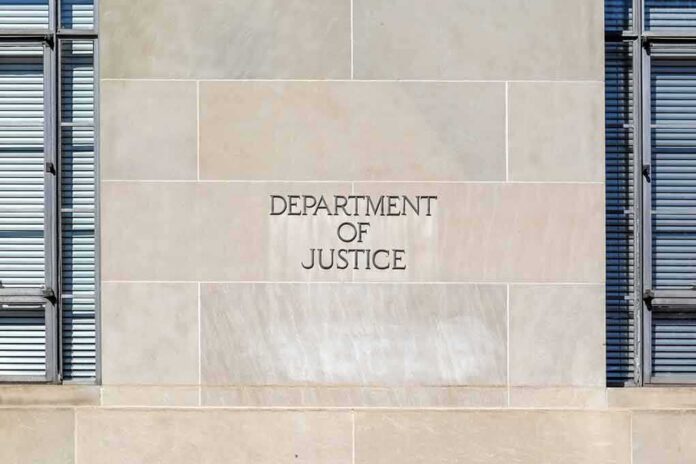
A new Justice Department memo now lets the attorney general and other top appointees campaign openly, erasing a line many thought was firm.
Story Snapshot
- The October memo says Senate-confirmed appointees can take part in partisan events in a personal capacity.
- The policy departs from tighter limits used under Attorney General Merrick Garland.
- Attorney General Todd Blanche spoke at a Republican convention and a Senate campaign rally, with DOJ saying ethics cleared both.
- Critics warn the shift blurs Justice Department independence, while DOJ cites Hatch Act exceptions and no fundraising.
What The New DOJ Memo Allows
Assistant Attorney General Jolene Ann Laurie issued an October 2026 memo stating that Senate-confirmed presidential appointees can engage in certain political activities while acting in a personal capacity. The memo covers speaking at rallies, canvassing, and serving as party delegates or officers, with reviews by ethics officials when events involve partisan candidates. The guidance says appearances near elections face “heightened scrutiny.” The department frames the changes as clarifying a Hatch Act exception, not creating a new carve-out.
Justice Department officials stress that the Hatch Act treats Senate-confirmed appointees as less restricted than most federal workers. They say the rule bars use of official authority, government resources, or agency business to sway elections, but it does not bar private partisan activity by these appointees. The memo’s text directs reviews to ensure events are clearly political or official, not both. It also notes the attorney general did not engage in fundraising at recent events, which remains a bright red line.
How This Differs From The Garland-Era Standard
Reporters compared the 2026 guidance to limits used under Attorney General Merrick Garland. Those earlier rules barred non-career appointees from attending partisan events in any capacity, including off duty. The new guidance permits Senate-confirmed appointees to attend and participate when acting personally, so long as they avoid official trappings and agency matters. That contrast explains why this change feels stark to many observers who viewed the older standard as a shield for Justice Department neutrality.
Legal permissibility and institutional trust are different tests. The department says the Hatch Act has always drawn distinctions for Senate-confirmed leaders. Critics worry that allowing the attorney general to campaign, even off duty, still chips away at the Justice Department’s image as above party fights. Both things can be true: the activity can be legal, yet still unsettle people who want prosecutors kept far from campaign stages.
Blanche’s Campaign Appearances And DOJ’s Defense
Attorney General Todd Blanche offered high-profile examples of the new approach. He spoke at a Republican midterm convention in September and appeared at a North Carolina Senate campaign rally. The department acknowledged the appearances and said Blanche acted in a personal capacity, did not discuss department business, and cleared the events with ethics officials. Blanche said he did not violate any rule or law. Coverage described his remarks as aligned with administration law-and-order and border themes.
Advocacy group Public Citizen asked the Office of Special Counsel to investigate whether an August Long Island rally appearance crossed the Hatch Act line. The group argues that appearing with candidates can amount to an active endorsement, even without saying “vote for”. The department called the complaint baseless and political, pointing to ethics review and the personal-capacity setting. No public ruling has resolved that specific dispute, which keeps the argument focused on norms rather than settled law.
Why This Fight Resonates Beyond Partisans
Many Americans across the spectrum think Washington protects insiders first. They see rules shift for people at the top, while the rest face strict lines. This memo feeds that fear. The nation’s top prosecutor can now appear at rallies, even if on personal time, while rank-and-file Justice Department employees stay under tougher limits. Supporters say voters deserve to hear from leaders. Skeptics ask who will trust sensitive cases if those leaders campaign on stage.
What To Watch Next
Watch for formal opinions from the Office of Special Counsel or new internal ethics writings that clarify how the line is drawn for the attorney general. Look for details on travel, staffing, and event logistics to confirm that no government resources support political work. Track whether Department messaging or case decisions shift around campaign events. If the facts show clean separations, legal risk stays low. If lines blur, pressure for stricter rules will surge.
Sources:
cbsnews.com, pbs.org, inquirer.com