
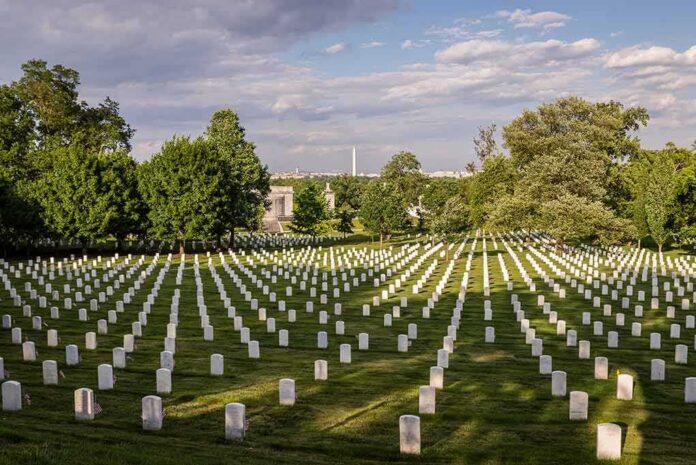
California let a $10 million federal offer for an Orange County veterans cemetery drift toward expiration as bipartisan lawmakers warned the clock was about to run out.
Story Highlights
- Bipartisan House members urged California to preserve $10 million in federal veterans cemetery funds.
- Orange County leaders had already backed the site and funding steps at Gypsum Canyon.
- State officials touted separate budget money to advance the same cemetery project.
- The record shows delay and risk of lapse, but not a formal grant rejection by the state.
What Congress Warned And When
A bipartisan group of House members told California leaders to act fast to protect $10 million for the Southern California Veterans Cemetery at Gypsum Canyon. Representatives Lou Correa and Young Kim led the letter, which urged the state to take “all necessary steps” to keep the Veterans Affairs offer alive. Representative Kim also stated California’s veterans department signaled it would not draw down the money before the end of the federal fiscal year, which risked the commitment.
Their warning focused on timing. Federal fiscal years end on September 30, and lawmakers said there was no guarantee the same money would remain in a later year. The Veterans Cemetery Grants Program sets strict annual steps. Preapplications are due July 1 and applications July 15 for the next federal year, though the program notes funds are available until expended. The mix of deadlines and annual priorities can create cliff-like pressure for projects that slip on one task.
Local Support And Money On The Table
Orange County officials had already lined up behind the Gypsum Canyon site. Board materials show the Board of Supervisors unanimously backed California’s veterans department applying to the federal grants program for the cemetery. County and state leaders had also set aside sizable funding. Public statements from the local delegation describe $20 million in county site work money from 2021 and a combined total of about $50 million from state and local sources for construction readiness.
Independent reporting earlier in the summer added momentum to that picture. Voice of OC described state leaders authorizing $10 million in direct spending plus $9 million for related work, and tallied more than $78 million set aside from federal, state, and county sources for the project. That combination suggests the project was not a paper idea. It was a long-running effort with land, design, and early-stage funds tracked by multiple governments and community advocates.
What The State Says It Is Doing
Governor Gavin Newsom’s office said the July budget advanced construction of the Southern California Veterans Cemetery in Orange County. The statement cited $34 million for veterans programs and noted $10 million in expenditure authority to begin planning, drawings, and Phase I construction at the site. That marks a clear message from the state: money exists in the budget to move the project. The state’s claim answers critics who say the cemetery was ignored.
Those signals do not resolve the grant timing conflict. The congressional letter and press statements say the state did not complete needed steps to draw down the $10 million federal funds before the fiscal year ended. The available record does not include a state memo explaining the delay, whether it involved site control, design milestones, or legal reviews. Without the state’s detailed rationale, the gap between budget intent and grant execution remains hard for the public to parse.
What Is Known, What Is Not, And Why It Matters
The documented facts show three things. First, federal veterans cemetery money was offered, and lawmakers across parties pushed California to lock it in before the deadline. Second, local officials in Orange County supported the Gypsum Canyon site and previous funding steps to prepare it. Third, the state claimed separate progress through its budget, including funds labeled for Phase I work. These points all can be true at once without resolving the immediate grant lapse risk.
CA let the clock run out on $10M in federal funding for our Orange County Veterans Cemetery.
Our veterans should not have to pay for Sacramento’s failure to act.
I’m not giving up & won’t stop until our veterans get the final resting place they deserve, right here at home.🇺🇸 pic.twitter.com/ozeVzGXLvt
— Young Kim (@RepYoungKim) October 2, 2026
Two important limits remain. The record does not show a formal written state rejection of the grant, only delay that placed the funds at risk. The federal program also states that appropriated funds are available until expended, which can soften, but not erase, deadline pressure in a given year. For families waiting on a place to honor service, the back-and-forth sounds like bureaucracy. For taxpayers, it raises a core worry: when governments cannot coordinate, money and trust both get burned.
Sources:
cnav.news, youngkim.house.gov, gov.ca.gov, correa.house.gov, tran.house.gov, voiceofoc.org, ocregister.com