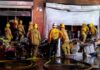


Passengers and crew fought into the cockpit and stopped a suspected pilot attack as their jet plunged thousands of feet before landing safe in Saudi Arabia.
Story Snapshot
- Israel’s leader says a pilot stabbed his colleague and “apparently tried to crash the plane.”
- The jet broadcast first a general emergency, then an unlawful interference alert.
- Passengers and crew overpowered the attacker and enabled a safe landing.
- Investigators are probing motives and any outside ties; no public proof yet links Iran.
What Happened During the Flight
On a flight from Dubai to Tel Aviv, a pilot in the cockpit stabbed the other pilot during cruise. Israel’s prime minister said the attacker “apparently tried to crash the plane,” which carried passengers who began praying as the jet plunged. The crew broadcast a general emergency and then a code for unlawful interference. The aircraft diverted to Tabuk, Saudi Arabia, and landed safely after an in-flight struggle that stopped the attack.
Reuters reported the jet fell nearly 14,000 feet in under 30 seconds after the stabbing. That sharp drop fits a sudden loss of control or deliberate input, not a routine event. Passengers and crew forced entry to the cockpit, subdued the attacker, and kept the aircraft flyable. Emergency responders met the flight in Tabuk. The injured pilot survived and has been praised for saving lives during the descent and landing sequence under extreme stress.
How Authorities Are Framing the Incident
Israel’s prime minister called the suspect a would-be killer and said officials would dig into motive and possible help from others. He said investigators would also examine any potential link to Iran, but added it was too early to say if Iran was involved. Israeli officials have described the event as an act of terror or an attempted crash. Israel said it would join the investigation with partners to trace the attacker’s background and intent.
Aviation reporting shows the jet first sent the 7700 transponder code, which signals a general emergency. It then switched to the 7500 code, which signals unlawful interference or a hijacking. These codes help air traffic control route help and prepare responders. By itself, a code does not prove motive, but the shift from 7700 to 7500 matches a cockpit security crisis, as described by officials and passengers on board the diverted flight.
Why This Matters for Flyers and Policy
This case highlights the last line of defense when systems fail: trained crews and engaged passengers. People on board acted fast, overpowered the attacker, and backed up the flight crew. Their actions turned minutes of terror into a safe landing. Many readers worry that elites cut corners while asking the public to trust them. Here, ordinary people did what government often cannot do quickly: take real risk and solve the problem in front of them.
A Flydubai flight from Dubai to Tel Aviv was forced to make an emergency landing in Saudi Arabia after an alleged attack inside the cockpit. The incident has raised fresh questions about the Omani pilot under investigation, his background, how he was cleared to fly to Israel and… pic.twitter.com/lv4ekQlL94
— THE WEEK (@TheWeekLive) October 1, 2026
The investigation now turns to hard evidence. Officials will review the cockpit voice recorder, flight data recorder, and medical reports. They will map the timeline of the assault, the code changes, and the rapid descent. They will also review communications, travel, and finances for any outside help. Leaders may speak in broad terms, but the recorders will give the clearest story of who did what, when, and how a packed jet came home alive.