
A federal judge cleared the Tucson 5 border wall project to move forward in Arizona, citing national security and federal land authority.
Story Highlights
- A federal judge denied an injunction, allowing 62 miles of wall work to proceed.
- The court said the project sits within a long-reserved federal strip, not tribal land.
- The judge cited national security and foreign policy as reasons to defer to the government.
- The tribe’s lawsuit continues, but construction planning is permitted during the case.
Judge’s Ruling Keeps Wall Preparations On Track
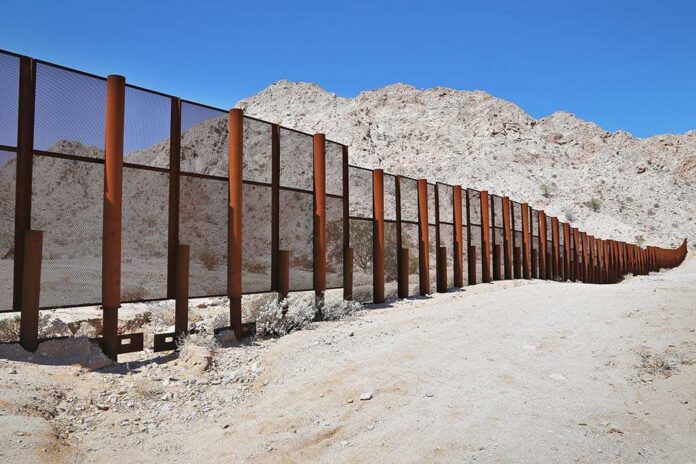
U.S. District Judge Richard J. Leon denied the Tohono O’odham Nation’s request to pause the Tucson 5 border wall project. The ruling lets the government continue planning and pre-construction work on about 62 miles along Arizona’s southern border while the broader lawsuit continues. Reporting on the opinion says the court found the Nation had not shown the fence is being built on tribal land and declined to halt the project at this stage, a key early win for border security.
The court’s decision emphasized deference to federal authorities on border threats. Coverage quotes the opinion as recognizing that national security and foreign policy concerns warrant giving the government room to act. That recognition matters for agents who face daily cartel smuggling, human trafficking, and fentanyl flows. The decision keeps momentum behind physical barriers, roads, and sensors that help agents control terrain and cut illegal crossings that drain local communities and law enforcement.
Land Status And The 1907 Federal Reservation
Reporting on the case explains the dispute centers on whether the wall sits on reservation land or within a long-established federal border strip. The court looked to a 1907 presidential proclamation that reserved the first 60 feet along the international line for federal use, often called the Roosevelt Reservation. Judge Leon, according to the coverage, rejected claims that the project would unlawfully shrink the reservation and said the Nation had not shown the fence would be on its land.
This land-status point is decisive at the injunction stage. If the work area is within federal land reserved for border control, agencies can advance construction subject to law and oversight. The government is proceeding through formal action by the Department of Homeland Security and United States Customs and Border Protection, not through informal occupation. The Nation’s own filing targets those agencies and seeks to stop “any steps in furtherance of construction,” confirming an active, official project record.
Project Scope, Process, And What Comes Next
Outlets describe a concrete scope for the Tucson 5 segment, including pre-construction activities tied to a 62-mile plan. These activities include surveys, staging, and related infrastructure that prepare for barrier installation. The ruling does not end the case. It means the emergency pause is denied while the lawsuit proceeds on the merits. The court weighed the record and found the Nation is not likely to succeed on key land claims at this time, which keeps preparation moving for federal crews.
Judge Leon’s decision also reflects a pattern in border cases. When the federal government frames a corridor as a national security zone, courts often defer early while they sort property, environmental, and cultural claims on a full record. That is what happened here. The government presented a border-security rationale, and the court credited that as weighty. The next phase will test remaining claims and evidence, including any environmental and cultural resource concerns.
Tribal Objections, Cultural Concerns, And The Legal Path
The Tohono O’odham Nation argues the project violates its sovereignty, alters boundaries, and threatens sacred and burial sites. The Nation also says the wall would further divide O’odham communities with ties across the border. Those objections are now part of the ongoing case and public debate. The judge’s denial does not resolve every cultural or environmental dispute; it addresses whether emergency relief is justified while litigation continues.
For border communities living with cartel traffic, the court’s ruling lands as a practical victory. It keeps crews moving and strengthens a layered strategy that adds barriers to manpower, tech, and roads. For the Nation, the fight is not over; its claims will be tested on a fuller record. For the country, this is a reminder: secure borders protect families, jobs, and the rule of law. The administration now must build firmly, lawfully, and with respect for legitimate cultural concerns.
Sources:
nativenewsonline.net, azcapitoltimes.com, californiaglobe.com, tucsonsentinel.com