

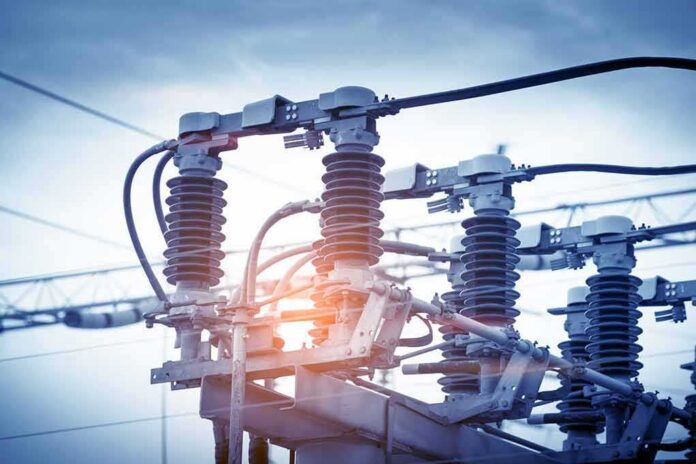
Hackers linked to Iran’s government shut down a small British power plant for four days, marking what is believed to be the first successful cyberattack of its kind on United Kingdom energy infrastructure.
Quick Take
- Iran-linked hackers disabled a UK power facility for four days, according to The Telegraph.
- The incident was reported to Britain’s National Cyber Security Centre.
- The outage did not affect the UK’s wider power supply or energy generation.
- Officials say state-linked hackers now cause three-quarters of attacks on UK critical infrastructure.
Four Days Offline at a British Power Facility
A British power plant went dark for four days after hackers tied to Iran broke into its systems, The Telegraph first reported. The incident was reported to the National Cyber Security Centre, the public arm of Britain’s spy agency GCHQ that advises companies on protecting critical infrastructure from foreign threats. Staff worked around the clock to bring the facility back online.
The plant’s exact location has not been made public for security reasons. Reports say the outage had no impact on the UK’s wider power supply or overall energy generation, meaning homes and businesses did not lose electricity because of the breach. Even so, security officials view the attack as a troubling first for British energy defenses.
A Possible Message From Tehran
Investigators believe the attack may have been designed to send a signal rather than cause lasting damage. The Telegraph reported it is possible the incident aimed to prove that hackers linked to Iran’s Islamic Revolutionary Guard Corps could break into UK systems and shut down sensitive infrastructure sites whenever they choose. No group has claimed responsibility, and British officials have not issued a formal public attribution.
This would not be the first time Iran’s Revolutionary Guard has been tied to cyber operations against Western targets. Earlier this year, the UK and international allies issued a joint advisory warning that Iranian state-linked hackers were exploiting technical weaknesses to run ransomware operations against multiple industries, showing a pattern of persistent, organized activity rather than a one-time incident.
Part of a Bigger Cyber Threat Picture
British officials say this kind of attack fits a growing trend. The National Cyber Security Centre reported that UK critical infrastructure faced more than 200 cyberattacks over the past year, with state-linked hackers behind three-quarters of them. The agency’s chief has separately warned that hostile nations, including Russia, China and Iran, are increasingly targeting the systems that keep hospitals, water plants and power grids running.
Hackers affiliated with Tehran shut down power plant for four days in UK following cyberattack targeted over 30 water systems in Minnesota and several others Trump said he did not think Iran was behind the attack in US https://t.co/fWzLAzDNkS
— Liberty Watch (@cajiintel) August 23, 2026
Cyber officials caution that attributing an attack to a specific government often takes time, since digital fingerprints can be disguised or shared across groups. Still, the pattern is clear enough that Britain now treats state-backed hacking as a routine, ongoing threat rather than a rare emergency. That reality raises hard questions for a government already stretched thin on funding and staffing for national defense.
For everyday Britons and Americans watching from across the Atlantic, the episode is a reminder that critical systems many take for granted, power, water and communications, remain vulnerable to foreign interference. Whether the attackers answer to a foreign government or work independently, the incident shows how quickly outside actors can test the defenses of essential infrastructure without ever firing a shot.
Sources:
iranintl.com, x.com, theregister.com, ncsc.gov.uk