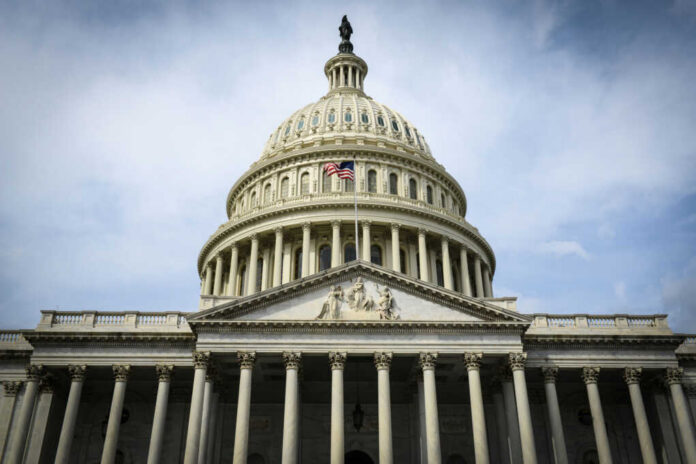
President Trump’s record $1.5 trillion defense request now sits before Congress, promising faster rearmament — and a bigger national bill — than anything in decades.
Story Snapshot
- The White House asked for $1.5 trillion for defense in fiscal year 2027, the largest request ever.
- Secretary of War Pete Hegseth told lawmakers the plan boosts readiness, innovation, and the industrial base.
- Analysts say the jump is roughly 40 to 50 percent over last year’s levels.
- Supporters call it a “generational” investment; critics warn of debt and misalignment of priorities.
What The Administration Formally Proposed
The administration released its fiscal year 2027 budget with a $1.5 trillion defense topline, the largest in U.S. history. Officials said the money supports troops and families, modernizes equipment, and rebuilds the defense industrial base needed for long wars and rapid production surges. The White House budget document states the request represents a 44 percent increase from the prior year’s defense level, reflecting a push to reset force readiness and deterrence after years of strain and deferred maintenance.
Secretary of War Pete Hegseth defended the plan before House and Senate committees. He argued the request meets an urgent moment and positions the joint force for both current fights and future high-end conflict. He said the budget would raise lethality, speed munitions output, and strengthen key supply chains across missiles, ships, and aircraft. He framed the proposal as essential to deter near-peer rivals and to avoid the higher cost of unpreparedness later.
How This Compares To Recent Budgets
Independent experts and coverage place the increase at roughly 40 to 50 percent above last year’s enacted levels, depending on what is counted. That jump would mark one of the largest year-over-year expansions since World War Two, far above routine growth rates for defense. Major outlets report the Pentagon has laid out how it would divide the funds across procurement, research, operations, and personnel to absorb the surge if Congress approves the full amount.
The request arrives after a fiscal year 2026 defense level near one trillion dollars that stretched the base budget to modern highs. The new plan seeks to build on that step by expanding production lines and stockpiles, which have been under pressure from recent conflicts and training demands. Hegseth told lawmakers that restoring depth in munitions and parts is central to credible deterrence and faster response times if a crisis widens.
Where The Money Would Go And Why It Matters
Pentagon briefings describe funds for pay raises, shipbuilding, tactical aircraft, air and missile defense, and rapid munitions output. Officials also highlight research areas like hypersonic systems, electronic warfare, cyber defense, and trusted microelectronics. The goal is to close gaps with near-peer militaries and reduce maintenance backlogs that keep units from meeting readiness targets. Supporters argue a larger, steadier demand signal will pull private industry to add capacity and workers nationwide.
Congressional supporters inside the majority party say the plan would rearm faster and reduce risk in a dangerous world. They see strong defense as the best way to avoid war and to protect trade lanes and allies. They also point to pay, housing, and family support as a way to improve recruiting and retention, which have struggled in recent years across several services. They frame the request as a strategic reset after years of patchwork fixes.
The Pushback: Debt, Tradeoffs, And Oversight
Budget watchdogs and some lawmakers warn the price tag would increase federal deficits and crowd out domestic needs. Analysts note that large, sudden increases can overwhelm acquisition programs and delay reform if oversight slips. They argue Congress should target waste, trim duplicative efforts, and set clear milestones before releasing full funding tranches. Some critics also question whether the mix of ships, jets, and research lines matches the most likely threats and timelines.
Debate will likely center on how much Congress funds in the annual defense policy and appropriations bills. Even with unified party control, committees often pare back or reshape big requests. Lawmakers will press for detailed spend plans, unit-by-unit readiness goals, and industrial delivery schedules. The outcome will signal whether Washington can both strengthen defense and keep faith with taxpayers who already feel shut out by a system that seems to reward insiders before results reach the rank and file.
Sources:
war.gov, defensescoop.com, americanprogress.org, wsj.com, whitehouse.gov