President Trump’s pick for the nation’s top law enforcement job is facing a Senate showdown that could decide whether a $1.7 billion “weaponization” fund and long-hidden Epstein files finally get real accountability.
Story Snapshot
- Acting Attorney General Todd Blanche faces a two-day confirmation hearing to permanently lead the Justice Department.
- Blanche says a controversial $1.776 billion settlement fund tied to Trump “will not progress,” but there is no written order ending it.
- Skeptical Republicans and united Democrats question Blanche’s independence after his years as Trump’s personal lawyer.
- Sanctions over an Internal Revenue Service lawsuit and fights over Jeffrey Epstein records fuel fears of a “weaponized” Justice Department.
High-stakes hearing for Trump’s loyalist-turned-law chief
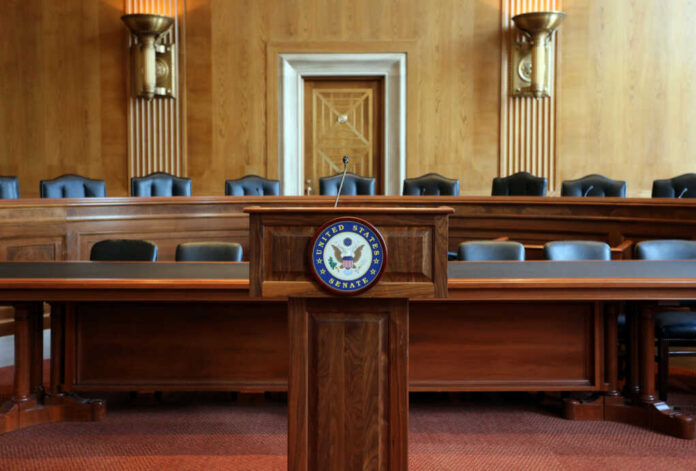
Acting Attorney General Todd Blanche is appearing before the Senate Judiciary Committee for a two-day confirmation hearing that will decide whether he becomes the permanent head of the Department of Justice. The committee scheduled the hearing for July 15 and 16 in the Hart Senate Office Building, with Blanche testifying on day one and outside witnesses on day two. Blanche has served as acting attorney general since April 2026, after former Attorney General Pam Bondi left the post. Before joining the department, he was one of Donald Trump’s personal criminal defense attorneys, which now lies at the center of questions about his loyalty and independence.
President Trump formally nominated Blanche earlier this summer to take over the Justice Department on a permanent basis, and Blanche has already submitted the detailed questionnaire required to start the committee’s 28-day review clock. That step cleared the way for the current hearing and set up a tight timeline for a possible floor vote before Congress leaves town. Republicans control the Senate, but the committee margin is thin. Reports say Blanche likely needs support from all Republican members on the panel if Democrats vote as a bloc against him. This gives a handful of uneasy Republicans enormous leverage over the future of the department—and over Trump’s grip on federal law enforcement power.
The $1.776 billion fund and fears of government “weaponization”
Blanche’s handling of a $1.776 billion Internal Revenue Service settlement fund has become one of the most explosive issues in the hearing. In earlier testimony on the Justice Department’s 2027 budget, Blanche told senators that the fund “would not progress” and that neither Trump nor his family would receive any money from it. That verbal pledge speaks directly to public anger about special deals for political insiders and the use of taxpayer money as a slush fund for the powerful. But so far, there is no signed executive order, act of Congress, or formal Justice Department policy document that permanently shuts down the fund. For Americans who already believe the system is rigged, a spoken promise without paper looks like more of the same.
Those doubts grew after a federal judge sharply criticized the IRS lawsuit that led to the settlement, calling it a case brought for “improper purposes” and describing the fund as a kind of scheme to shield Trump from tax liability. Legal analysts have warned that such sanctions and harsh language hurt the credibility of the department Blanche now leads. For many people on both the right and the left, this episode fits a familiar pattern: when elites bend the rules, regular citizens pay the price. The hearing gives senators a rare public chance to press Blanche on whether he will truly dismantle this fund and stop similar maneuvers—or whether the Justice Department will keep working one set of rules for the connected and another for everyone else.
Independence, Epstein records, and bipartisan distrust
Questions about Blanche’s independence go far beyond the settlement fund. Several Republican senators, including Thom Tillis and John Cornyn, have asked for firm commitments that Blanche will act independently of Trump’s personal interests, yet there is no record of detailed written or sworn promises from Blanche that satisfy them. At the same time, more than a thousand former Justice Department employees and dozens of civil rights organizations have publicly opposed his nomination, arguing that his past actions show a Justice Department drifting away from equal treatment under the law. This unusual mix of criticism from both conservatives and liberals reflects a larger mood in the country: many people no longer trust Washington to police itself.
Blanche’s handling of Jeffrey Epstein–related records adds another layer of concern. Court filings and news reports say he has not fully released millions of pages of Epstein documents despite orders and congressional pressure to do so, and he now faces proposed daily fines for noncompliance. Survivors and advocates warn that this creates “an illusion of transparency” while powerful names stay protected. For Americans who see a deep state guarding its own, the idea that the nation’s top law official is resisting full disclosure in such a notorious case only confirms their fears that justice is for the few, not the many.
What today’s showdown reveals about a broader justice crisis
The fight over Blanche’s nomination fits a decades-long pattern in which presidents choose justice chiefs who are close loyalists, and then the country must ask whether those loyalists will stand up to the very person who picked them. Blanche’s past role as Trump’s personal defense lawyer makes that question sharper than usual. Critics worry he will act as Trump’s shield rather than as the people’s lawyer, while supporters say his time as acting attorney general proves he can run the department. This clash mirrors a wider frustration shared by many conservatives and liberals: they feel top officials serve presidents, donors, and lobbyists first, and ordinary citizens last.
Todd Blanche needs Republican unity. One GOP senator could complicate the path. Two could stop him in committee. Here’s the Senate Judiciary math — and the Republicans to watch.https://t.co/VoNJu8xH0b
— Craig Crawford (@craig_crawford) July 15, 2026
Today’s hearing will not, by itself, fix that deep distrust. But it does force clear choices into the open. Senators must decide whether Blanche has done enough to close the $1.776 billion fund in a real, legally binding way, whether he will obey court orders on the Epstein records, and whether he can stand apart from Trump when the law demands it. For millions of Americans watching from both sides of the aisle, those answers matter less as partisan wins and more as a test of whether the federal government still remembers that its first duty is to the public, not to the powerful.
Sources:
facebook.com, judiciary.senate.gov, youtube.com, washingtonexaminer.com, federalnewsnetwork.com, washingtonpost.com, cnn.com, msmagazine.com, faughnanonethics.com, ibtimes.co.uk, lawdork.com, dnyuz.com, govinfo.gov, citizen.org, loc.gov