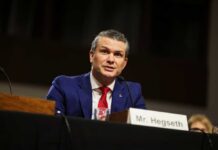


Scott Bessent’s call for unified sanctions exposes Europe’s inaction, threatening global stability.
Story Highlights
- U.S. Treasury Secretary Scott Bessent criticizes lack of unified sanctions against Russia.
- Bessent highlights Europe’s role in prolonging the Russia-Ukraine conflict.
- The U.S. pushes for coordinated economic measures, including secondary sanctions.
- Russia continues to exploit divisions among Western nations to sustain its war effort.
Bessent’s Call for Sanctions Cooperation
U.S. Treasury Secretary Scott Bessent has publicly criticized Western nations, particularly European allies, for failing to enforce robust, coordinated sanctions against Russia. Bessent argues that this lack of unity is a significant factor in prolonging the Russia-Ukraine conflict. He emphasizes that stronger economic pressure is essential to bring Russian President Vladimir Putin to the negotiation table. This call for action comes amid escalating Russian missile and drone attacks on Ukrainian cities.
Bessent specifically highlights the role of third-party countries purchasing Russian oil in undermining international efforts to constrain Russia’s military operations. He suggests that secondary sanctions and tariffs on these nations could effectively cut off revenue streams that fund the Kremlin’s war machine. However, the response from European partners has been fragmented, with some nations hesitant to escalate economic measures due to domestic economic concerns.
Secretary of the Treasury Bessent: If the US and EU together coordinate sanctions and secondary tariffs on Russian oil buyers the Russian economy will suffer a "full collapse." pic.twitter.com/TT0VPmzj26
— Igor Sushko (@igorsushko) September 7, 2025
Impact of Sanctions on Global Dynamics
The ongoing lack of coordinated sanctions has implications that extend beyond the battlefield. The protracted conflict in Ukraine has already resulted in massive displacement and significant global economic repercussions, particularly affecting energy markets. The U.S. administration, under President Trump, is pushing for more aggressive measures, yet faces resistance from some European allies who are wary of the potential economic fallout.
Experts argue that without global enforcement, gaps in the sanctions regime allow Russia to adapt and continue its military campaign. The Treasury Secretary’s direct criticism underscores a broader issue within international alliances, where differing economic interests and politics will create rifts that adversaries like Russia exploit to their advantage. This situation raises questions about the future of transatlantic relations and the effectiveness of economic policies as tools for conflict resolution.
Long-term Implications and Future Outlook
In the long term, the continued conflict risks destabilizing Eastern Europe and further disrupting global energy markets. The reconstruction of Ukraine, once peace is achieved, will require massive investment and a sustained commitment from Western nations. The U.S.-Ukraine Reconstruction Investment Fund has been established to support this endeavor, signaling a long-term dedication to Ukraine’s recovery.
While the U.S. administration remains committed to supporting Ukraine’s sovereignty through economic pressure, the effectiveness of these measures hinges on the cooperation of international partners. Bessent’s call for unified action is a reminder of the importance of solidarity in upholding democratic values and ensuring global stability.
Sources:
Bessent warns all options on the table for Russia sanctions
US prepared to increase pressure on Russia, Treasury Secretary says following overnight attacks
Wyden questions Treasury Department over Russia sanctions flip-flop
Treasury Press Release
Treasury Press Release