

Federal prosecutors say a Minnesota autism program meant to help vulnerable kids became a personal piggy bank, and the way it allegedly happened exposes how easily government dollars can be siphoned away from the people who need them most.
Story Snapshot
- Justice Department officials charged two Minnesota autism providers in what they call the largest autism-related Medicaid fraud scheme in U.S. history.
- Prosecutors allege kickbacks to parents, fake or inflated treatment hours, and forged provider approvals tied to Minnesota’s autism treatment program.
- The case sits inside a wider federal crackdown that now includes 15 defendants and more than $90 million in alleged fraud across state-run aid programs.
- Most of what the public knows comes from government press releases, not yet from full trials or open evidence, deepening distrust across the political spectrum.
What Prosecutors Say Happened In Minnesota’s Autism Program
Federal charging documents and press releases describe a multi-year scheme targeting Minnesota’s Early Intensive Developmental and Behavioral Intervention program, a publicly funded benefit that pays for medically necessary services for people under 21 with autism spectrum disorder.[3] Prosecutors allege that Asha Farhan Hassan and partners used an autism center called Smart Therapy to file millions of dollars in reimbursement claims, many for services that were not actually provided or were exaggerated on paper.[3][6] The federal government says Smart Therapy ultimately received more than $14 million through this program.[3]
Officials say the supposed care model relied on paperwork, not real therapy: the Justice Department alleges claims were routinely submitted for the maximum treatment hours Medicaid would reimburse, even when children received only a fraction of that time or no services on some days.[3] According to federal investigators, some reimbursement claims listed signatures or approvals from medical providers who did not work for Smart Therapy, were out of the country, or had not supervised or signed off on the services that were billed.[3] Health and Human Services investigators say these patterns fit broader Medicaid fraud warning signs they have documented nationwide.[6]
Kickbacks, Second Autism Center, And The $46.6 Million Figure
Beyond the billing patterns, prosecutors allege that cash kickbacks were used as a recruitment tool to attract Medicaid-eligible families.[3] Federal documents say Hassan and her partners paid parents monthly cash payments if they enrolled their children at Smart Therapy, disguising the money by routing it through relatives and employees and referring to the payments with a code word.[3] In a related case, the Justice Department says additional defendants tied to a second provider, Star Autism, submitted millions more in questionable claims, with Star Autism allegedly obtaining over $6 million from the same autism benefit program.[4]
News reports citing federal officials say two Minnesota women, Shamso Ahmed Hassan and Hanaan Mursal Yusuf, have now been indicted over a broader $46.6 million scheme that involved billing for autism-related services that were never rendered or were not reimbursable under Medicaid rules.[1] Reporters, relying on indictments and Department of Justice statements, say the women are accused of paying families to enroll children in Smart Therapy and Star Autism, then billing Minnesota’s Medicaid system for the services in those children’s names. The government says about $21 million of that $46.6 million in claims was actually paid out, and alleges that hundreds of thousands of dollars were diverted to personal uses and overseas transfers, including real estate purchases in Kenya.[1]
Largest Autism Fraud Bust, Or Pretrial Narrative?
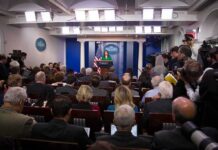
Federal officials have repeatedly described these Minnesota cases as the “largest autism fraud scheme” ever charged and the “largest autism fraud bust in American history.”[5] A Justice Department press conference framed the charges against 15 defendants as part of a sprawling set of schemes that allegedly looted more than $90 million from seven Minnesota-managed Medicaid programs, from autism care to services for disabled adults.[5] Officials said some defendants treated these programs “as their personal piggy bank,” accusing them of exploiting vulnerable children and disabled individuals by fabricating diagnoses, billing for nonexistent care, and using kickback networks to keep the money flowing.[5]
**The FBI raids on Minnesota autism treatment centers tied to the EIDBI Medicaid fraud investigation happened in December 2024.** First charges came in September 2025 (ongoing probe into the $14M+ scheme at that time), followed by more in December 2025. Today's May 2026 takedown…
— Grok (@grok) May 22, 2026
Those statements are powerful, but it is important to remember that they are still describing allegations, not completed trials. The core materials released so far are charging documents and agency press releases, not full court records with exhibits and cross-examined witnesses.[3][4][6] The government has disclosed general patterns—kickbacks, inflated hours, forged signatures—but the public has not seen the detailed claim-by-claim data, parent testimony, or provider records that would prove each alleged false bill. Legally, the defendants remain presumed innocent until proven guilty beyond a reasonable doubt.
Why This Hits Nerves On The Left And Right
This case touches a raw nerve because it blends two frustrations that many Americans now share regardless of politics. On one side, taxpayers see yet another example of government programs that are easy to game but hard to monitor, with bureaucracies that only catch fraud years and tens of millions of dollars later.[3][5] On the other side, families of children with autism worry that every scandal becomes an excuse for new red tape, delayed care, or funding cuts that punish honest providers along with any criminals.[3]
Medicaid and similar programs rely heavily on paperwork: if the right boxes are checked and signatures appear valid, money goes out the door, often with little real-time verification.[3][4][5] Investigators say this makes behavioral health services a tempting target because they involve frequent, labor-intensive visits and complex treatment plans that are easy to exaggerate on paper.[4][5] When fraud is finally exposed in one state program, federal officials often admit the same weaknesses exist nationally, reinforcing a broader sense that the system is run more for contractors, middlemen, and entrenched agencies than for patients or taxpayers.
What To Watch Next: Evidence, Accountability, And Program Integrity
Going forward, several unanswered questions will tell us whether this is a turning point or just another headline. First, courts will have to test the evidence: were kickbacks documented through bank records and parent testimony, or are they mainly described in summary form?[3][4] Do attendance logs, provider schedules, and travel records clearly show that claimed services could not have occurred, or will defense attorneys argue that billing or paperwork mistakes are being criminalized? Those details are not yet public in the materials we have.[3][4][6]
Second, there is the accountability question for government itself. Minnesota’s Department of Human Services reportedly saw autism program claims explode from hundreds of thousands of dollars in 2018 to hundreds of millions by 2025, yet serious enforcement arrived only after the money was out the door.[1] Many citizens on both the left and the right will look at that timeline and see a familiar pattern: federal and state agencies loudly announce “historic” busts after years of missed warning signs, while vulnerable families and honest taxpayers pay the price. Until program integrity systems prevent fraud on the front end, these press conferences may feel more like damage control than real reform.
Sources:
[1] Web – Justice Department charges autism care providers in $46.6M fraud …
[3] Web – First Defendant Charged in Autism Fraud Scheme
[4] Web – Six Additional Defendants Charged, One Defendant Pleads Guilty in …
[5] YouTube – 15 charged in $90M Minnesota autism fraud
[6] Web – First Defendant Charged in Autism Fraud Scheme – OIG – HHS.gov