
Police say a man spray-painted an anti-gun message over victims’ names at the 9/11 Memorial, turning a sacred site into a political billboard in broad daylight.
Story Highlights
- Police arrested a suspect after red paint covered engraved names at the North Pool.
- The message promoted a website tied to a gun-regulation theme, witnesses said.
- The 9/11 Memorial and Museum called the site a sacred place and restored the panels.
- Officers cited damage costs above $2,550 and filed criminal-mischief charges.
What Police And Memorial Officials Reported
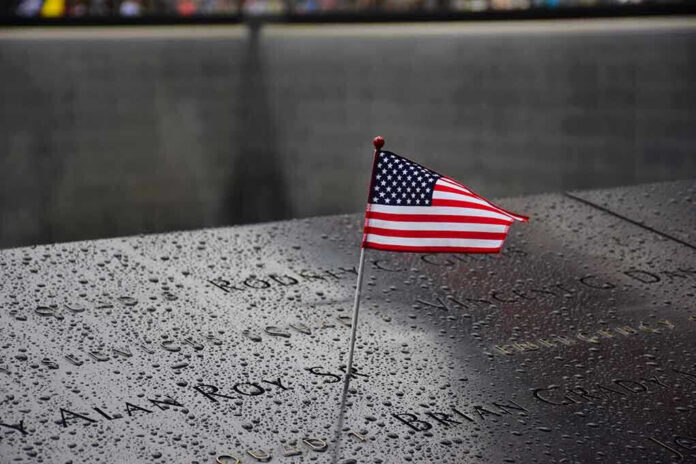
New York City police said a man sprayed red paint on bronze panels at the 9/11 Memorial’s North Pool around late afternoon. The words crossed engraved victim names and included a website address that points to a gun-regulation theme. Officers detained the suspect and reported damage that they valued at more than $2,550. The 9/11 Memorial and Museum said the site is a sacred place of reflection honoring 2,983 victims and that staff restored the area after the incident.
Police described charges including criminal mischief and making graffiti. Reports said the message read “just stop killing kids” or showed the web address “juststopkillingkids.com,” which linked the act to a gun-regulation push. Coverage said the act happened in daylight and was captured on surveillance. Some outlets reported the suspect identified himself as responsible. The memorial reopened the affected spot after cleaning removed the paint and returned the panels to normal condition.
Why The Location Matters To Public Reaction
The 9/11 Memorial holds the names of people killed in the 2001 and 1993 attacks. Officials called it a place for mourning and reflection, not political speech. Because the paint crossed victim names, many saw the act as disrespect, no matter the goal. That framing shaped how people judged the event. The memorial’s statement and quick repairs put focus on damage, not debate. That often happens when protest targets sacred or symbolic spaces.
History shows graffiti can push messages into view, but the backlash can be strong when sites are tied to grief. The act drew fast press coverage and an arrest, but not a clear policy effect. There was no identified bill, target, or plan tied to the slogan in available reports. That gap leaves a message without a roadmap. In cases like this, attention rises for a day, while trust and shared rules for public spaces take the hit. Those tradeoffs can harden divides.
The Broader Clash: Expression, Law, And Shared Places
Protesters often use visible spots to force a hard look at violence or policy. But property laws, public norms, and the meaning of memorials set real limits. Courts in the United States protect speech, yet vandalism is a crime, especially at memorials. Researchers note that political graffiti can spread fast across streets and screens, but it also blends anger and symbolism. That mix can spark news, while shifting focus from the issue to the act itself.
I don't understand why progressive protest via vandalism? And at the 9/11 Memorial? This is the exact opposite approach of MLK, etc. https://t.co/16iPSmycqG
— Anthony Bradley (@drantbradley) October 28, 2026
Americans across parties see a deeper problem here. Many feel leaders ignore basic duties: safety, order, respect for public sites, and honest debate on guns. When a sacred place becomes a canvas, people see a system that cannot protect meaning or solve pain. Some will blame activists. Others will blame government gridlock. Either way, the result is more distrust. We need safe spaces to mourn and real venues to argue policy, without turning one into the other.
Sources:
twitchy.com, dailymail.com, nydailynews.com