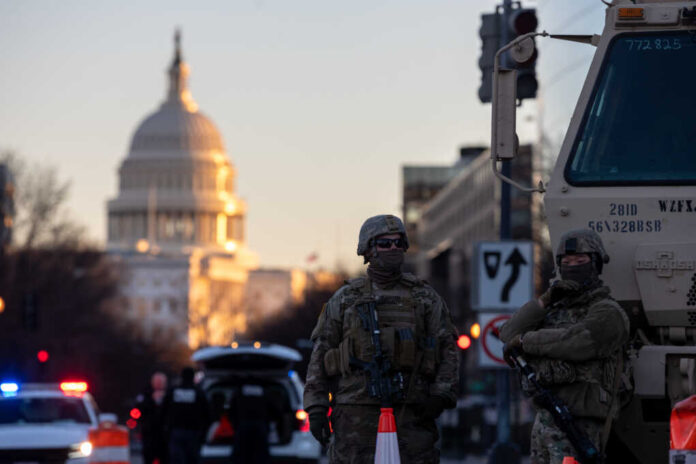
Federal intervention in crime control draws fire from Democrat leaders, intensifying political tensions.
Story Highlights
- President Trump deploys National Guard and federal agents to DC
- Democratic governors condemn the move, citing political motives
- VP JD Vance questions Democrat priorities, highlighting a deeper political rift
- Over 600 arrests reported since intervention began
Federal Intervention in Crime Control
On August 11, 2025, President Donald Trump declared a crime emergency in Washington, DC, marking the start of a controversial federal crackdown on crime. This decision involved deploying National Guard troops and federal agents, with plans to extend similar interventions to other Democrat-led cities. The move has sparked significant debate, as Democratic governors argue it undermines local authority and is politically motivated.
Democratic Opposition and Political Implications
Democratic leaders, including governors Gavin Newsom and JB Pritzker, have publicly condemned the federal intervention. Newsom argued the move was politically motivated, while Pritzker emphasized that crime control should remain a state responsibility. The political tension is further fueled by Vice President JD Vance’s remarks questioning why Democrats seem more concerned about federal intervention than addressing crime rates themselves.
President Trump and VP Vance have linked this crackdown to the 2028 presidential race, suggesting it could damage the records of Democratic contenders. With over 600 arrests reported since the federal takeover, the administration argues that their actions are crucial for restoring public safety, a core issue for many conservative voters.
Local Reactions and Ongoing Debate
Bowser and Police Chief Smith told ABC News that local reforms had contributed to reductions in violent crime in 2024–2025, and questioned the need for federal intervention. However, the ongoing federal presence highlights a broader debate over states’ rights and federal authority. As political protests continue, the effectiveness and appropriateness of such interventions remain hotly contested.
Vance questions why Democrats are angrier about Trump’s plan to tackle crime than crime itself https://t.co/IG0C8soq6n via @OANN
— Terrie Lake (@terrielake) August 26, 2025
This intervention sets a potential precedent for expanded federal roles in local crime control, raising questions about the balance between federal and local governance. With the 2028 presidential election on the horizon, crime policy is poised to be a pivotal issue, determining voter sentiment and political strategies.
Sources:
Bloomberg (political analysis, statements from Trump and Vance)
White House (official declaration, crime statistics)
ABC News (local official statements, public protests, law enforcement perspectives)