A federal judge just slammed the brakes on a $1.8 billion “anti-weaponization” payout plan that many see as proof Washington takes better care of insiders than ordinary Americans.
Story Snapshot
- A federal judge has frozen Trump’s $1.8 billion Anti-Weaponization Fund and is keeping it blocked indefinitely while a lawsuit moves forward.
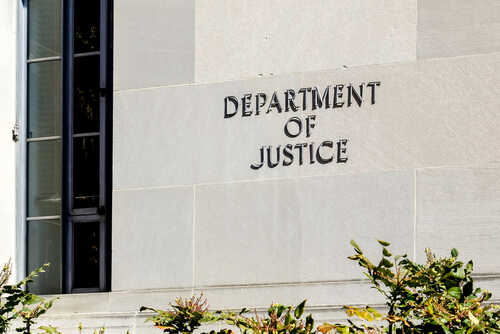
- The Justice Department now says it is scrapping the fund, but the judge wants sworn promises from top officials before she lets the case go.
- The money was meant to compensate people who say they were targeted by a “weaponized” government, possibly including some January 6 defendants.
- The fight highlights a deeper worry on left and right: a government that uses huge secretive funds to help the connected while ignoring everyone else.
What this $1.8 billion fund was really supposed to do
The Trump administration created the nearly $1.8 billion Anti-Weaponization Fund as part of a settlement of President Trump’s own lawsuit against the Internal Revenue Service over leaks of his tax returns.[2] The fund was designed to pay people who say they were unfairly targeted by a “weaponized” government, including some convicted in the January 6, 2021 Capitol attack.[4] Supporters called it justice for political abuse. Critics called it a huge, vague slush fund with little legal basis or oversight.[1]
Federal District Judge Leonie Brinkema in Virginia first stepped in earlier, ordering a pause so no money could be moved into the fund, no commission could be formed, and no claims could be reviewed or paid.[1] She said the point was to keep the “status quo” and stop any money from being irreversibly disbursed before the court decided if the program was legal.[1] At that time, the Justice Department had not even formed the five-person commission that would decide who gets paid, so no one had received a dollar yet.[2]
Why the judge refused to accept “trust us, it’s over”
At a June 12 hearing, the Biden Justice Department told the judge it was abandoning the fund and argued the lawsuit should be thrown out as “moot,” meaning there was nothing left to fight over.[3] Acting Attorney General Todd Blanche had told Congress, “We are not moving forward with the fund. Period,” and court papers also said the program “isn’t going forward.”[4] On paper, that sounded final enough to many in Washington who just wanted the controversy gone.[4]
Judge Brinkema did not just take those words at face value.[3] She extended her block on the fund and asked for stronger proof that the government would not quietly revive it later once the lawsuit disappeared.[2] Reports say she gave the parties a week to work out an agreement that would force top officials, including Blanche, to file sworn declarations promising the fund would not be brought back.[2] She also reportedly pointed to Trump’s recent public praise for the idea as a reason to doubt the project was truly dead.[3]
How this fight exposes a deeper problem in Washington
This clash shows a familiar pattern that frustrates both conservatives and liberals who think the system is rigged. The federal government designs a complex, billion-dollar program with vague rules, then shifts its story once a court starts asking hard questions. Here, critics say there was no clear law from Congress authorizing the Anti-Weaponization Fund or spelling out who would qualify and how the money would be tracked.[1] That lack of clarity made it easier for people to see the program as payback for allies rather than equal justice.
For many on the right, the fund tapped into real anger over politicized prosecutions, especially under earlier administrations, and a belief that the “deep state” crushes dissent while protecting its own.[4] For many on the left, the idea that taxpayer dollars might go to some January 6 offenders looked like rewarding attacks on democracy and shifting money toward already powerful political networks.[4] Both sides, in different ways, saw a government serving insiders and factions, not the average citizen trying to live by the rules.
Courts, “weaponization,” and the fear policies can come back
Judge Brinkema’s caution lines up with a long-standing rule in American law: the government does not get cases dismissed just by saying “we stopped, trust us.” Courts are wary of “voluntary cessation,” where officials pause a disputed policy during a lawsuit and then restart it once the judge backs off. That is why Brinkema signaled she might dismiss the lawsuit only if officials formally and fully kill the fund in a way that makes it very hard to revive later.[3]
A federal judge is keeping Trump’s $1.8B “Anti Weaponization Fund” blocked and wants more than verbal assurances that it is dead.
The fund was announced by DOJ as part of a settlement in Trump’s lawsuit against the IRS over the leak of his tax records.
DOJ said the fund would… pic.twitter.com/DYYXtnXTc0
— HeedlessHorizon (@HeedlessHorizon) June 13, 2026
The result is a strange moment that should worry anyone who thinks the system is broken. On one hand, the administration pushed a giant, barely tested compensation scheme that could funnel money to people close to power. On the other hand, critics had to rely on a single judge to freeze it while the same Justice Department that built the fund now promises it will behave. The episode underscores a larger fear across the spectrum: in modern Washington, billion-dollar experiments can start and stop with almost no input from the people paying the bill.
Sources:
[1] Web – A federal judge has put the brakes on a $1.776 billion fund created to …
[2] Web – Judge extends block on Trump’s anti-weaponization fund
[3] Web – Judge extends block on Trump’s $1.8 billion ‘Anti-Weaponization Fund’
[4] Web – Judge extends block on Trump’s ‘Anti-Weaponization Fund’ – Politico