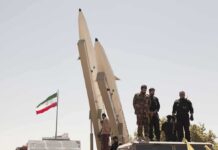
North Korea just turned a live‑TV naval disaster into an even bigger warning shot, quietly building warships roughly twice the size of the destroyer that capsized in front of Kim Jong Un.
Story Snapshot
- North Korea’s new 5,000‑ton destroyer rolled onto its side during launch while Kim Jong Un watched, exposing serious cracks in an authoritarian system built on fear, secrecy, and speed.
- State media admitted “criminal” negligence and detained multiple officials, then rushed to claim the ship was righted, repaired in days, and relaunched, despite outside doubts about real damage.
- Satellite photos and expert analysis suggest flooding and structural harm that could take months or longer to truly fix, showing how propaganda often outruns engineering reality.
- Even after the accident, Kim doubled down on naval power, fielding the Choe Hyon‑class and pushing even larger warships, adding pressure to already‑stretched U.S. forces and taxpayers.
A Destroyer Tips Over Before Kim’s Eyes
On May 21, 2025, North Korea tried to launch its second 5,000‑ton destroyer at Chongjin, and the event collapsed into a scene that would embarrass any navy. According to the Korean Central News Agency, a failure in the side‑launch system caused the stern to slide early into the water, crush parts of the hull, and leave the bow stuck on the ramp.[3] The 5,000‑ton warship rolled onto its side as Kim Jong Un watched from the reviewing stand.[5]
Satellite images released afterward showed the destroyer lying on its side, partly submerged and covered with tarps, with the forward section still on solid ground.[2] South Korean military analysts and independent experts said the ship appeared badly damaged and called it a major setback for North Korea’s most ambitious naval upgrade in decades.[2] For people in free countries, it was a rare unfiltered look at what happens when a secretive regime pushes complex projects faster than its infrastructure can handle.
Blame, Arrests, and a Miracle Repair Story
North Korean state media did something unusual: it openly admitted failure. Kim Jong Un called the launch a “criminal act” caused by “absolute carelessness, irresponsibility, and unscientific empiricism,” language that signaled more than a routine mistake.[5] Authorities quickly detained several senior figures tied to the shipyard and weapons sector, including engineers and party managers, vowing that those responsible would face harsh punishment.[5] In a system ruled by fear, technical failure became a political crime overnight.
Soon after, though, the story began to shift. State media announced that salvage crews had righted the capsized ship, pumped out water, and moved it to a pier for repair.[3] Officials claimed there was “no hole” in the bottom and promised a “flawless restoration” in roughly ten days, framing the accident as a short‑term problem, not a deep flaw in the navy’s modernization drive.[3] Outside engineers questioned whether a large, flooded hull with likely structural twisting could be fixed so quickly, warning real repairs could take a year or more.[1]
What the Images Show and What We Still Do Not Know
Commercial satellite imagery gives a partial reality check. Follow‑up images showed the destroyer upright again at Chongjin, confirming that North Korea did manage to refloat and stabilize the vessel.[12] Later pictures suggested continued work around the hull, consistent with a long repair effort rather than a quick patch job.[12] But those photos cannot see inside the ship, so the true state of engines, wiring, and weapons systems remains hidden from public view.[12]
Reports based on North Korean statements say Kim ordered the destroyer fully repaired before a key party meeting, and that he later attended a new launch ceremony, declaring the warship restored and back in the water.[7] State media even claimed the earlier disaster had not slowed naval modernization and that the damaged ship was now again part of a growing fleet.[13] Many analysts remain skeptical, noting there is still no clear public evidence of serious sea trials or sustained operations that would prove the ship is truly combat‑ready.[7]
Authoritarian Speed, Real‑World Limits, and Why Americans Should Care
This accident highlights a pattern seen across many authoritarian systems: leaders demand fast, showy results, while engineers and workers operate under fear of punishment if anything slips.[17] Political science research shows that when a failure becomes visible, dictators often respond with purges and blame games rather than honest fixes, because admitting deeper problems threatens their power.[17] That mindset can produce impressive headlines, but it also leads to brittle systems that hide risk until something breaks in public view.
🛳️ One month ago, North Korea test‑fired strategic cruise and anti‑ship missiles from the lead Choe Hyon‑class destroyer.
As we documented extensively last year, the first Choe Hyon was launched and tested from Nampo and designed for multi‑mission operations, including cruise…
— CSIS Korea Chair (@CSISKoreaChair) June 19, 2026
For Americans on both the right and the left, there are two hard truths here. First, North Korea is still moving forward. Despite the launch disaster, Kim has pressed ahead with the Choe Hyon‑class destroyers and is now working on even larger warships, giving his small navy more reach and more ways to threaten U.S. allies and forces in the region.[16] That means more strain on an already overextended U.S. Navy and, ultimately, more pressure on American taxpayers to fund ships, bases, and deployments.[18]
Second, the way information is managed around this incident should feel uncomfortably familiar. North Korean state media minimized damage. Foreign outlets leaned into the humiliation angle. Social media chased the most dramatic clips. Regular people were left to sort truth from spin with limited facts, not unlike how many Americans feel about their own government and media today. Both in Pyongyang and in Washington, elites often control the story while the public carries the cost.
Sources:
[1] Web – North Korea Capsized Its New Destroyer on Live TV Before Kim Jong Un: …
[2] Web – North Korea refloats warship that capsized during launch, surprising …
[3] Web – New satellite photos show damaged North Korean warship – BBC
[5] Web – North Korea’s New Destroyer Capsizes at Launch (May 2025) – Reddit
[12] Web – North Korea has raised capsized destroyer upright as it continues …
[13] Web – Quick Take: Chongjin Destroyer Returned Upright – 38 North
[16] YouTube – How North Korea’s New Warship Exposes Fast Shipbuilding Tricks
[17] Web – North Korea Refloats Destroyer After Failed Launch in May
[18] Web – North Korea Raises Capsized Destroyer Upright After Embarrassing …