
A new diplomatic framework is shaping U.S. foreign policy toward the Arctic, as a collaborative NATO strategy aims to prevent Russian and Chinese expansion in Greenland. This approach, which follows a period of heightened U.S. pressure for acquisition, marks a significant shift under President Trump toward strategic cooperation with transatlantic allies to counter adversarial influences in the critical Arctic region.
Story Highlights
- NATO focuses on keeping Russia and China out of Greenland.
- Trump’s rhetoric shifts from acquisition to collaboration.
- Diplomatic tensions with Europe ease significantly.
- Rutte confirms NATO’s Arctic security strategy.
NATO’s Strategic Shift in Greenland
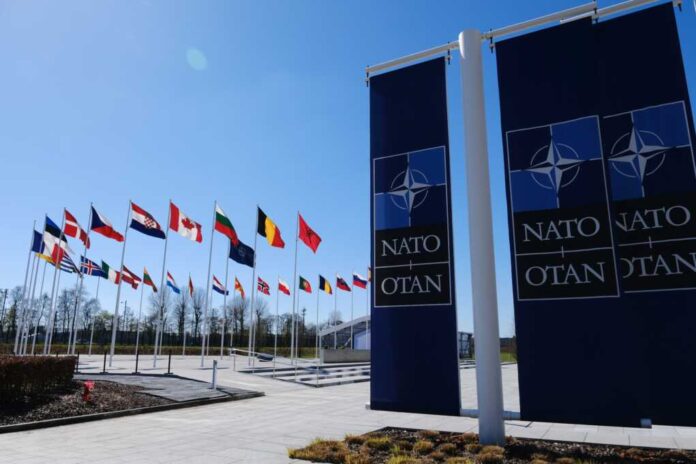
NATO Secretary General Mark Rutte announced that upcoming talks will focus on preventing Russian and Chinese access to Greenland, a Danish Arctic territory. This comes after U.S. President Donald Trump and Rutte discussed the matter at the World Economic Forum in Davos. Trump’s earlier threats to seize Greenland have now softened into a collaborative approach within NATO, shifting the narrative from aggressive acquisition to strategic cooperation.
Greenland holds immense strategic value due to its location and resources, making it a focal point in Arctic geopolitics. Trump’s initial public threats to impose tariffs on European nations unless the U.S. acquired Greenland created significant diplomatic tension. However, the recent framework agreement showcases a pivot towards a united NATO strategy, focusing on countering adversarial influences in the Arctic region.
Rutte says the status of Greenland was not discussed as part of the “framework” deal Trump announced pic.twitter.com/Y4iAT7pLEB
— Aaron Rupar (@atrupar) January 22, 2026
Rutte’s Role and NATO’s Unified Front
Rutte emphasized the importance of a collective NATO response to Russian and Chinese ambitions in the Arctic. His statement underscores NATO’s commitment to maintaining the alliance’s unity and addressing security challenges collaboratively. The framework agreement acknowledges Greenland’s status as part of Denmark, aligning U.S. interests with broader NATO security concerns and averting a potential diplomatic crisis among transatlantic allies.
The rapid de-escalation of tensions highlights the effectiveness of NATO’s diplomatic channels. Within 24 hours of Trump’s tariff threats, discussions shifted towards a cooperative framework. This outcome not only prevents immediate economic repercussions but also solidifies NATO’s capacity to manage internal disagreements while presenting a unified stance against external threats.
Long-Term Implications for Arctic Security
The Greenland talks set a precedent for future Arctic security protocols, involving the seven Arctic NATO members. This collaborative approach aims to thwart Russian and Chinese strategic maneuvers in the region, reinforcing Greenland’s integration within NATO structures. As a result, the alliance is expected to enhance its Arctic operational presence, establishing the region as a central theater for U.S.-Russia-China competition.
JUST IN – Greenland talks aim to prevent Russia, China 'access': NATO chief https://t.co/nIrAVt213g pic.twitter.com/jBuAZOJRjQ
— Insider Paper (@TheInsiderPaper) January 22, 2026
This diplomatic recalibration not only preserves Greenland’s sovereignty but also reinforces transatlantic relations. By shifting focus from unilateral actions to multilateral cooperation, the U.S. and NATO can address Arctic security more effectively, countering adversarial influence while maintaining alliance cohesion. This strategic shift signifies a significant victory for conservative values, emphasizing national security and international cooperation.
Watch: ‘No One Can Take Greenland’, NATO Leaders’ Fiery Debate Over Trump, Ukraine & Greenland | AC1G
Sources:
Greenland: NATO Chief Says Talks to Focus on Keeping Russia, China Out
NATO Chief Says Russia, China Must Not Gain Access to Greenland’s Economy, Military Infrastructure
Rutte Says Trump Greenland Plan Involved No Sovereignty Talk – Bloomberg
Davos 2026: Trump Arrives in Switzerland Where Quest to Own Greenland Could Overshadow Other Goals