
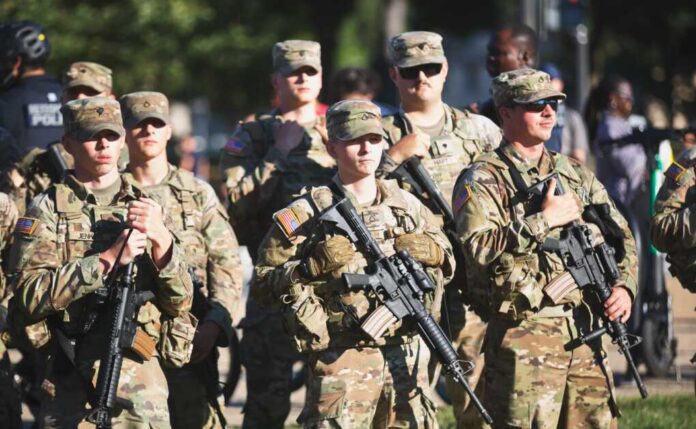
The U.S. is poised for decisive military action against Iran, with senior military leaders briefing a key Middle East ally on imminent strikes targeting nuclear sites, missile facilities, and IRGC leadership. Authorized by President Trump, the potential attacks signal a firm resolve to neutralize a regime long seen as a threat to American interests and regional stability. The massive U.S. military buildup, including the USS Abraham Lincoln carrier group, comes amid threats of crushing retaliation from Iran and urgent calls for restraint from Arab states concerned about oil supply disruption through the Strait of Hormuz.
Story Highlights
- Senior U.S. officials warned the ally—likely Saudi Arabia—of potential attacks as early as Sunday targeting Iran’s nuclear sites, missiles, and IRGC leaders to achieve regime change.
- Trump deploys massive armada including USS Abraham Lincoln carrier group amid Iran’s threats of crushing retaliation and Strait of Hormuz drills.
- Saudi Crown Prince denies airspace for strikes, while Arab states urge restraint to avoid oil chaos affecting 20% of global supply.
- Iran offers talks without threats but vows to preserve missiles; U.S. troops numbering 30,000-40,000 remain vulnerable in the region.
U.S. Prepares Decisive Action Against Iran
Senior U.S. military officials informed a key Middle East ally of possible strikes on Iran authorized by President Trump as early as Sunday. Targets include nuclear facilities, ballistic missile sites, and IRGC leadership to pursue regime change. This briefing occurred Tuesday amid rapid U.S. military buildup. The USS Abraham Lincoln carrier strike group, destroyers, bombers, and jets deployed to the region position America for precision operations. Such moves restore deterrence eroded under prior weak policies.
🚨🇸🇦 BREAKING: The Saudi defense minister has informed US officials that an attack on Iran should be carried out so that Iran does not emerge stronger from the current situation. pic.twitter.com/pcDlwCohZw
— Jackson Hinkle 🇺🇸 (@jacksonhinklle) January 31, 2026
Timeline of Escalating Tensions
On Tuesday, January 27, Saudi Crown Prince denied U.S. use of airspace in a direct call. Wednesday saw Trump warn of a massive armada heading to Iran, declaring time running out for a deal. Thursday brought Iranian warnings, IRGC live-fire exercises planned for the Strait of Hormuz Sunday-Monday, and Israel’s heightened alert. Friday featured Iran’s FM Araghchi in Istanbul offering nuclear talks without threats while defending missile programs. U.S. Central Command issued warnings against unsafe Iranian actions.
These developments highlight Iran’s pattern of proxy aggression through Hamas, Hezbollah, and Houthis, fueling demands for permanent uranium enrichment halt, missile curbs, and proxy cutoffs. Past precedents include June 2025 Israeli strikes on Iranian nuclear sites and shifted Iranian tactics abandoning prior warnings for surprise attacks targeting over 500 U.S. casualties.
Stakeholders and Regional Dynamics
President Trump drives U.S. strategy with threats and deployments, supported by Secretary of State Marco Rubio noting troop vulnerabilities. Iran counters through FM Araghchi’s diplomacy, Brig. Gen. Akraminia’s escalation threats, and IRGC exercises. Saudi leadership, briefed on strikes, prioritizes oil security by refusing airspace and joining Oman and Qatar in restraint lobbying. Israel prepares against proxies; Turkey mediates with proposed U.S.-Iran trilateral talks. Power tilts toward U.S. superiority despite ally hesitance.
Potential Impacts and Specialist Views
Short-term risks include Strait of Hormuz closure disrupting 20% of global oil, U.S. base attacks, and proxy wars by Hezbollah and Houthis endangering 30,000-40,000 American troops. Long-term effects feature frayed U.S.-Gulf ties, Turkish nuclear pursuits, and regional security shifts. Former U.S. intel officials confirm regime change focus beyond nukes. Lt. Col. Jonathan Conricus states strikes are inevitable and exceed 2025 actions. Arab diplomats fear destabilization, underscoring need for strong U.S. leadership to protect allies and energy markets.
Watch the report: Iran Warns Of Strong Retaliatory Action Against The U.S., Others
Sources:
U.S. military tells key Middle East ally to prepare for attack on Iran
Tehran braces for war while testing the limits of diplomacy | Iran International
Iran seeks to avert US military action with talks in Ankara | Iran | The Guardian