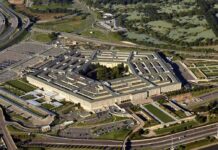

President Trump has launched a $22.5 billion push to turn what he calls one of the “worst” airports in the world into a high-tech global gateway that reshapes how people enter the nation’s capital.
Story Snapshot
- President Trump and Transportation Secretary Sean Duffy announced a $22–22.5 billion overhaul of Washington Dulles International Airport, including new concourses and transit systems.
- The plan ends Dulles’s unpopular “people mover” shuttles and replaces them with an expanded underground train, walking tunnel, and more moving sidewalks.
- Financing will lean on airport and airline-backed bonds and fees, with some taxpayer support, not one giant check from Washington.
- The project fits a pattern where big federal announcements grab headlines while long-term costs, delays, and tradeoffs land on travelers and local communities.
Trump’s Vision: From “Worst Airport” to Flagship Gateway
President Trump used an Oval Office event to unveil a sweeping plan to rebuild Washington Dulles International Airport in Virginia, saying the aging hub will go from “one of the worst airports anywhere in the world” to “maybe the best.” The $22 to $22.5 billion blueprint calls for a massive reconstruction of terminals and concourses while keeping the famous 1962 main terminal designed by architect Eero Saarinen. Trump framed the project as part of his wider effort to remake the nation’s capital region.
Administration officials say the project will add more than 5 million square feet of new or renovated space, replace the current C and D concourses, and greatly expand capacity. Dulles handled about 29 million passengers in 2025, but long-term plans aim to handle far more traffic. Trump has complained for years that Dulles is “badly designed” and “not a airport,” and now he is tying his political brand to fixing it. Supporters see a long-overdue upgrade; skeptics see another mega-project with big risks.
What Will Actually Change at Dulles
The most dramatic change for travelers is the death of the airport’s mobile lounge “people movers,” the rolling buses that ferry passengers between the iconic terminal and far-off gates. Those shuttles have been unpopular for decades, and Trump has made them an early target. Plans instead call for an extended underground AeroTrain in a horseshoe or U-shape, a central walking tunnel, and many more moving sidewalks to link passengers to four or five new linear concourses that replace today’s A, B, C, and D gate areas.
Renderings and early briefings describe long, modern concourses with more natural light, updated security checkpoints, and expanded baggage areas. A new or expanded parking system, including a proposed 32,000-space garage that Trump touted as the largest in the world, would move parking closer to the main terminal for easier access. The plan also includes new restaurants, shops, and what United Airlines has billed as one of its largest Polaris lounges, signaling that airlines see business upside. For everyday travelers, the promise is simple: shorter walks, clearer wayfinding, and fewer crowded, “temporary” gate areas that have lasted 40 years.
Who Pays: Taxpayers, Travelers, or the Airport Itself?
The headline sounds like Washington is writing a $22 billion check, but the funding story is more complex. A White House briefing and later reports say the overhaul will be “partially funded by taxpayers,” with costs divided among the Metropolitan Washington Airports Authority, the airlines that use Dulles, and federal support. Transportation Secretary Sean Duffy earlier confirmed that the federal government plans a roughly $22 billion renovation, but airport-backed bonds, airline leases, and passenger fees are expected to do much of the heavy lifting.
This follows the usual pattern for big airport projects: leaders announce a huge number and vision, while the airport authority and carriers later sort out bonds, gate deals, and ticket surcharges. For conservatives wary of more federal debt, the heavy role of user fees and private partners may sound like a plus. For liberals worried about rising costs on working travelers, the concern is that airlines will pass billions onto fares and fees while Wall Street underwrites the bonds. Both sides can see a familiar pattern: elites decide at the top, and regular flyers and taxpayers pay over time.
Speed, Disruption, and the Deeper Trust Problem
Officials and local media say construction could begin as soon as next spring, with an ambitious target of finishing around 2034. That means at least eight years of major work at the main international gateway for the nation’s capital. Travelers can expect construction zones, closed gates, rerouted shuttles, and changing drop-off patterns for much of the next decade. Veterans of other mega-airport projects know that delays and cost overruns are more common than on-time, on-budget delivery.
President Donald Trump has unveiled a $22 billion plan to rebuild Washington Dulles airport by replacing concourses and adding a large parking garage while preserving the landmark main terminal.
The announcement is the latest in a series of major projects he has announced in… pic.twitter.com/IaRBgbHcPq
— Breaking Aviation News & Videos (@aviationbrk) July 29, 2026
The deeper story reaches beyond airport design. Many Americans on both the right and the left already believe the federal government works for powerful insiders, not for them. A $22 billion project backed by the White House, airlines, bond markets, and regional authorities hits those nerves. Supporters will argue that building a safe, modern, efficient gateway to Washington is a core national interest. Critics will watch to see whether contracts, cost overruns, and user fees look like another case of the well-connected getting richer while ordinary people wait in longer lines and pay more just to visit their own capital.
Sources:
nypost.com, 6abc.com, abc45.com, youtube.com, tribune.net.ph, foxbusiness.com, facebook.com, newsfromthestates.com, reuters.com, virginiabusiness.com