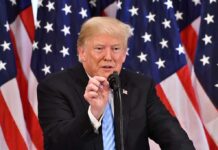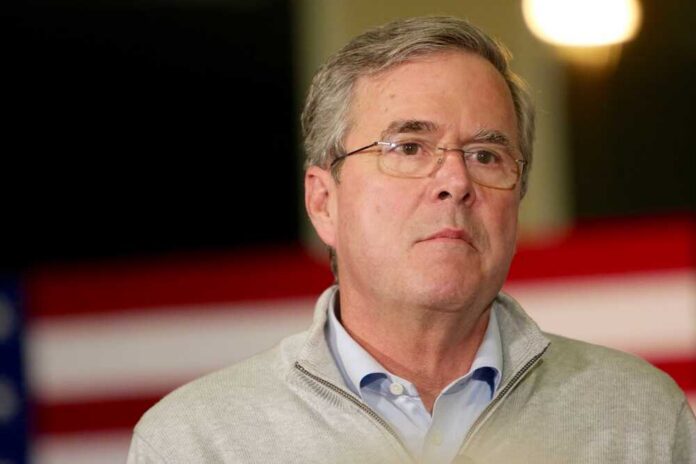
Former political rival Jeb Bush publicly praised President Trump’s bold military strike that eliminated Iran’s Supreme Leader, signaling a remarkable unification of the Republican Party around decisive action to end a nearly half-century terrorist threat.
Story Highlights
- Operation Epic Fury killed Iranian Supreme Leader Ali Khamenei and targeted nuclear facilities in joint U.S.-Israeli strikes on February 28, 2026
- Jeb Bush and nonprofit UANI commended Trump’s “courageous decision” as an opportunity for Iranians to liberate themselves from repression
- The operation marks a rare bipartisan Republican moment, with Bush setting aside 2016 primary rivalry to support national security interests
- Trump emphasized diplomatic efforts failed due to Iran’s continued nuclear defiance and imminent threats to American security
Bush Praises Operation as Liberation Opportunity
Former Florida Governor Jeb Bush, co-leader of United Against a Nuclear Iran, issued a statement alongside Ambassador Mark Wallace commending President Trump’s decision to launch Operation Epic Fury. Bush called Khamenei the “Butcher of Tehran” and framed the strikes as a pivotal moment for the Iranian people to reclaim their nation from decades of oppression. The endorsement represents a significant political shift, given Bush’s contentious 2016 primary battle with Trump. This unified Republican response demonstrates how national security concerns transcend internal party disputes when America’s interests are at stake.
Operation Targets Nuclear Threat and Regime Leadership
President Trump ordered the military operation after Iran rejected diplomatic negotiations and continued advancing its nuclear weapons program. The strikes targeted Iranian military leadership, nuclear facilities at Fordow, Natanz, and Isfahan, and missile capabilities threatening U.S. allies and potentially the American homeland. Israeli sources confirmed Khamenei’s death by late afternoon on February 28. Trump emphasized Iran posed imminent threats to U.S. security after 47 years of “Death to America” rhetoric and terrorist sponsorship. The operation followed previous June 2025 strikes that significantly degraded but did not fully eliminate Iran’s nuclear infrastructure.
Diplomatic Efforts Exhausted Before Military Action
Trump administration officials stressed that diplomatic options were pursued extensively before resorting to military force. The President sought a negotiated deal as recently as the week before the strikes, but Iran’s leadership refused to abandon its nuclear ambitions and continued threatening behavior. Trump envoy Steve Witkoff warned on February 21 that Iran was approximately one week away from industrial-grade bomb-making material. This timeline underscores the urgent security situation facing the administration. The decision reflects conservative principles of peace through strength—diplomacy backed by credible military power when adversaries refuse reasonable terms.
Bipartisan Republican Unity on National Security
Bush’s public support signals broader Republican consensus on confronting Iranian aggression despite past political divisions. United Against a Nuclear Iran, which Bush co-leads, actively advises on Iranian terror risks and human rights abuses. U.S. Ambassador Mike Waltz defended the strikes at the United Nations, citing Iran’s decades-long terror campaign against America and its allies. This unified conservative front contrasts sharply with Democratic criticism and congressional war powers debates. The operation demonstrates how Trump’s America First approach prioritizes protecting citizens from genuine threats while giving diplomacy every opportunity to succeed before taking decisive military action.
Iran vowed retaliation at the UN Security Council, with Ambassador Amir-Saeid Iravani condemning the strikes as unprovoked aggression. Iranian forces launched attacks against Israel and U.S. bases in the region. The long-term implications remain uncertain, with possibilities ranging from regime instability opening pathways to Iranian freedom, to continued conflict and nuclear program rebuilding. This situation reinforces the need for sustained American vigilance and strength to counter threats that previous administrations allowed to fester through weak policies and ineffective agreements like the failed JCPOA.
Sources:
Iran vows ‘decisive self-defense’ at U.N. after Trump kills Supreme Leader in Operation Epic Fury
Jeb Bush commends former rival Trump’s Iran op: ‘This is their time to take their country back’
United States, Israel attack Iran nuclear and missile sites
UANI Applauds and Supports American and Israeli Strikes on Iranian Regime
UANI Statement on Death of Ali Khamenei