

A federal judge just ordered the DOJ to release hidden records on E. Jean Carroll’s Trump accusation, exposing potential deep state sabotage against President Trump’s comeback.
Story Snapshot
- Federal Judge Analisa Torres rules DOJ must disclose records on investigation into Carroll’s sexual misconduct claim against Trump.
- Judicial Watch’s FOIA victory pierces DOJ’s exemptions, amid Trump’s post-inauguration push to drain the swamp.
- DOJ under Biden-era holdouts appealed, delaying transparency as Trump calls it vindication against hoax accusations.
- Records could reveal exculpatory evidence, threatening Carroll’s $88M judgments and leftist narratives.
Court Ruling Exposes DOJ Withholding
U.S. District Judge Analisa Torres ruled on February 10, 2026, that the Department of Justice must partially release records related to a federal probe into E. Jean Carroll’s accusation against President Trump. Carroll alleged a 1990s assault at Bergdorf Goodman, publicized in her 2019 book. The DOJ withheld documents citing national security and deliberative process exemptions. Torres rejected these, prioritizing public interest under FOIA. This marks the first judicial breach of DOJ’s shield in a high-profile Trump accuser case.
Timeline of the Witch Hunt
E. Jean Carroll accused Trump of rape in 2019; Trump denied it as a hoax. She won a $5 million defamation suit in June 2023, followed by $83.3 million in January 2024, totaling over $88 million in judgments. Trump appealed and posted a $91.6 million bond. In fall 2025, Judicial Watch filed a FOIA request suspecting DOJ buried exculpatory evidence like payment incentives. DOJ denied in December 2025. Torres’s February 2026 order forces partial disclosure by March 15, despite DOJ’s stay motion.
Key Players and Power Shifts
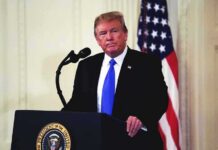
Judicial Watch, led by Tom Fitton, drove the FOIA fight for transparency against deep state bias. President Trump, now in office since January 2025, posted on Truth Social: “Fake news and crooked DOJ hid the truth about this liar!” Carroll’s lawyer Roberta Kaplan claimed “no cover-up, just privacy.” Judge Torres, who presided over prior Carroll trials, acted as neutral arbiter. DOJ transitioned from Merrick Garland to Trump appointees like potential AG Pam Bondi, who vowed record reviews. This adversarial dynamic favors Trump’s exoneration push.
Conservative watchdogs hail the ruling as proof of weaponized DOJ under Biden-Harris. Trump supporters see validation amid ongoing appeals. The case polarizes: #MeToo advocates fear credibility erosion, while it bolsters Trump’s persecution narrative for 2026 midterms.
Implications for Justice and Transparency
Short-term, DOJ’s February 26 appeal to the conservative-leaning 2nd Circuit delays records, fueling midterm rhetoric. Long-term, it sets FOIA precedent for political cases, potentially exposing inconsistencies undermining Carroll’s verdicts. Broader effects weaken agency exemptions, spurring conservative suits like past wins on Clinton emails and Hunter Biden laptop. Trump leverages this for swamp-draining, aligning with declassification efforts on Epstein files. Limited data on record contents noted; outcomes hinge on appeal.
Experts like Tom Fitton call it “proof of weaponized DOJ.” Alan Dershowitz warns records showing incentives could collapse the case. Heritage Foundation praises accountability steps. Left-leaning views frame it as distraction, but facts align on ruling details across sources.
Sources:
CourtListener docket for Torres case No. 1:25-cv-08976
Judicial Watch press release, Feb 12, 2026
Fox News liveblog [foxnews.com, Feb 26]