
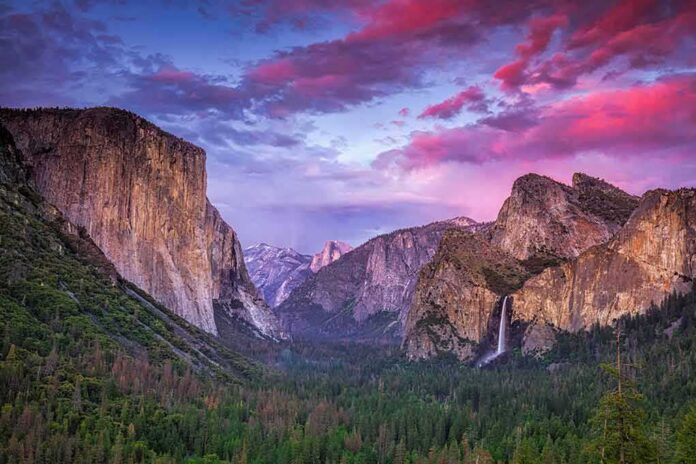
Nine days into a pounding Sierra storm, climber Sasha DiGiulian waited in a hanging tent 2,600 feet up El Capitan—and then finished the climb anyway.
Story Snapshot
- DiGiulian spent nine days on a wall-mounted tent during a fierce storm on El Capitan.
- She and partner Elliot Faber chose to hold position during a brief clearing, then pressed on.
- Reports say the full ascent lasted about 23 days, with nine days paused for weather.
- Past Yosemite incidents show storms can strand climbers for days, sometimes with deadly results.
What happened on El Capitan during the storm
Outside magazine reported that Sasha DiGiulian waited out severe weather on a small portaledge tent about 2,600 feet above Yosemite Valley. She described snow, ice, rain, and strong wind hammering the wall for days. Her four-by-six-foot shelter became her home as the storm surged. Water soaked gear and froze on the granite. Sleep came in short bursts. The report placed her on El Capitan during mid-November and emphasized the nonstop nature of the storm’s impact.
Climbing magazine later detailed a key judgment call. DiGiulian and partner Elliot Faber reached Gold Ledge near pitch 31 and saw a short break in the weather. They weighed descending against staying put to protect their attempt on the route. They chose to remain on the wall. The storm resumed, dropping rain, hail, and snow. Ice built up on their tent. When the wall dried enough to move, they continued the ascent and completed the climb after weeks on the route.
How long the ascent took and why the pause mattered
CBS News reported that DiGiulian finished El Capitan’s longest free route over more than three weeks and spent nine of those days waiting on the wall for the storm to pass. That timeline places the weather hold inside a larger push that required grit, food management, and careful planning. The pause mattered because wet, icy granite makes free climbing risky and often impossible, and a wrong step can be fatal. Waiting preserved both safety and the style of the ascent.
The San Francisco Chronicle likewise framed the storm as a central chapter in a roughly 23-day effort. Their account described rain and ice pummeling the face and soaking her ultralight portaledge. That detail matches common big wall hazards: water runs down the slab, pools in seams, and chills climbers fast. Even top athletes can be stuck for days. Finishing after such a delay shows both endurance and discipline to move only when conditions improved.
Why climbers sometimes stay put instead of bailing
Storm immobilization on El Capitan is not rare. The American Alpine Club has documented multi-day storms that stranded several parties high on the wall. In one case, four teams were locked down by a four-day winter storm. Three parties were rescued. Two climbers died of hypothermia near the top of the Nose. Those records explain why a portaledge, a dry sleeping bag, and patience can be safer than a rush to descend on slick stone and in high wind.
In DiGiulian’s case, reporting shows a deliberate risk calculation: stay on a secure ledge system, ride out the worst, and keep the chance to complete the free climb. That approach aligns with standard big wall strategy. When storms turn holds to ice and ropes to frozen cables, movement can become more dangerous than waiting. The choice to hold position during a brief break, then continue later, fits this logic and helps explain the nine-day pause.
What this says about risk, rescue, and public resources
Big wall climbers accept real risk. But preparation, judgment, and self-reliance can reduce the load on rescue teams. DiGiulian’s episode involved no cited rescue, no ranger extraction, and no incident report in the sources. That matters to people who worry about taxpayer-funded rescues for avoidable danger. Here, the reporting supports a self-managed delay inside a planned ascent, not a callout that pulled park staff into a storm on the wall.
Climber trapped on Yosemite’s El Capitan for nine days when massive storm hit California https://t.co/24z17PLF26 @californiapost
— Joel Pollak (@joelpollak) November 16, 2026
For readers across the spectrum, the through-line is practical: personal responsibility and smart planning save lives and public dollars. Yosemite Search and Rescue crews have handled many high-angle emergencies over the years, often in brutal weather. Their logs show how fast missteps can turn fatal. DiGiulian’s team carried shelter, waited when the wall was unsafe, and moved when conditions improved. That is how risk sports can respect both personal freedom and shared public safety.
Sources:
people.com, attackofthefanboy.com, el-balad.com, outsideonline.com, storre.stir.ac.uk